

On a swing at "The Hill"
When I was younger, much younger, summer meant going for a few weeks to “The Hill”, a farm run by two wonderful women, Ola and Beth Anderson. They were glorious weeks of freedom and activities out of the normal routine of Ocean Grove. I remember the two square cypress hedges at the gate, the rumble of the cattle grid and the hundred metre drive to the front gate next to the windmill and water tanks. To the left and down the hill was the Dairy and farm sheds. The shed contained an Aladdin’s cave of treasures: gas masks, wagons, farm implements and other wonders to open the eyes of a young boy.
The Hill was a small farm in Mepunga West, east of Warrnambool. I would get up and “help” the sisters with the milking; walking in the cool of the summer morning and calling the cows in. I would help clean the udders and put the cups on. I remember watching the milk go though the pipes, via a glass bulb above the cow along a pipe to cooling system. The milk cascaded down a rippled cooling apparatus to a tray below where it was channelled into a 10 gallon can. The chugging of the milking machine was steady and mesmerising. The dairy cats waited patiently for their share.
We would take the cans to a depot; really just a platform on 4 large stumps, on the back of a old converted army jeep. If the jeep didn’t start we would have to harness the jinker. I always felt special when we needed to use the horse and jinker.

Ola and I on Old Con
The horse, Old Con, was also the horse I could ride during the day. He had a patient and steady temperament. That, too, was really special for a town kid. I remember playing in the haystacks and making cubbies with a friend. The smell of the dry grass, which gives me hay-fever today, was glorious then! I learned to play tennis on the asphalt court over the road. They dressed me up in a Davy Crocket outfit (that is another story)!
Other memories include, home-made ice cream, learning how to use knife and fork “Aussie style” and lavish afternoon teas before the second milking. I also remember the infinite patience of Ola and the finite patience of Beth. I was often meeting new members of what seemed like an unending stream of Anderson family members. Every so often we would meet these members on their farms – each one different and unique. All very Australian.
Another clear memory was going to the Post Office at the Croft’s farm. This was a little office behind the house and it also doubled up as the telephone exchange – I am talking about the late 1950s and early 60s.

Two of the nephews and me
The house at The Hill was made up of addition upon addition and closed in verandas. I remember the insects banging against the ceiling and walls on a hot summer’s evening. The antique Singer was still used as was the piano for sing-a-longs on an evening when people had gathered together. My dad, who played by ear, had to improvise when there was no music. And there were the black and white and sepia photos of family members present and past. Here I learned that men had gone to war and never came back.
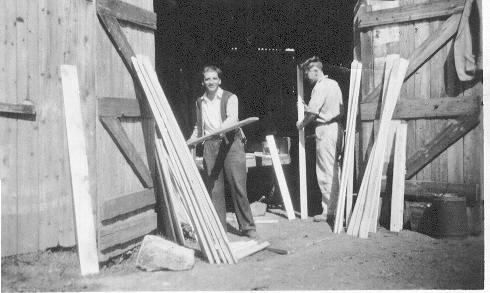
Dad and my Uncle Adrian at the farm shed
There were picnics at Childers Cove and a trip to Lake Gillear, places like Nirranda and Nullawarre. If I close my eyes and allow my mind to wander, my heart goes back to those great days and wonderful experiences. To a measurable degree I am the person I am today because of the influence of these amazing people.


 Travels from Ur