

 Parents
Experiences
Values
Bible
Personality
Sin
Society
Teachers
Media
Faith
Friends
Family
Church
Books
… can shape
the way we see
the world.
Which lenses should we keep
and polish
and which distorting specs
throw away?
To see
as Jesus
wants us to see
and feel as He would feel
and do as he did
for the world in which we live?
Parents
Experiences
Values
Bible
Personality
Sin
Society
Teachers
Media
Faith
Friends
Family
Church
Books
… can shape
the way we see
the world.
Which lenses should we keep
and polish
and which distorting specs
throw away?
To see
as Jesus
wants us to see
and feel as He would feel
and do as he did
for the world in which we live?
In Genesis 12:2 God says to Abram,
“I will make you into a great nation,
and I will bless you;
I will make your name great,
and you will be a blessing.”
In Romans we are reminded that he was the father of faith. Abram was a prototype of what 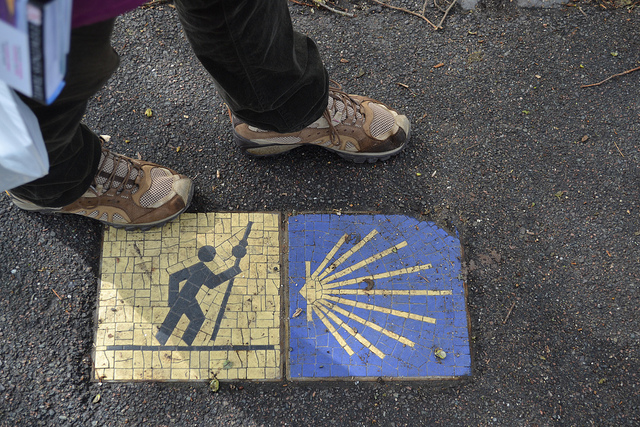 would happen in the New Testament. He was one of the few OT people upon whom the Holy Spirit had come.
In the New Testament the Spirit of God is poured out on the church to empower us, like our forefather to be a blessing. If we read through Acts we find that after the coming of the Holy Spirit, persecution multiplied: stoning, beatings, gaolings, killings and the list goes on. And yet the church grew.
In the west our priorities are often the avoidance of pain and the pursuit of pleasure. Just imagine what would have happened to the gospel and our place in the story if that had been the priority of our early brothers and sisters. The likelihood is that we would all be pagans. The gospel would have been stifled.
The challenge is that we too, like Abram and the early Church have been blessed to be a blessing. I don’t know about you but that makes me very uncomfortable.
Every creature is the product of a thought of God; hence all created things can serve as emblems of the Divine.
 It is not of ourselves that in winged creatures we hail a figurative expression of the Divine life; but Scripture does it, and now, accustomed to it, every devout believer readily acknowledges that this imagery warms the heart and enriches the mind.
In what Jesus said of Jerusalem this comes within every one’s comprehension. The hen with her chickens is a figure of Divine compassion, which moves every one by its beauty and tenderness. “Jerusalem, Jerusalem, how often would I have gathered thy children together as a hen gathereth her chickens under her wings, and ye would not” (Matt. 23:37).
Yet this word of Jesus has a far deeper meaning than he who merely admires it imagines. Truly it speaks of protection and compassion, for this is the purpose here of the gathering together. But there is more in it than this. It also implies that the chickens belong with the mother-hen; and that nothing else than return to her can render them safe against the dangers of cold, and prowling vermin. Yea, it also contains the striking figure that by nature the chickens are appointed a hiding place close by the mother-hen, and that they find shelter and protection of life only in the immediate nearness of the mother-life, under the outspread wings that will embrace and compass them.
Thus, this striking saying of Jesus is taken bodily from Old Testament imagery and in turn is explained by it.
When in Psalm 91 it is said. “He that dwelleth in the secret place of the Most High, shall lodge under the shadow of the Almighty, ” we deal with the selfsame figurative representation.
It is the epitome of what the Psalmist elsewhere expresses (61: 4).. “I will make my refuge in the covert of thy wings.”
It is the same thought that was expressed by the wings of the cherubim over the mercy-seat of the ark of the Covenant.
“It is ever the one idea: God created a fowl that gathers her brood under her wings and with these wings covers and cuddles them; and now this richly suggestive picture is held before us in order that our soul might seek refuge under the shadow of the Almighty and hide in the covert of His wings.
Abraham Kuyper To Be Near Unto God (Courtesy CCEL.org)
A friend alerted me to a book by the 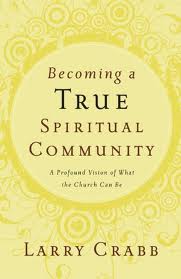 well know Christian author Larry Crabb: Becoming a True Spiritual Community- A Profound Vision of What the Church Can Be.
In this book he raises a question that many people are asking, “What is missing in the church?”
Crabb speaks for many of us when he states:
And I’m disappointed, overwhelmingly so, when I take stock of the current state of Christian community. In my own life, there are several bright pockets of relational joy, for which I am extremely grateful, but none that quite measure up to Trinitarian standards.
And he continues by declaring.
I am willing to risk giving up my cultural definition of church and try to define it biblically.
When I read this I knew someone else understood my plight. My desire for something more profound wasn’t just an idle and foolish wish. More over it reminded me how profound our revisioning of the church needs to be. Larry Crabb’s offering adds to the other excellent work being done by people such as Michael Frost (Exiles) and Tim Chester and Steve Timmis (Everyday Church). Crabb’s book takes us deeper into the heart of the Christian community. He looks at what stifles spiritual community and suggests ways in which it can be/must be enhanced.
It is dangerous using a phrase like “Spiritual Community” because we all have our own understanding of it – usually shaped by our experiences. Larry Crabb speaks of “turning our souls towards one another”. He references people such as Henri Nouwen, Teresa of Avila and Dietrich Bonhoffer – who all take us beyond institution to a perspective that is far more intimate and relational with God and each other.
This book also challenges many of the attitudes and values of counselling and therapy and explores how our healing/restoration will be far more effective if, in community, we point each other towards God, and if we see suffering as a means of drawing closer to Him.
This is a book I haven’t finished yet, and I already know I will have to re-read. What it is calling for is a paradigm shift in the way we “do” church. I hope to say more about this book and its impact in future posts.
The Son is the image of the invisible God, the firstborn over all creation. For in him all things were created: things in heaven and on earth, visible and invisible, whether thrones or powers or rulers or authorities; all things have been created through him and for him. He is before all things, and in him all things hold together. And he is the head of the body, the church; he is the beginning and the firstborn from among the dead, so that in everything he might have the supremacy. For God was pleased to have all his fullness dwell in him, and through him to reconcile to himself all things, whether things on earth or things in heaven, by making peace through his blood, shed on the cross.
Colossians 1:15-20
 Today we had a Christian education refresher course/professional development day at our school. I teach at a Christian school, and many people, often Christians challenge me about the need for Christian schools.
The text above encapsulates the need. We are directed to recognise that “all things”, which includes what we often (mistakenly) call the sacred and secular, are under Christ’s authority. Mathematics, history, character development, art, music, sport, worship, prayer, Bible and etc. are all under the rulership of the King of creation. Paul reminds us that as the very Word of creation, Christ, is the upholder of every aspect of it.
In the words of the Dutch theologian and Prime Minister Abraham Kuyper:
“In the total expanse of human life there is not a single square inch of which the Christ, who alone is sovereign,does not declare,’That is mine!
To suggest that education is neutral denies both Christ’s claims but also fails to see the humanistic foundations of public education; an education in which humanity is (an idolatrous) king.
We had a great day. All the staff – teachers, administration, bus drivers and gardeners, as well as board members – came together to be reminded of their part in important Kingdom work.
As we start the working week, here is a verse that reminds us that God sings over his children like a loving mother over her baby:
The Lord your God is with you,
the Mighty Warrior who saves.
He will take great delight in you;
in his love he will no longer rebuke you,
but will rejoice over you with singing.”
Zephaniah 3:17

A Daybed but not the one in question! Courtesy Google images.
Quite a number of years ago we were given a day bed; a small backless couch which we placed in our entry hall. But a time came when it surplus to requirements. I thought of chopping it up but finally we took it to the local, pre eBay, auction house. The auctioneer said he would try to sell it but didn’t hold out much hope. On the way home I suggested to my wife that whatever was raised, if anything, we would give to the church building fund as we were in the process of putting up a new building.
Two weeks passed and suddenly I remembered the couch. I rang the auction house and asked what it had raised. “5.45,” was the reply. Five dollars and 45 cents. Ok, it was probably better than chopping it up. When the cheque arrived it was for $545. For a brief moment I thought that maybe we should split it 50/50 with the church. We could have used $272.50. I remembered my promise and I also remembered the story Ananias and Sapphira in Acts 5. It is one of the scarier stories in Scripture because it is so close to our own everyday life: that mismatch between what we say and what we do; between our heart and how we wish to appear before others.
There are nearly as many explanations of this passage as there are commentators. Three points stand out for me.
1. Lying within the church to other brothers and sisters is as good as (or should I say “as bad as“) lying to God. That in turn has implications for the level of “truth in love” that needs to be developed within the Christian community.
2. Ananias and Sapphira had obviously colluded within their marriage. It is a contrast to a healthy marriage where the husband and wife hold each other accountable before the Lord and encourage Christian growth.
3. I ask myself how often I have tested God with my own lack of faith and arrogance? The answer is: far too often! I too deserve the punishment of Ananias and Sapphira. This is all more the more reason to trust in, and depend on, the grace of God and put aside any wilful desire to fool Him or disregard Him.

The Beautiful Alesund Rebuilt After the 1904 Fire
When we were travelling through Norway an amazing recurrent theme started to appear: fire. Many towns, being built of wood, had serious town-wide fires in their history. Trondheim had 9 between 1598 and 1842. Bergen had a few and Alesund was totally destroyed in 1904.
Albert Einstein is supposed to have said that insanity is doing the same thing over and over again and expecting a different result. May be we are all a bit insane. A bit of the Norwegian town builder resides in each one of us. There are so many unproductive habits and sins in our lives that we don’t deal with. We walk old paths hoping to get to a different destination and we are surprised when nothing has changed.
After the Great Fire of London in 1666, building regulations were changed: houses had to be faced with bricks and roads were widened. The Government of the day was keen that this fire would not happen again. Too often we are not that wise.
We need to take similar action. We need to change our ways. In Acts 2 we are reminded by Peter that the Holy Spirit enables us to repent and believe. “Repent and be baptized, every one of you, in the name of Jesus Christ for the forgiveness of your sins. And you will receive the gift of the Holy Spirit.” We don’t have to change our habits in our own futile strength. It is a journey that God goes on with us. Once we have come to Him in faith, His Holy Spirit remains to give us power over foolishness and sin.
What “fires” repeat themselves in your life? Is there a wiser material to use in the future?
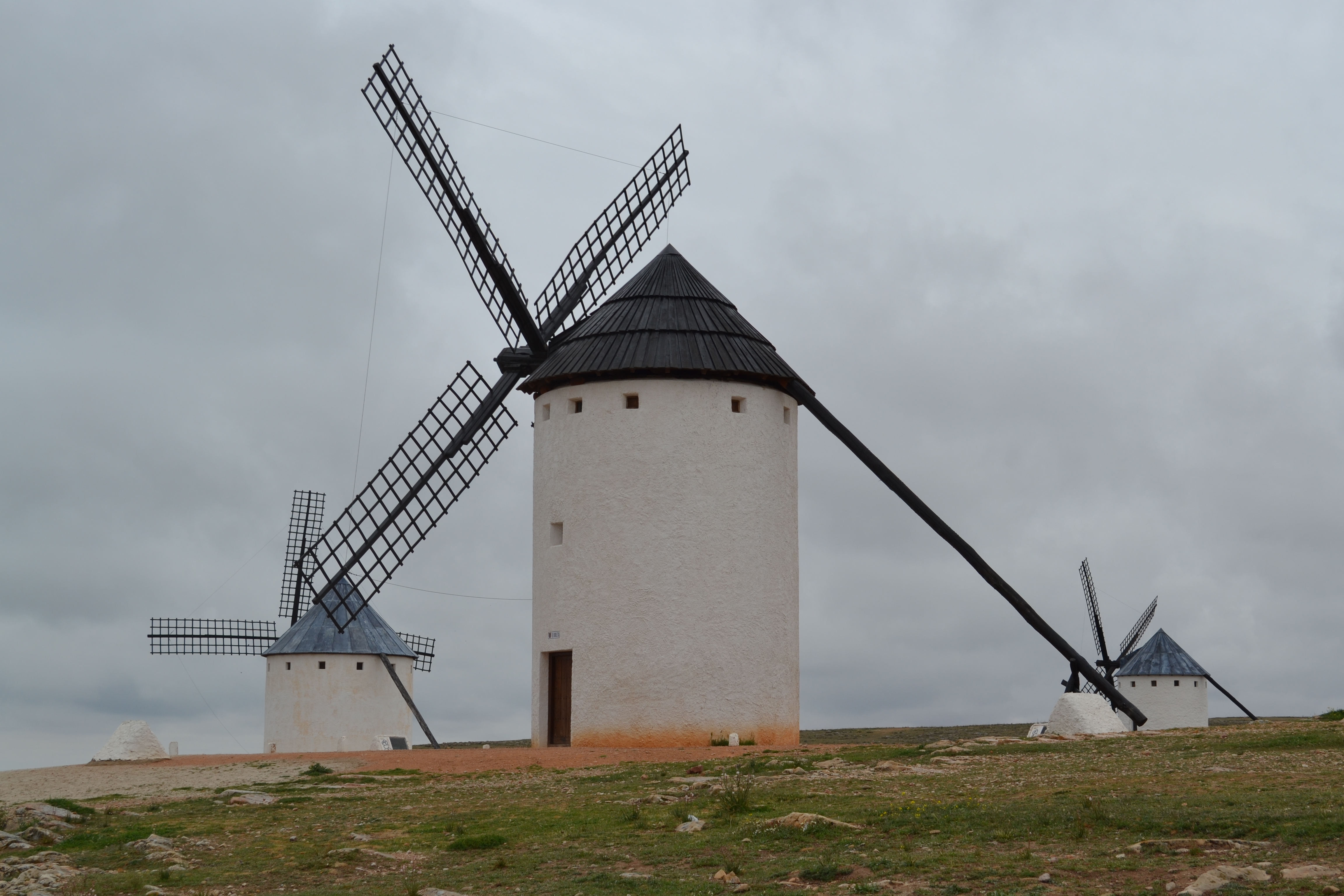
The Windmills of La Mancha
Every day they continued to meet together in the temple courts. They broke bread in their homes and ate together with glad and sincere hearts, praising God and enjoying the favor of all the people. And the Lord added to their number daily those who were being saved. Acts 2:46 & 47
One of my favourite characters in literature is Don Quixote. With a sense of honour and justice he sallies forth to defend the honour of his lady Ducinea. The truth is that he attacks windmills thinking that they are the enemy and gets gets involved in all sorts of preposterous behaviour, assuming that he is doing good. Even Dulcinea is a figment of his fervent imagination. Faithful Pancho supports his master but knows the truth.
When I explore the idea of “church’ I get a sense that I am like the deluded Don tilting at windmills and passionate about something that doesn’t really exist. Reading Acts, imperfect as the church was, they still had something special. There was a community living in excited expectation, sharing and supporting each other.
What is there in our Western C21st culture that blinkers us to the enormous potential of the church? What binds us? Is it our wealth and materialism or our lack of faith? Or is it the fact that we have been “doing it this way” for so long we fail to see the possibilities?
In the last two years I have been to many churches and I have seen wonderful things: programmes, passion, solid preaching, functional buildings and friendly people. Yet I still sense that somehow we are missing the point.
Am I the only one? Are Don Quixote and I closer than I think?


 Travels from Ur