christian education

The Lure of the Occult

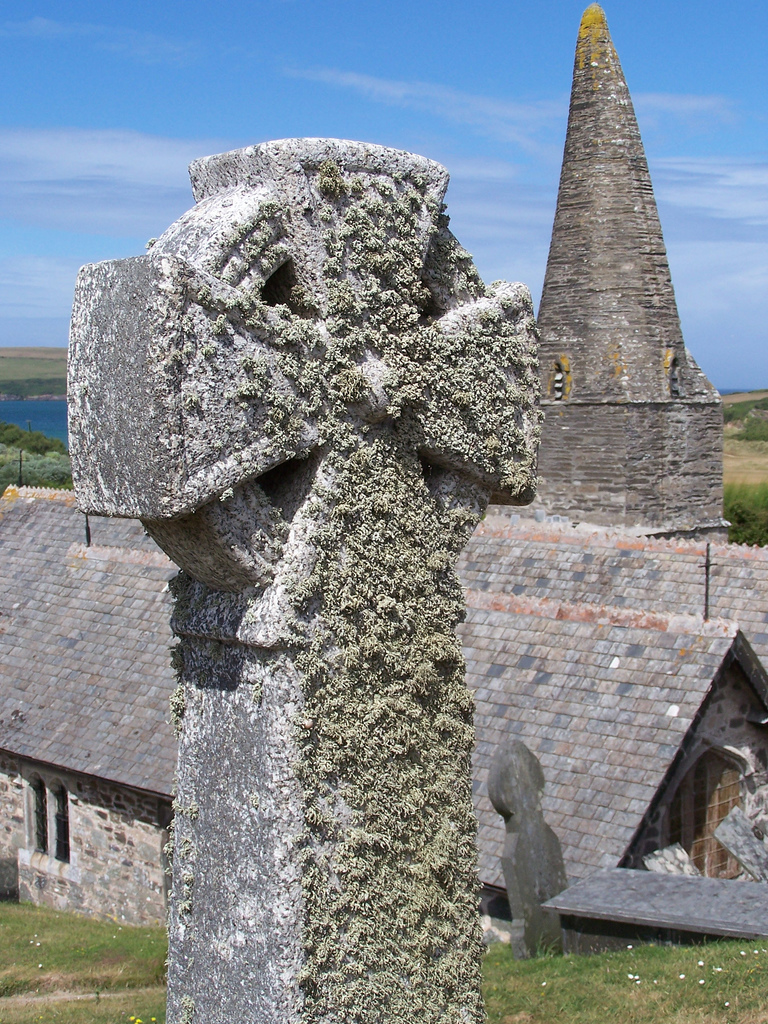
St Michael's Victory over the Devil, a sculpture by Sir Jacob Epstein

St Michael’s Victory over the Devil,  by Sir Jacob Epstein

I remember back in my high school days, last century, that every now and then an occultic fad would pass by: Ouija boards, seances and even palm and tea leaf reading. People have this “spiritual” itch that they want to scratch with these practices.

There is an excitement about dabbling covertly in these unknown realms. Many people have done it from Arthur Conan Doyle (who seemed so logical in his Sherlock Holmes stories!) through to the notorious Rasputin plus many, many more.  Every age seems to have its own versions and own followers. The latest incarnation is a game called Charlie Charlie.  The interweb has made the progress of this and other modern fads more immediate. A few days ago the SMH reflected on the speed at which Charlie Charlie had progressed.

Now it is easy to say that most people who engage in these facile games are not impacted for the long term.  But why does Scripture exhort us to steer clear of these activities? In Ephesians 6: 11 & 12 Paul reminds us to equip ourselves with the full armour of God: Put on the full armour of God, so that you can take your stand against the devil’s schemes.  For our struggle is not against flesh and blood, but against the rulers, against the authorities, against the powers of this dark world and against the spiritual forces of evil in the heavenly realms.” In other words, there is a realm of existence about which we not only need to be very wary but we also need to consciously protect ourselves. And if we don’t dabble in it we don’t have to be fearful either and the child of God will be protected.  Second Thessalonians 2 reminds us of the “lawless one” whose aim it is to encourage us to serve the lie – that is Satan.

When we read the Old Testament we also find many frightening passages which literally damn these practices as they are in direct contravention of the first four commandments.  God doesn’t mince His words when He speaks of divination, sorcery and its practitioners.

As parents and teachers we need to be sensitive and aware of this discussion.  Some young people may be just playing a foolish game, for others however, there may be a real spiritual longing – one that we could tap into and nurture in healthy directions. An added concern is the alarming prospect that there may be those for whom these games act like a gateway drug and introduce them to more worrying and even more sinister activities.

Whatever the situation, this latest fad is a clear reminder to be vigilant and to protect, educate and nurture those in our care or sphere of influence in ways that enhance and protect their spiritual and eternal welfare.

Here are a few helpful resources on the Web:

http://www.christiananswers.net/q-eden/edn-occult.html

http://studentsoul.intervarsity.org/occult

This has a useful list of texts further down the page.

http://www.gospelway.com/religiousgroups/witchcraft.php


Categories: christian, christian education, Christianity | Tags: , , | 5 Comments

Jesus Unicorn

Today my wife, Hetty, is presenting a guest blog on the topic of children and worship.

Jesus Unicorn

Courtesy Google  images

Courtesy Google images

A young girl was given a notebook and some colouring pencils and pens while she sat in the pew with her family.  After a few weeks, her parents suggested that she listen to the sermon while she drew. By the end of the sermon she had drawn some pictures of a unicorn with the words ‘Jesus Unicorn’ above them.  Her parents were amused.
 
Some questions:
 
  • What did her parents believe children should be doing in a worship service?
  • Did they give her any guidance about what she could do with the writing and drawing materials?
  • What was the underlying message the child got concerning how she should behave in the worship service and from her parents’ subsequent suggestion?
 
Some ideas:
 
If you were her parents, how might you encourage her to participate in the worship service?
How would you begin a discussion with this child about ‘Jesus Unicorn’ which could lead her to a fuller experience of worship?
 
Paper and pencils are fine to keep a child’s hands busy, to keep a child quiet, and even as a stepping stone to taking notes of the sermon but it should never stop there.
Children can draw the stories they hear (and they should be hearing God’s stories, not just theological concepts) or their feelings. There should be a clear understanding of when they can draw/write and when they should be participating in the singing, praying, etc.  Parents should follow up with the child later. It may help if the parents also occasionally used paper and pencils during the sermon, and the family shared their pictures afterwards.
 
A warning:
 
Be careful not to let this become another kind of ‘school’ activity.
Help the child to use the writing and drawing, as well as the words they’re hearing and the images they’re seeing, as a way to explore their understanding of God, and the worship of Him.
 
 
Hetty Stok
Categories: Child Theology, Children, christian, christian education, Christianity, Church, Uncategorized | Tags: , , , | 8 Comments

Reports, Graduations and Thanksgiving

It is that time of year again.  The general populace is thinking of Christmas but teachers are busily finishing off reports and reflecting on creative ways of telling the truth without engendering the wrath of protective parents.  Do I write, “Johnny is an enthusiastic student whose energy knows no bounds” or “Johnny is uncontrollable and has no sense or discipline or self-control”?  Do I write, “Mary is unmotivated“ or “Mary reflects all the sloth of her parents”?  Um, I wonder?

Before the report writing there was the marking.   Exams, essays and other pieces that would provide evidence for the reports, all had to be assessed.  Writing and meaning had to be deciphered.  By this stage of the year the shoulders are hunched, the eyes bleary and the footstep slow.

The Thanksgiving and Graduation evening is special.  Students who have worked hard and achieved highly are acknowledged.  My favourite awards are for students who have worked hard and progressed but have not necessarily achieved high marks but need to be encouraged for their effort.  Also students graduate from one section of the school and move to the next and the Year 12 students are acknowledged as they leave the College.  This year, after being, homeroom teacher to the same group of students for the last three years I have that nagging parental conflict of hope and fear, and excitement and trepidation as another group of Year 12 students step out into the next stage of their lives.  May God go before them.

And then, next year, I can start all over again …

Categories: christian education, Education | Tags: , | 2 Comments

Values and Discrimination

15374634478_0527b03fbf_z

Tossed to and fro …

There is an election coming up in my state and one of the issues that has arisen is the possibility that some of the elements of the Discrimination Act which allows Christian Schools to employ only Christian staff will be removed.

For our school, which was set up by a group of Christian parents to support each other in the task of nurturing their children in the Lord, this is a serious issue. Not just our teaching staff but also the ancillary staff (administration, cleaners, bus drivers, aides) are seen as part of that process in a Christian community.  As with any community, this side of heaven, it is not perfect but our aim is to use Christian principles and values to guide and lead us through the vagaries of life.

I have to confess that I tend to become annoyed having to fight these battles on a continuing basis. Christians seem to have to justify themselves daily. I say to myself, why can’t other people see how obvious and consistent this thinking is even if they don’t agree?  However, on calmer reflection I realise that the majority of people, including Christians, live lives based on a higgledy piggledy set of values which are often in conflict and not consistent. So why should governments be sympathetic to our values when we treat them with intermittent disdain anyway?

So for me, the challenge is not (just) about standing up against society’s attacks upon my Christian values and principles but it is more about me living out my Christian worldview consistently so that my life and decisions are a reflection of a Biblical undersdtanding. Every time I am hypocritical, judgemental or shallow, I give people around me ammunition to suggest that the Christian faith is not the radical change of heart and life that Jesus and Bible claim it to be.

My consistency and that of the Christian community to a gospel life style should be the first line of defence against assaults on Christian values and principles.

Categories: christian, christian education, community | Tags: , | 5 Comments

Is it that time again?

It is that time of year again when I have to farewell another group of Year 12 students going out into the world.  It never gets easier. In fact it gets harder. This made me think, why is becoming more difficult to say good-bye?

One reason maybe my age.  I have now encountered many of the pains, frustrations and sorrows that life can throw at us and I know that these enthusiastic students will encounter them too – possibly worse – a lot worse.

However, I think it has more to do with my unease with our culture and the changes I have witnessed over the last 60 odd years.  Not all the changes have been bad. The improved status of women and the greater openness about sexual assault are just two areas where we have learned somewhat.  Yet the decline of Christianity in Western countries, the even greater commodification of sex, the loss of childhood and innocence, and the decline(in my view) of idealism are just some of the concerns I have.

sunrise newThey are some of the reasons for my “dis -ease”. But there are positives to this.  It is becoming harder for Christians to sit on the fence and be nominal. To live a life of faith is requiring a greater sense of radical lifestyle.  This in turn will mean that there will be more opportunities to make a difference.

So once again, I wish my students God’s richest blessing and urge them to hold on to Christ with a God inspired passion.

Categories: christian, christian education, Christianity, Faith | Tags: , | 4 Comments

Helping Our Children Grow in Faith – a review

keeleyOver the years I have become reticent about recommending books as I have discovered that books often resonate with a person because of the time and place they are in individually. However, I will overcome my reluctance and challenge Christian parents, teachers and Children’s ministry workers to read “Helping Our Children Grow in Faith” by Robert J. Keeley (Baker Books 2008).

Essentially Keeley unpacks 6 principles that he believes (and I concur) are important in nurturing faith in children.

  • Children need to be nurtured in their faith by the whole community of faith, not just parents.
  • Children need to be part of the whole life of the church.
  • Children need to know that God is mysterious.
  • Bible stories are the key to helping children know a God who is mysterious and who knows them for who they are.
  • Faith and moral development are both important but they are not the same thing.
  • Children should be part of congregational worship and they should have opportunities to experience developmentally appropriate worship.

Not only are these 6 points beautifully unwrapped but a lot of the incidental teaching along the way is very valuable too. For example, when discussing the power of story, he touches on the danger of simply attaching morals to Bible stories. He suggests that if we simply connect a story to a moral (“Dare to be a Daniel or David” – my examples) we prevent children pondering what God may be teaching them.

He also reflects on a passion of mine: children in worship. He says, “For children to have the kind of faith we want them to have, they need to be part of the worship experience.” Here I would like to have seen, at least, a mention of the impact that children have on the faith of adults as they can inspire us with their naïve simplicity.

Overall, an excellent book that is worth reading, re-reading and discussing with family, colleagues and congregation so that we can all assist in the nurturing of that all import faith in the most vulnerable in our families, schools and churches.

Categories: Book Review, Child Theology, Children, christian, christian education, Christianity, Church | Tags: , , , | 1 Comment

Children as Spiritual Champions – Part 1

The first book I am re-reading as I immerse myself in the topic of “children and church” is George Barna’s very personal confession and realisation, “Transforming Children into Spiritual Champions” (Regal 2003). In this book he acknowledges his own blindness, and suggests that this is modelled by the church at large – especially its leadership, with regard to the importance of children in the church.

In true Barna-esque style he weighs and measures the problem. He looks at the trends and suggests they are alarming (41). He measures the knowledge and values that children have and comes to the conclusion that American children are not being nurtured in the faith. He says this is even more alarming when you understand that most people come to their Christian faith in their childhood.

In a very moving chapter entitled “Why kids matter” he points out that, first of all, they matter to God. They are his gifts to us. Even more importantly, because they matter, He has given clear instruction to parents and the community at large as to the importance of nurture. I would add that we see this most intimately in Jesus’ relationship with children.

Barna also states that children are the battlefront of the spiritual warfare. The battle for the hearts and minds of children is where spiritual warfare is the hottest! He suggests that the more we invest in training, teaching, modelling, encouraging and etc. at this time the less we will have to pick up the pieces in the future.

Part 2 – soon. I hope!

Categories: Children, christian, christian education, Christianity, Church, community, Ethics, Faith, Family, Reflections | Tags: , , , , , | 1 Comment

Unbiased Education

st enodocThere is a feeling in the general community that secular state education is neutral and Christian education is partisan. However the real question is, can any educational system deliver education that is not shaped by the values and particular world-view of both the system and the teacher? To be frank, I believe the manner in which we teach any subject is saturated in a world-view.

For example, history is more than just a collection of objective facts but also about how we interpret them. We can ask, is history simply events determined by the decisions of humanity – are we in charge of our own destiny, or are greater forces at work? Is science the exploration of the chance events occurring over millions of years or is there a higher being at work? Any study of literature is the study of values, worldviews, hopes, aspirations and failures of humanity. A neutral objectivity is naive and foolish.

Why do I raise this question? There is an arrogant totalitarianism developing in democratic countries that suggests that the only truly valuable education can be pursued by the state – everything else is partisan. The reality behind this thinking is that mankind is “god”. We determine what is valuable and true. The majority rules. Somehow truth is determined by the greatest number.

Essentially the fundamental difference between Christian education and state education is the God/god that we follow. The God I follow has revealed himself in His Word and in His son. It is a truth that has withstood the test of time. The god of secular state education is determined by the values, votes and fashions of any particular era.

I know where my loyalty and faith lies.

Categories: christian, christian education, Christianity, Uncategorized | Tags: , , , | 6 Comments

Equipping The Troops – a Christian Apologetic Approach

If the Laissez faire is foolish and the Fortress method only temporary, how do we prepare our children for a life of Christian faith that can withstand the arguments and abuse that will certainly come.

Let me begin by saying, if one believes that Scripture is the Word of God and that the Holy Spirit is real and that God’s promises are true then there is no reason to be fearful. Too often however, I have seen parenting that is driven by fear – fear of the world and its myriad dangers.

From an early age, starting with Children’s Bibles, teach the truth as the Bible presents it.skate board ramp (The Bible in Pictures for Little Eyes by Kenneth Taylor is a classic in this area). Do this daily, whether at the meal table or bedtime. And pray regularly. As the children grow, so must the sophistication of the stories and the discussion. Bible knowledge is the bedrock from which we defend our faith. Memorising stories and verses become essential tools for the future.

Knowing the overarching story of Scripture with the centrality of the promised Christ in the Old Testament and his arrival in the New will protect them from seeing Scripture as a mere set of moral rules. As our children grow older they discover that the Bible is presenting an image of a Kingdom that has come in Christ and will be completely revealed with his return. They need a picture of eternity and the relationship of our earthly pilgrimage to it.

P1030744I could say so much more about this but I think you get the drift. Our children need to be seeped in knowledge AND in understanding. They need to understand the uniqueness of the faith. Critically, they also need to know that God has created them for a purpose in His kingdom, both now and forever.

So where do other faiths come in? Don’t major on minors. What are the predominant counter Christian worldviews today? What do people believe? What motivates the lives of people? What dominant values does the media portray? How is Christianity distinctive from these views?

To understand these motivations is to know where Christianity differs. What are the logical outcomes of these “faiths”? E.g. If we are simply the product of evolution how does that affect our value as humans? How does this contrast with being a child of God? And what about faiths that demand we earn our salvation? What does that reveal about their view of sin and how does that match up with the Christian concept of Grace?

100_9647Finally, as parents we need to model a genuine Christian life where our words and actions, choices and views are shaped by our faith. Our children need to see us talking with God and studying His word. Our children need to see that our lives are not lived out of custom and superstition but out of a living relationship.

Is this a guarantee. No. Ultimately our children will need to make choices of their own. But if you hearken back to Prov 22:6,(see: A Scary Verse)  the principle is that if we set the foundations of faith the likelihood of straying will be greatly reduced.

Categories: Child Theology, christian, christian education, Christianity, Devotional, Faith, Family, Reflections, Uncategorized | Tags: , , , , , | 4 Comments

Keep The Drawbridge Closed

A few days ago I started a discussion on how we direct our children with regard to faith in this chaotic post-modern environment. The story continues …

How do we guide our children in the fraught area of faith? Some parents try to surround their children with their values and beliefs and keep all other views at bay. We could call this a fortress approach. This method of  parenting, especially in the area of faith, is very understandable. It can be a very nasty, seductive and confusing world out there. So these parents tend to limit the contact their children have with the outside world. TV and the internet is controlled, friends are screened and if at all possible they are home schooled. (I am not suggesting this the motive for all home schooling parents).

20120502-204846.jpg

Some parents try the fortress approach.

Is this approach sustainable? I would suggest not. It might be appropriate at young ages but there is also a need for our children to argue for their faith and to justify their beliefs. (I’ll say more about this in the future). The time will come when they are confronted by the world and they will need the foundation and the tools to withstand the onslaught, and advance their faith and worldview. In other words, it is naive to believe that only protecting them is sufficient to plant and grow a healthy and lasting faith.

I have seen too many young people lose their faith when they have gone to university or work for the first time and they haven’t had the where-with-all to counter and defend themselves against the worldviews, thinking and values that others hold. Why? Simply, because they hadn’t been prepared.

So how do we prepare them? More tomorrow.

Categories: Child Theology, christian, christian education, Devotional, Faith, Family, Reflections, Uncategorized | Tags: , , , , | 3 Comments

Blog at WordPress.com.