christian

Eyes Attuned

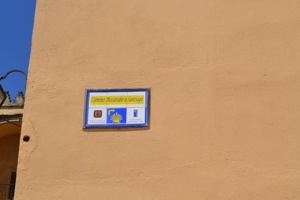
If your eyes are attuned, when you travel around France and Spain there are numerous signs indicating the Camino to Santiago. They are on walls, paths and buildings.  They are a silent indication that you are on one of the many paths leading to the Spanish city of Santiago. But I had never noticed them until I had actually gone on a portion of the pilgrimage. After that, I bumped into these signs regularly – I began to notice them. Until I had consciously connected these signs with the pilgrimage, these signs were invisible to me.

We need to have this sense of attunement too, with the representation of Christ in the Old Testament.

20130519-123638.jpg

20130519-123947.jpg

The Old Testament, without seeing Jesus is, quite bluntly, a pointless book. The promise of Christ is the backbone that holds the Old Testament together. But when we start to look for him, he is not just in the promises and prophecies, but can also be glimpsed in key people (e.g. Moses – prophet, priest and king), ceremonies and rituals (the sacrifices in Leviticus find their reality in Jesus) and events (the exodus from Egypt and the entrance into the promised land declare so much about Jesus and the reason for his incarnation). The coming of Jesus, and Satan’s desire to prevent his birth is a continuous undercurrent that surges through the highs and lows of God’s people in Old Testament history. What if David had been killed by Goliath or Joseph had been killed by his brothers? What would have happened to God’s promises?

O.k. God is sovereign, yet we see that sovereignty against a backdrop of Satan’s hatred and humanity’s sin. The golden thread that draws the Old Testament into a unified story of God’s salvation history is the promise of Christ – the Messiah.

One other reason for recognising this important truth: it prevents the Old Testament from becoming just another version of a morality tale alongside brothers Grimm and Hans Christian Andersen. The O.T goes far beyond “daring to be a Daniel” or “having the courage of David” it is about God and his plans to see the King and the Kingdom come.

A book that does a wonderful job relating Jesus and his kingdom to the Old Testament is Graeme Goldsworthy’s Gospel and Kingdom. It has been around for a while yet it is still a great introduction to open ones eyes to Jesus, his kingdom and the way it is revealed in the Old Testament.

Gospel and Kingdom is a book I have purchased on a number of occasions and yet I don’t have a copy on my shelves because I have given it away or “loaned” it on numerous occasions.
Categories: Bible, christian, Christianity, Reflections, Uncategorized | Tags: , , | 2 Comments

The Bible in Music

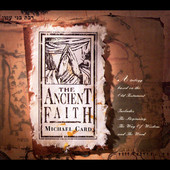
the ancient faithLast weekend I listened, once again, to Michael Card’s CD, The Ancient Faith, a musical tour through the Old Testament with an underlying theme of the coming of Christ. Even though it is nearly 20 years old it is still a marvelous work for a variety of reasons. Not the least, it honours Scripture.

We have on this album, magnificent Biblical themes which are combined with appropriate and beautifully composed music. To me, it epitomises what good Christian music can be. It would be difficult for a believer to listen to this and not a. worship and praise God,  b. gain greater insights into the Bible and c. be inspired by the love of God.

One way Michael Card does this, for me, is by expressing Scripture from the point of view of  various characters. The most striking is “The Song of Gomer” as she reflects on Hosea’s love. In fact, Gomer’s song becomes our song as we reflect and rejoice in the love that Christ has given us.

If you haven’t listened to this album for while, find it and find a quiet room and a quiet hour or so and let Michael Card minister the Word to you.

What Christian albums speak to you? I would love to hear your responses.

Categories: christian, Christianity, Reflections, Uncategorized | Tags: , , , , | 5 Comments

How Does the World See Us?

I haven’t finished  Brandon Hatmaker’s  book, Barefoot Church: Serving the Least in a Consumer Culture, but as soon as I do I will write a review. In the meantime here is another challenging quote that forces us to think about what it means to be church.

Guell Park, Barcelona

Guell Park, Barcelona

“Faith can be confusing enough without adding to the mix. Sorting through an unexpected death, processing a tragic natural disaster, or observing evil in the world are things that have shaken individuals’ faith for centuries. People outside the church don’t see hope in a building or a program. They don’t value them like we do because they don’t connect them with a nostalgic faith moment like we do. Culture has shifted. Things have changed. The church is on the fringe of our society, and we need to find new ways to undo the damage to our reputation. We have to change the way we are seen by the world. We have to become good news again.”

Hatmaker, Brandon (2011-11-01). Barefoot Church: Serving the Least in a Consumer Culture (Exponential Series).  Zondervan. Kindle Edition.

Categories: christian, Christianity, Church, Faith | Tags: , , , , | 7 Comments

True Community and Mission – a quote

“Every time I hear someone teach on the Acts 2 church I wonder what first-century faith community really looked like. I can’t help but think there was something special about it that we’ve missed. It’s hard to imagine a day where people would pool what they had to make sure no one was without. While things certainly look different in our time, it just seems as if we’ve lost a little something. Something tells me community didn’t just fill a need in their lives to connect, it gave them purpose.

A Chess Community in Geneva

A Chess Community in Geneva

In essence, missional community may serve as one of the best ways we can embody the incarnation of Christ — putting on flesh and being Jesus to our world. When we live this out, the focus of the church shifts to hearing and responding to the Spirit. When this is translated collectively, congregations as a whole tend to take more seriously the how and when to engage communities where they live. “

Brandon Hatmaker, Barefoot Church: Serving the Least in a Consumer Culture (Exponential Series).  Zondervan. Kindle Edition.

Categories: christian, Christianity, Church, community, Devotional, Faith, Uncategorized | Tags: , , , | Leave a comment

The Curse of Dualism

What is the biggest threat facing Christianity today? Islam? Biblical and theological liberalism? Possibly, but I would suggest that an even greater threat to the effectiveness of Christianity is dualism.

Dualism is that technique we use to artificially divide life into the secular and sacred – the religious and the every day. This pernicious division carries with it the emasculation of the Christian faith, or if you like, the barrenness.

spain warning

Risk of falling

When we divide Christianity into these two portions there is an emphasis on personal salvation but this is done to the detriment of the wider gospel message. Now an individual’s salvation is absolutely critical and should be pursued but it is only part of the gospel story. The other crucial part is the redeeming of the kingdom. John the Baptist heralded Christ by declaring the Kingdom of heaven was at hand. Christ’s mission was for more than individual souls.

Dualism disempowers Christianity as it removes the larger portion of our lives from serving God. Our workplace, our sport and leisure become, at best, places for personal evangelism but we fail to see that the very activity carried on is claimed by God too.

The challenge for the Christian business man is to run his business in a way that honours God. The teacher in school is there on Christ the King’s behalf – whatever the school. The tradesman is there to serve his King too. And like so many areas of Christian existence we will not be immune from suffering – suffering in business or work. Suffering has long been a characteristic of those who willingly serve the King in all their lives. In contrast, dividing our lives into two categories is, too often,  a means of alleviating that suffering. By placing much of our lives in the “secular realm” we are saved from having to confront the values and beliefs of this world.

Dualism promotes the lie that part of life is neutral but if we look carefully at the worldviews behind much of the business world or the education world we see many gods lurking in the corners; humanist gods which promote man, money, self sufficiency and the like.

The gospel declares that we have a comprehensive King, or in the words of the Dutch theologian and statesman, Abraham Kuyper,  ” … there is not a square inch in the whole domain of our human existence over which Christ, who is Sovereign over all, does not cry: ‘Mine!‘”

Categories: christian, Christianity, World Views | Tags: , , , | 2 Comments

The Power of Passion and a Christian World-view

Recently I encountered someone with a infectious passion for people to understand a Christian world-view. 

Mike Goheen is currently the professor of missiology at Calvin Theological Seminary in Grand Rapids. His passion is to promote a holistic Christian world-view – a perspective in which the children of God seek to serve God in every corner of life and claim it for God.

The following quote comes from his paper:

A Missionary Encounter with Western Culture (which can can found at: http://www.allofliferedeemed.co.uk/goheen.htm)

“A missionary encounter is about a clash of ultimate and comprehensive stories—
the Biblical story and the cultural story. It requires a church that believes the gospel and
is committed to shaping its entire life by the Biblical story. When this happens the
foundational religious beliefs shared by the cultural community are challenged. As the
church lives fully in the biblical story, it encounters the reigning idolatrous assumptions
that shape its culture. The church offers the gospel as a credible alternative way of life to
its contemporaries. There is a call for a radical conversion, an invitation to turn from the idolatrous beliefs of its cultural story and to understand and live in the world in the light of the gospel.”

This quote highlights both Goheen’s passion but also his challenge to the church. For the C21st church to make a difference once again it needs to reclaim its calling. Christ claimed Kingship over His people and His Kingdom. The church is called to herald that by showing that redemption goes far beyond individual souls but extends to a radically new way of living.

Categories: christian, Christianity, Church, Faith, Uncategorized, World Views | Tags: , , , , | 3 Comments

Equipping The Troops – a Christian Apologetic Approach

If the Laissez faire is foolish and the Fortress method only temporary, how do we prepare our children for a life of Christian faith that can withstand the arguments and abuse that will certainly come.

Let me begin by saying, if one believes that Scripture is the Word of God and that the Holy Spirit is real and that God’s promises are true then there is no reason to be fearful. Too often however, I have seen parenting that is driven by fear – fear of the world and its myriad dangers.

From an early age, starting with Children’s Bibles, teach the truth as the Bible presents it.skate board ramp (The Bible in Pictures for Little Eyes by Kenneth Taylor is a classic in this area). Do this daily, whether at the meal table or bedtime. And pray regularly. As the children grow, so must the sophistication of the stories and the discussion. Bible knowledge is the bedrock from which we defend our faith. Memorising stories and verses become essential tools for the future.

Knowing the overarching story of Scripture with the centrality of the promised Christ in the Old Testament and his arrival in the New will protect them from seeing Scripture as a mere set of moral rules. As our children grow older they discover that the Bible is presenting an image of a Kingdom that has come in Christ and will be completely revealed with his return. They need a picture of eternity and the relationship of our earthly pilgrimage to it.

P1030744I could say so much more about this but I think you get the drift. Our children need to be seeped in knowledge AND in understanding. They need to understand the uniqueness of the faith. Critically, they also need to know that God has created them for a purpose in His kingdom, both now and forever.

So where do other faiths come in? Don’t major on minors. What are the predominant counter Christian worldviews today? What do people believe? What motivates the lives of people? What dominant values does the media portray? How is Christianity distinctive from these views?

To understand these motivations is to know where Christianity differs. What are the logical outcomes of these “faiths”? E.g. If we are simply the product of evolution how does that affect our value as humans? How does this contrast with being a child of God? And what about faiths that demand we earn our salvation? What does that reveal about their view of sin and how does that match up with the Christian concept of Grace?

100_9647Finally, as parents we need to model a genuine Christian life where our words and actions, choices and views are shaped by our faith. Our children need to see us talking with God and studying His word. Our children need to see that our lives are not lived out of custom and superstition but out of a living relationship.

Is this a guarantee. No. Ultimately our children will need to make choices of their own. But if you hearken back to Prov 22:6,(see: A Scary Verse)  the principle is that if we set the foundations of faith the likelihood of straying will be greatly reduced.

Categories: Child Theology, christian, christian education, Christianity, Devotional, Faith, Family, Reflections, Uncategorized | Tags: , , , , , | 4 Comments

Keep The Drawbridge Closed

A few days ago I started a discussion on how we direct our children with regard to faith in this chaotic post-modern environment. The story continues …

How do we guide our children in the fraught area of faith? Some parents try to surround their children with their values and beliefs and keep all other views at bay. We could call this a fortress approach. This method of  parenting, especially in the area of faith, is very understandable. It can be a very nasty, seductive and confusing world out there. So these parents tend to limit the contact their children have with the outside world. TV and the internet is controlled, friends are screened and if at all possible they are home schooled. (I am not suggesting this the motive for all home schooling parents).

20120502-204846.jpg

Some parents try the fortress approach.

Is this approach sustainable? I would suggest not. It might be appropriate at young ages but there is also a need for our children to argue for their faith and to justify their beliefs. (I’ll say more about this in the future). The time will come when they are confronted by the world and they will need the foundation and the tools to withstand the onslaught, and advance their faith and worldview. In other words, it is naive to believe that only protecting them is sufficient to plant and grow a healthy and lasting faith.

I have seen too many young people lose their faith when they have gone to university or work for the first time and they haven’t had the where-with-all to counter and defend themselves against the worldviews, thinking and values that others hold. Why? Simply, because they hadn’t been prepared.

So how do we prepare them? More tomorrow.

Categories: Child Theology, christian, christian education, Devotional, Faith, Family, Reflections, Uncategorized | Tags: , , , , | 3 Comments

Let them Choose

Yesterday I wrote about the confusing “world of faiths” that has developed in Western countries over the last few generations. It is this faith supermarket that our children enter. I didn’t even mention celebrities and Scientology, or the crazy “God will make you rich” fringe of the Christian church – attempts to justify consumption and not feel bad about it. Also I didn’t mention the impact of the marginalisation of the Bible in many churches and the resulting liberalism and watering down of the gospel.

So how do we guide our children? One stream of parents I come across say that we shouldn’t guide our children. “Let them make up their own minds in their own good time. If Christianity is the best faith or the most suitable faith for them they will find it in time. We have an open family where all things are discussed and in time they will chose for themselves. After all, what we believe may not be the best thing for them.” A very open approach.

There are two things I want to say about this:

1. It is not an approach we would use in other areas of life. “Children will discover for themselves the need to brush their teeth, and wash their hands after having been to the toilet. If they wish to follow our example they can, if they don’t, that is their own choice.” We would call that neglect. The result would be rotten teeth and hepatitis Anyone who said this would be considered dim. “When the child decides that school is for them, then they will go to school or be educated.” We can imagine a host of other situations like this. Why then do we do this with faith? I believe the answer is simple. We have consigned it to the less important areas of life. Faith is personal, individual and not part of the mainstream of life. It is not worth the parental investment required. We will encourage sport and music, but not faith.

2. My second point is that this approach is the antithesis of what Scripture commands.

Breakfast Under the Big Birch Tree - Carl Larsson

Breakfast Under the Big Birch Tree – Carl Larsson

Teach your children at every opportunity (Deut 6), train your child (Prov.22:6), do not hinder them from entering the Kingdom (Matt 18). God’s approach, the Bible’s approach is that children are precious and so need to be nurtured in eternal truths – the character of God, the nature of salvation and their place in His Kingdom, from an early age. This takes intention and time, effort and passion, faith and family. Scripture suggests that nurturing children is one of the most important, if not the most important, calling a parent has. There is no place for a laissez faire attitude.

We guard them from live power points, suspicious people and moving cars, so why don’t we protect their eternal souls from the clutches of the evil one?

Next I want to look at the opposite approach: Blinkering the child from other faiths.

Categories: Child Theology, christian, christian education, Christianity, Devotional, Faith, Family, Reflections, Uncategorized | Tags: , , , , , | 6 Comments

Which Direction?

photo

When I was young, faith choices were fairly limited. The main choice was between Catholic and Protestant and among the Protestants it was a sub choice from a variety of groups – Methodist, Anglican, Presbyterian and so on. Then a few cults arrived: Jehovah’s Witnesses and Mormons. In the 1960s Charismatic churches started making their presence felt. Up to this point the general focus of faith was still around the Christian tradition even if a few seemed flaky.

Anyway, the choices were largely determined by family tradition. For me, Catholics and Anglicans were out as our family had always been Reformed. The big question in a small country town was where would the girl come from whom I was going to marry? I know it gave my mother sleepless nights! I could come home with a Baptist or even worse, a Catholic!

In the late 60s and into the 70s other, non Christian, groups started showing their faces. Hare Krishnas were the most talked about as they drummed their orange lives into our consciousness. Buddhism, the Baha’i faith, Islam were just some of the other new comers. The occult was always there but it was only whispered about.

All in all it meant that in a few short decades our religious culture had become far more pluralistic. Alongside this came the Postmodern idea that truth is relative and personal. From a relatively homogeneous religious culture we arrived at a smorgasbord. Every person’s taste is now catered for.

How in this culture do Christian parents train their children? If one believes in the truth of Scripture and the reality of Christ and His Kingdom (very absolute beliefs in a Postmodern era), how do we encourage our children to follow, what we believe is truth?

In coming days I hope to explore some approaches that parents take, and consider their effectiveness.

Categories: christian, Christianity, Church, Reflections, Uncategorized | Tags: , , , | 1 Comment

Blog at WordPress.com.