Faith
God’s Lists – A Poem
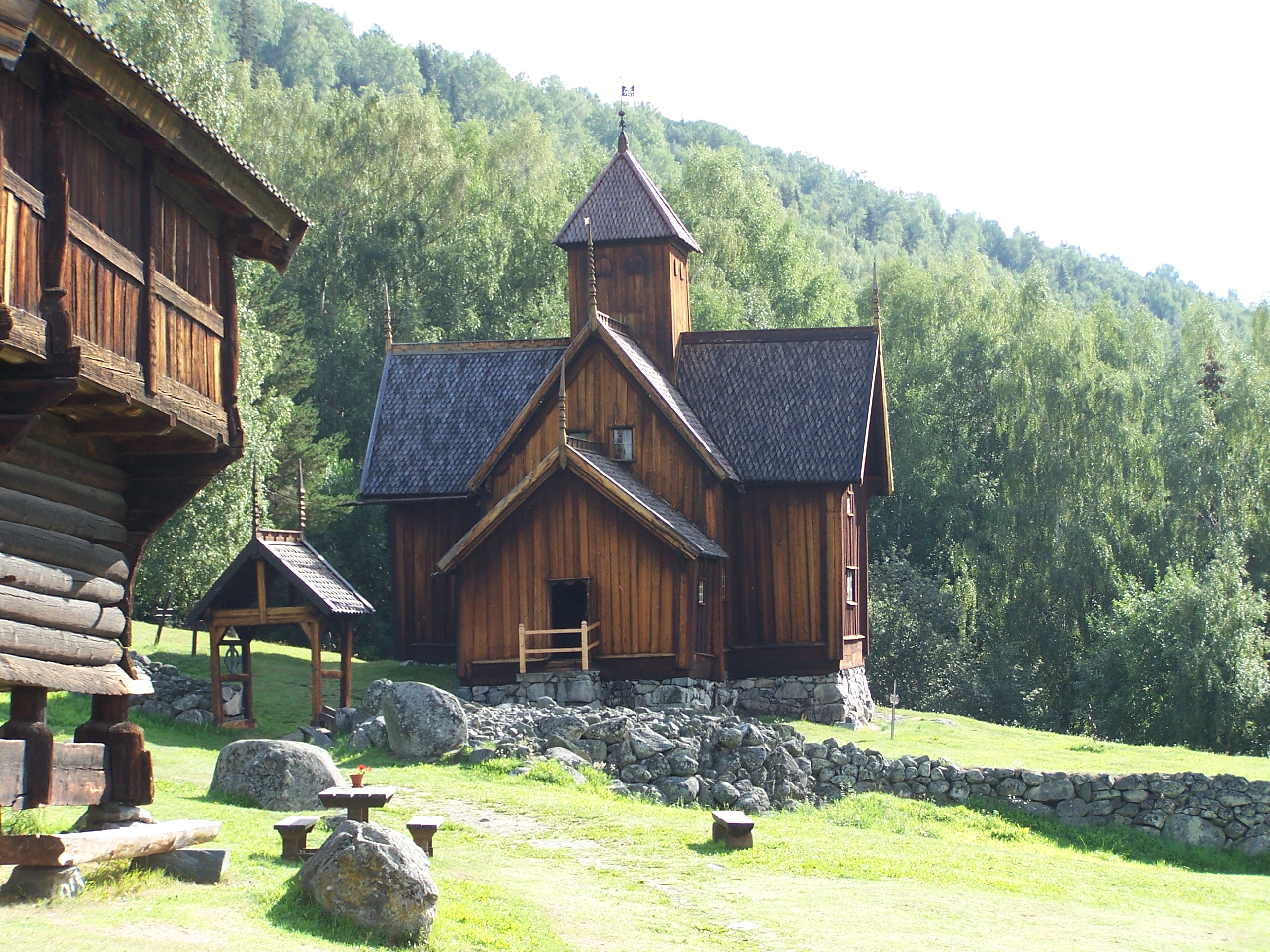
Stave Churches – Wooden Churches That Have Survived For Centuries.
But do not forget this one thing, dear friends: With the Lord a day is like a thousand years, and a thousand years are like a day. 2Pe 3:8
The Uvdal Stavkirke (Stave Church) in Numedal district in central southern Norway. It dates from the end of the 1100s and was remodelled into a cruciform shape in 1720. It is one of about 30 that remain in Norway today.
Below is the more ornate Gol Stavkirke now found in the Norsk Folkemuseum in Oslo on the island of Bygdoy. This was built in about 1200 and moved to the present site in 1885.
Dwarfs on Giants’ Shoulders
John of Salisbury quoted Bernard of Chartres (circa 1100 AD) who said, “We are like dwarfs on the
shoulders of giants, so that we can see more than they, and things at a greater distance, not by virtue of any sharpness of sight on our part, or any physical distinction, but because we are carried high and raised up by their giant size.”
What a profound thought! As C21st people there is an arrogance in our spirit that we know it all or can know it all. In science, technology, medicine and a whole host of other areas we puff out our chest. We even decry the feebleness and simplicity of earlier generations. We fail to understand what Bernard did. Our understanding, education or knowledge only came about because of the mighty works of others. In fact, we are the dwarfs and they are the giants.
It hearkens back to an earlier time that is found in Genesis 11. Then, as now, there was a supreme arrogance in humankind. They thought they could do anything, including, building a tower to the heavens so that “we may make a name for ourselves.” Pride wasn’t in short supply.
God thwarts their plan by confusing their language.
My question is this? How do we maintain a proper and healthy perspective today? How do we actively place ourselves in a continuum of history rather than seeing ourselves as some sort of apex of it?
The Bible has some handy reminders. First of all we are created beings. We are beholden to a supreme God for our existence. Our gifts and talents come from Him. Secondly, we have rebelled and sinned. Our understanding is not as perfect and sharp as it should be or could be. We are constantly in need of grace. We see that in our failures; in the evil that many of our clever creations engender. We made computers but there are those engineering viruses. We made the internet but pornographers run rampant with it. We made penicillin but super bugs have developed.
Modern humanity should learn from the giants on whose shoulder we stand. We only need to think of examples such as Galileo and Copernicus for whom their research was an extension of their faith and acknowledgement of God. Much of maths, philosophy, science and medicine was driven because of faith, not despite it.
We think we are so big but we have jettisoned a Biblical concept of family, life and morality. Socially today, we are disfigured and ugly. Just look at the murders that occur within broken families, riots, corrupt politicians and myriad other example that slap us in the face every day.
The people of Babel were humbled by God. They became confused and spread throughout the earth. We too need to be humbled. We are created creatures. We were created to worship God – not ourselves. Self worship has got us into the moral morass we see today. For the Christian, humility starts at the cross. The journey commences before a Saviour who came to give us life to its greatest extent – eternal life in an eternal kingdom. With this fresh set of eyes we reflect on science, medicine, family, society and the multitude of other areas that make up what we call “life” and ask: How does my Creator want me to use, utilise and serve Him and my neighbour with the gifts he has give me?
The giants of the past weren’t perfect either but what set the true giants apart from the rest was that they knew and depended on their God. If there was ever a moment in history where that realignment with God was needed, especially for us in the West, it is now.
Consequences – the Sapling on the Grave
In my devotions at present I am being reminded of sin; the original sin, my sin, even your sin and the consequences.
The photo (left) reminded me of consequences. I imagine that many, many years ago an enterprising person went around this cemetery planting cypress pines with the aim of beautifying the place. Little did he or she realise that in 120 years, the cute little sapling would dominate the grave.
Little did Adam and Eve realise … little do we realise the lie, the cheat, the disobedience, the selfishness, the arrogance, in fact, any of the sins we tend to call “little” or “white”, have an impact on ourselves, others and our relationship with God. We just let them shoot, grow and develop. Sometimes the consequences are not there for us to see immediately. Sometimes, like the cypress tree, it will only be evident in the distant future. That is when the full impact is revealed.
For the Christian, forgiveness is always at hand. We are usually not slow at appropriating it. I must add, I’m all for it. However, we often forget about confession, reconciliation and restoration. There are consequences to deal with. The hurt, the anger and the disappointment, often weighing on people who are close to us, still needs healing. Bridges need to be built. We still need to ask, “Will you please forgive me.” Sometimes the answer might be,”No. I’m not ready yet.” That is a consequence we need to live with.
Yes, God forgives, and He looks at His children through Christ coloured glasses. He sees us as guiltless and innocent through his son but that mustn’t stop us from taking steps to stop the cypress trees from growing in places where they can do great damage.
A Text of Hope for Sunday ( with Photo)
For the Lamb at the center of the throne will be their shepherd;he will lead them to springs of living water.And God will wipe away every tear from their eyes.” Rev 7:17
“Forgive Us Our Trespasses No.2” a poem
Piled upon the others …
Your little sin
Piled upon yours …
Their little sin
Upon theirs:
Each, seemingly,
So insignificant,
So minuscule,
But daily,
Weekly,
Yearly,
They grow and grow.
The heap rises to the depths.
It blots out the light of God.
Darkness descends,
Until the cross …
Until the Grace …
Until the Sacrifice
… breaks through.
“Forgive Us Our Trespasses No 1” a poem
Christian Indifference of the Good Kind
“Do not store up for yourselves treasures on earth, where moths and vermin destroy, and where thieves break in and steal. But store up for yourselves treasures in heaven, where moths and vermin do not destroy, and where thieves do not break in and steal. For where your treasure is, there your heart will be also. Matt 6:19-20
Normally when we think of being indifferent we conjure up a “couldn’t care less” attitude.
St Ignatius, the Counter Reformation Reformer, uses the term in a totally different way. His definition of the word suggests, rather, a sense of detachment. He doesn’t say that the things of this world are unimportant but he suggests that we need to develop an attitude where God’s priorities take precedence over all. So God’s will becomes the key motivation for our lives – not money, nor pleasure – nor even the length of our life.
What St. Ignatius is acknowledging, is that the command of Jesus in the sermon on the mount, is a radical reorientation of our lives. It confronts the attitude of the “tacked on faith” that our lives so often portray. Too often, faith is that insurance policy, that little extra that gives our life a deeper dimension, or faith is that element that stops our lives being as shallow as that of so many people around us. “Indifference”, however, declares that “tacked on faith” is not what God wants for His children. Our Creator wants lives anchored in Him, not in the transient trappings of this world – no matter how alluring and tempting they may be.
Does this mean that Jesus is calling for an ascetic other worldliness? Not at all. Jesus enjoyed a party just as much as the rest of us. (See Tim Chester’s “A Meal with Jesus”). Our problem is that we often confuse the things of this world with ultimate meaning. Our wealth, fame, house, possessions, or my case, books, is what, so often, gives our life meaning, rather than our relationship with God and our place in His Kingdom. That is why Jesus gives us the warning about our heart and our treasures. That is why he says it is easier for a camel to go through the eye of a needle than a rich man to enter the kingdom of God. We so easily confuse the temporary niceties for eternal realities.
Secretly we think that Jesus’ command and St. Ignatius’ injunction cause us to be hard done by. Somehow we are missing out. But let us reflect more deeply. Does the God who sent His son to die on the cross for us, whose son is right now preparing a place for us, who dwells within us with his Holy Spirit, who pictures a city the streets of which are paved with gold – is this a God who wants to short change us and deprive us? Or is it that He has greater things in mind for His people and it is just our feeble baby like like imagination that clamours for the dross rather than wait expectantly for the gold.
A Poem on Sunday Gen 3:4-5
Slyly it lures and entices.
Whispers and cajoles.
“You will know the truth.”
“You will not die.”
“You will be like God!”
“Bite, chew, enjoy!”
“Savour the taste.”
…
The world still tugs, wrenches and lures. Double minded heart. Dissembling mind.…
The drag and pull relentless, But life is at hand. The Calvary comes, Spirit descends. Still at war … … but my side is winning.