History

Unusual Grace – A Dead Man’s Boots

My dad and fellow workers in WW2

My dad and fellow workers in WW2. Dad is top left.

I have reflected previously on some of my father’s experiences as a conscripted worker in Germany during WW2. (See here) Dutch workers had more freedom than others as the German authorities simply said, “If you abscond we will pick up your father to take your place.”

My father worked north of Berlin in a place called Hennigsdorf on the Havel river. In 1945 he and his fellow workers were liberated by the advancing Soviet armies. The workers found themselves in the midst of extremely harrowing battles as the German army made its last ditch stand.

One of the few detailed stories my dad told me about this part of his life centred on this liberation. By 1945 his clothes, and in particular shoes, were in a state of extreme deterioration. One of the liberating soldiers motioned (language being a useless option!) to my father that he should find a German soldier’s corpse with the right boot size and “liberate” them for his own use. I gather there were quite a few and they all wore high quality boots. But even after years of war my dad was still squeamish about such matters. The Russian soldier, seeing my dad’s reluctance, took off his own boots gave them to my dad and then went in search for an appropriately sized and equipped corpse.

Yes, it is a strange story, yet I have always seen it as an act of unusual, but real, grace. This was one of only a very few experiences that my father ever shared with me about that time of his life. The grace shown in the midst of horror was a memory he could share.

Categories: Family, History, my dad, Reflections, Uncategorized | Tags: , , , , , , | 7 Comments

Geddington, Grief and the Eleanor Cross

The Eleanor Cross, Geddington on a gloomy day

The Eleanor Cross, Geddington on a gloomy day

In the delightful little village of Geddington in Northamptonshire there is a fine example of an Eleanor Cross. Edward 1st was so grief stricken by the death of his wife, Eleanor of Castile in 1290, that he erected fine stone crosses from Lincoln to London to mark where the body had rested on its journey. They  are an amazing record of devotion. Today three of the 12 crosses survive and the Geddington cross is considered to be the best of these.

Edward had the power and wealth to manifest his grief in this physical manner. For the commoner on the other hand the memories and grief are usually less tangible. We may erect a headstone or another small plaque but our expression is limited.

What is the best memorial to erect? I believe the best memorial is the legacy that we leave to others and to a large degree that is in our own hands. And of all the legacies to leave, rather than wealth, fame, land and possessions, we cannot do better than pass on  the power of faith in Jesus Christ. I know that each person must make their own decision with regard to faith. However our lives can declare its reality and appeal. We can make it attractive. I have written on previous occasions of my dad whose faith struggles manifested, for me as a child, the reality of the relationship one can have with God. To this day the memory and image of my dad living his life before God is extremely powerful for me, even though he has been dead for nearly 19 years.

So when people grieve at our passing what will they remember, cold stone crosses or a life well lived that pointed beyond itself to greater and eternal realities?

Categories: christian, Christianity, Devotional, History, Reflections | Tags: , , , | Leave a comment

Memories of Church No.4 – Conflict and Conclusions

The last part – for the time being.

As I grew up, particularly in my teen years, I began to realise that Christians weren’t perfect and conflict was an inevitable part of church life. It became obvious that the words and actions of adults didn’t always match, and that motives were not always pure. One became aware of the cliques and groups – people with different attitudes, agendas or values.

In the early 1960s our church had a very conservative, very Dutch minister. In order to attend communion, which was held every three months, you needed to attend church twice a Sunday. My dad, also Dutch and stubborn, had refused to travel to Geelong twice a Sunday after his little church in Ocean Grove had been closed. “If they close my church, I am only going once!” So the scene was set for conflict. Every three months before communion my family would receive “huisbezoek” – a home visit by the elders and minister. I was allowed to attend the formalities: coffee, Bible reading and prayer. Then I was sent to my room. However I could still hear the “conversation” between my father and the minister clearly through the walls. Dad didn’t give in and neither did Dominee K.

As I stated earlier, Dominee K returned to Holland and we had a new minister who simply asked my dad, “Do you love the Lord?” To which my father replied, “Of course!” and so he was allowed to return to the communion table. And my father started going to church, twice on a Sunday!

The arrival of the Pentecostal movement had far more profound effects. The church became divided, some families split and there were married couples who lived in tension for decades to come, with the death of a partner greeted with relief rather than sorrow as it ended an unhealed past. The power of deeply held beliefs to unify is profound, but its power to divide is monumentally tragic.

Looking back, I can now see the attraction of the charismatic outbreak. There was a joy in God and worship, a recognition of the power of the Spirit and an overall enthusiasm for faith and outreach. At the time there were also excesses and extremism. But that was true of both sides. Both groups saw right on their side. I don’t want to enter into the theology of this division at this point but rather consider the attitudes that people held that didn’t reflect Christ. As a young person at the time I was bewildered. How could beliefs, people and values shift so quickly? On the other hand I was in a privileged position as the two key leaders on both sides of the debate had a profound impact on my life. They were both men who loved the Lord deeply. Their followers were not always that wise. Blacks were made blacker and whites whiter. I have come to reflect that we often justify our attitudes by hardening our positions. There are times when we may need to separate or part ways due to deep disagreements but this can still be done with grace and Christ-likeness. This is particularly true when the heart of the gospel is not compromised.

Over 45 years later, I now work in a school where fellow Christians from a wide variety of evangelical backgrounds respect each other’s differences and work together for the common good of Christ’s Kingdom and Christian education. These changes didn’t happen overnight. It took many, many years. I rejoice often that I have lived to see a day when the values of two men I respected dearly have come to coexist and empower the place where I work. More importantly, I believe because of this healthy co-operation, we can see Christ and His kingdom more clearly.

Hah! But that callow youth back in the late 1960s did not have clue of what God had in mind.

Categories: christian, Christianity, Church, Faith, Family, History, my dad | Tags: , , , , , | 2 Comments

Memories of Church No.3 – Methodists and Mayhem

This is part 3 of my early recollections of church.

In the mid 1960’s the church to which I now belonged rented a Methodist church that only had a few members left. After a couple of years we purchased the building and added to our congregation a small number of aged Methodists who refused to leave the building they had been part of for their whole lives. One of the “fixtures” was Mr. Robinson who, in his earlier life, had shown 16mm films in the local schools. He was also an expert on first aid and was always willing to give our youth group demonstrations. As we had Dutch parents and grandparents, Mr Robinson was our connection with the new culture in which we lived.

This was also the time that I was starting to think about the future. God put in a number of factors: there was a teacher who urged me to apply for University, which, as I have explained in earlier blogs was light-years away from my parents’ experience, and there was Rev. Deenick who urged me to explore the concept of Christian education. Rev. D. didn’t hit me with all of that at once but over time we had discussions, and he urged me to read certain books and attend particular conferences and so when the time came, in the then, distant future, I was helplessly drawn into a group of people whose aim it was to set up a Christian school, and ended up being a Christian school teacher.

 At the time it seemed all so “accidental” but looking back Rev. Deenick and God were in close collaboration.

But I am racing ahead of myself. When I look back, being a Christian was a serous matter. It was not about having fun – and I am ok with that. Awe, obedience and doing things the right way were explicitly and implicitly drummed into us.

Then in the second half of the 1960s an upheaval occurred. One of the professors from the theological college (the “house” I mentioned previously) started teaching the doctrine of a second blessing with the baptism of the Holy Spirit*. To be blunt, theological war broke out and my parents were in the middle of it. As a teenager I pretended nothing was happening, after all, even though church was important there were also music, girls, cars and a bit of study to consider.

Little did I know then that this was part of the Pentecostal/Charismatic tsunami that was to hit Australian churches, and whether I liked it or not, I would have to reflect deeply on the Bible and what I believed.

* Both these men, Rev Deenick and Professor Schep, in opposing theological camps, are mentioned under my blog heading: Melchisedeks.

Categories: christian, Christianity, Church, Faith, Family, History, my dad, Reflections, Uncategorized | Tags: , , , , , , | 2 Comments

Islam and Christianity

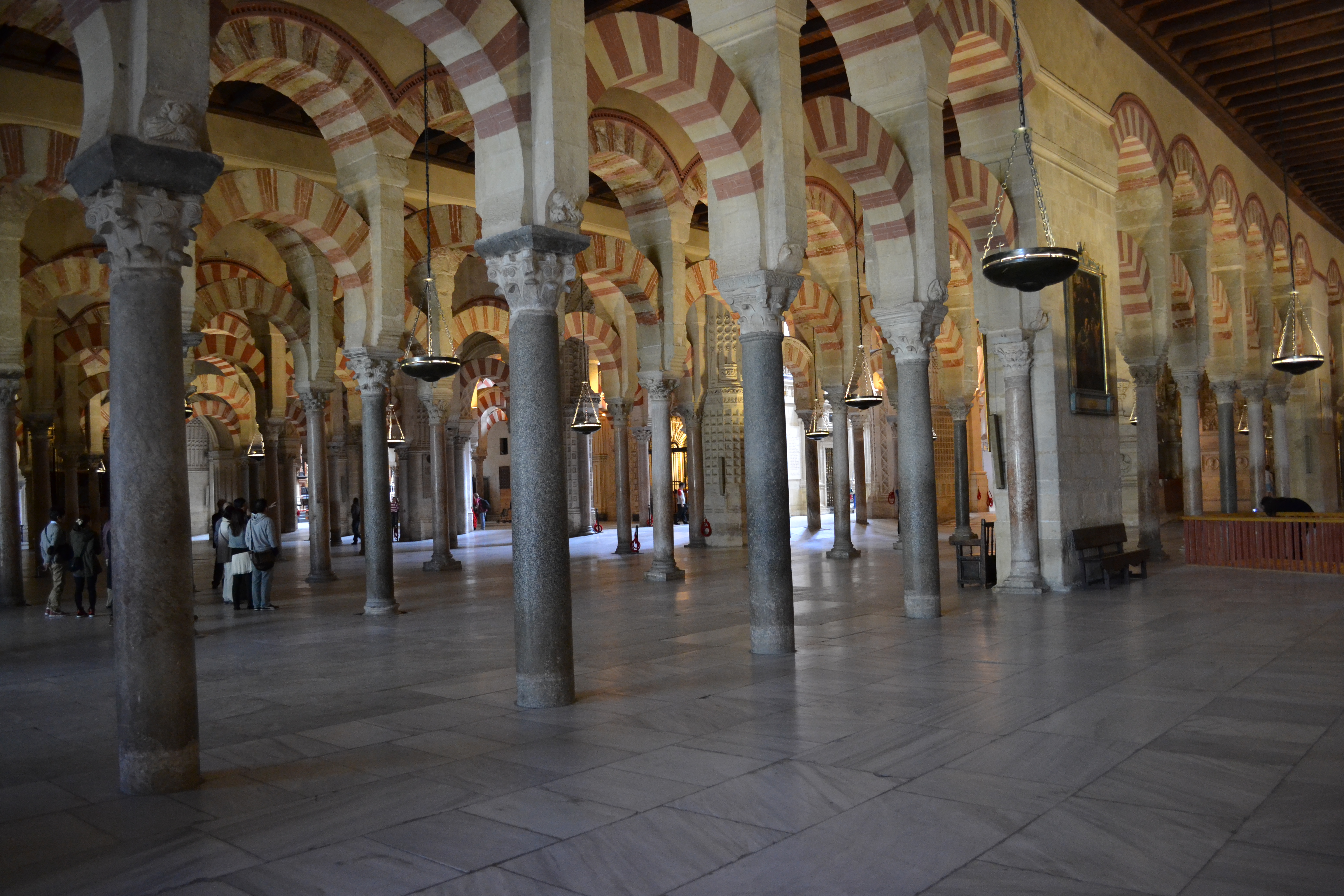
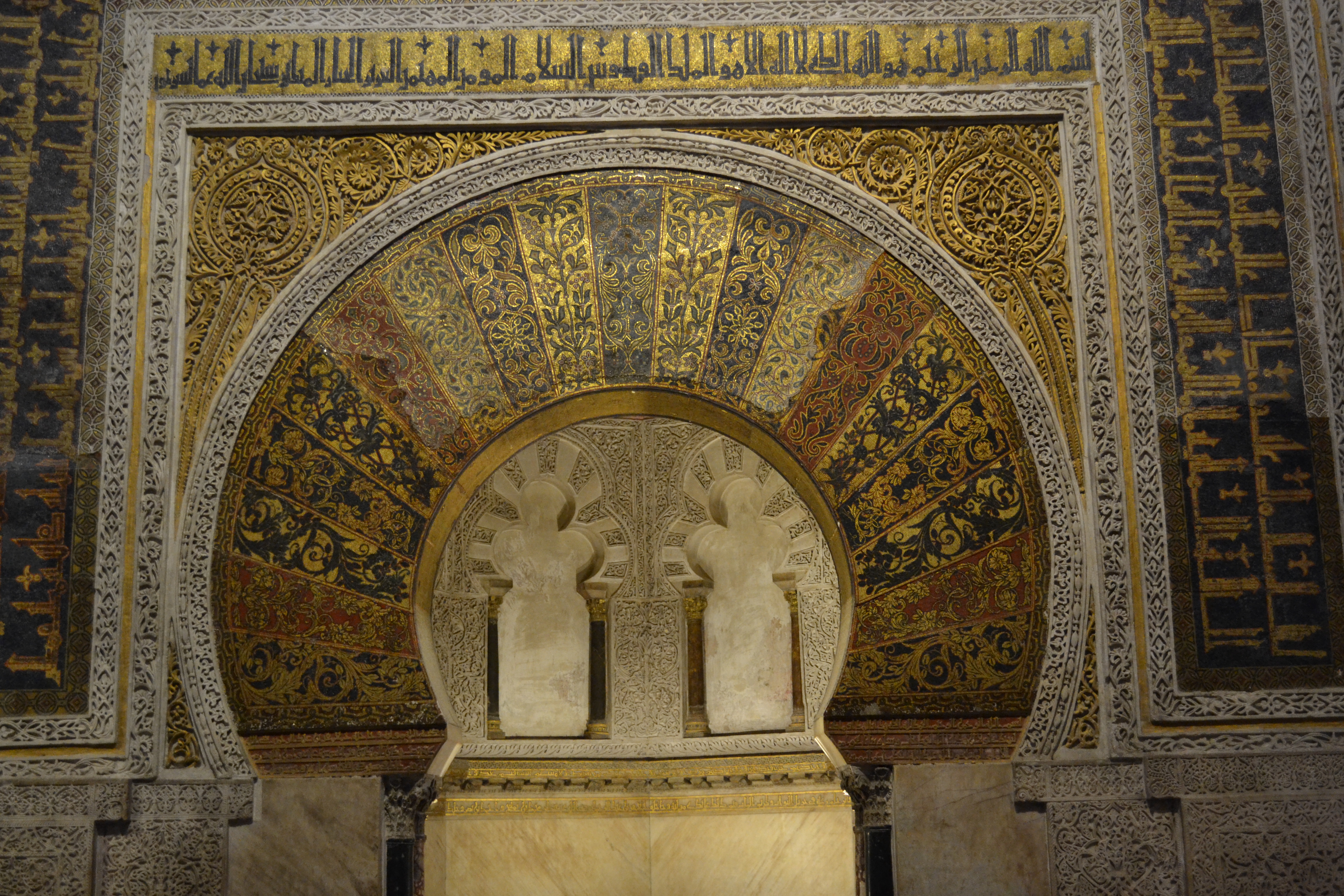
I was going through some of my photos looking for an illustration of the historical tension between Christianity and Islam. Then I came across the Mezquita in Cordoba. It epitomises this struggle – a Cathedral built into the centre of a mosque. It is an historical picture of a current reality.

Picture 569

Picture 593Picture 590


Categories: christian, Christianity, History, Photo | Tags: , , , , | Leave a comment

Queenscliff and the Field of Memories

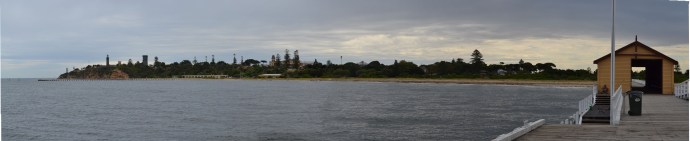
QueenscliffQueenscliff - A Panorama from the jetty

Queenscliff – A Panorama from the jetty. From the left: The fort with the black lighthouse, the water tower, the Ozone guest house and the jetty

On a whim, we drove to Queenscliff yesterday. As we entered the town the first sight was the empty field where the high school once stood. Only a few parking spaces and cricket practice nets remain. But even the empty space evoked a mountain of memories of 5 years spent at the school. Every day we took a shaky old Ford bus from Ocean Grove to Queenscliff.

Once a week a steam train would chug past with coal and shell grit. The school flag pole was multi-masted and could display a veritable united nations of flags – although it never did. And everyday we lined up on the asphalt rain, hail or shine to listen to Mr. Irwin’s instructions for the day.

The names of teachers drifted through my mind: Mr and Mrs Mason, Mr Anderson, Mr Griffin, Mrs le Maistre and, of course, the redoubtable Mr. van Every. There were the young things just out of Teachers’ College that stirred a boy’s heart … and many more. There was the small sailing boat a friend and I built in the shelter shed, and marching on the oval in preparation for sports days – adjudicated by a Colonel from the army fort near by.

The student body was an odd mixture. Sons and daughters of farmers, fisherman, migrants and officers from the Staff College at the fort. On the whole we got on well but my quick temper did get me into trouble on occasions. It was a simple time. You could leave school in Form 2 and work for the Post Office – Robbo did. By Form 4 a bank job was a possibility, Form 5 primary teaching and to do Form 6 we had to change schools. Finding employment wasn’t a problem. The unemployment rate was less than 2%.

There was the day a thistle funnel rocketed into the ceiling powered by hydrogen gas – unexpected but spectacular. We constructed a ghost house under the staff room and  had unaccompanied walks across town to the tennis courts or the fort on Wednesdays for sport. That wouldn’t be allowed today in our litigious age. Once we went to see the Longest Day at the Vue Grande and on another occasion we visited the boat builders before the launch of a small boat.

I remember sitting in the sun telling my friends from form three that they were not real but figments of my imagination because I had decided that I was God. They were the years when girls took on a new meaning and confusion reigned in heart and mind. Oh yes, we learned things too. I learned that simple arithmetic was enough for me but you could never get enough of history and literature.

A small few acres crowded with memories now lies quiet and forlorn waiting for “Mac mansions” to be built over it. But these memories and many, many more will forever haunt this corner of Queenscliff.

Categories: History, Queenscliff, Reflections | Tags: , | 4 Comments

Blindness of the Heart

I have written previously about my father’s experience as an “conscripted” worker forced to work in Germany during World War 2. In the photo below, my dad (on the left) stands with two friends at a tram stop in Berlin in 1943.

dad germany

At a tramstop: Berlin c1943

From the photo it is difficult to believe there is a horrendous war going on at the time it was taken. Almost four years of war have already been gone through, yet daily life, it seems, is going on as normal. Within the next two years allied troops would storm Berlin and it would become a divided city until the fall of the Berlin Wall in November 1989. The people of Germany may have had an inkling, but certainly no knowledge of, what was going to happen in the future. As best they could, they were living life as normally as possible.

We may have a variety of responses to this. They must have been blind, or foolish or wilfully ignorant. Or, maybe, they were caught in a trap of their leader’s making and they felt powerless to do anything about it.

So often we live like that too. Men are good at denying symptoms of a disease until it is too late. Parents see behaviour in their children that should alert them to dangers but continue pretending that everything is ok. Or most seriously, we know there is a spiritual dimension to our lives but we fail to respond to it.

The other day I reviewed a book by Francis Spufford “Unapologetic”. What I liked about it was the struggle that he revealed as he dealt with those spiritual questions. He didn’t push that “spiritual nagging” aside but opened his life to its challenging journey.

My dad was a man like that. He was the black sheep of his family and the church. He asked questions that no one could, or wanted to, answer. However, as a child growing up it was plain to me that my dad had an on going conversation/argument/relationship with God. There was never a doubt about God’s existence. My dad just struggled to understand God’s intentions, or at other times submit to His call on my dad’s life.

One of the spiritual legacies my father left to me was the image of a real God who comes into our lives. He also showed me that this was a dynamic, on going and relationship. So, unlike the people in the photo above, there was never any doubt about how “life’s story” would end and who was in control.

Categories: christian, Christianity, Devotional, Faith, Family, History, Uncategorized | Tags: , , , , , | 5 Comments

Gwennap Pit

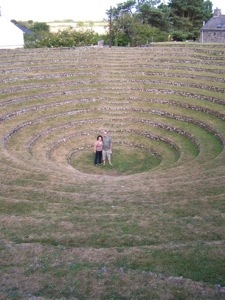
Two friends in Gwennap Pit in 2006

Just imagine crowds numbering into thousands in this pit with John Wesley at the centre declaring the gospel; Tin miners and their families gathering to taste the Word of God!

Gwennap Pit, in Cornwall, was created by mine subsidence in the mid C18th. It was then used as an amphitheatre by people such as John Wesley during the revival at that time – sometimes called the Methodist revival.

The pit is a visual reminder of how Dissenters had to use any suitable place to preach, such as a field, barn or mine subsidence, because churches were closed to them.

Categories: christian, Christianity, Church, Faith, History | Tags: , | Leave a comment

If Only Time Travel Were Real

If you enjoy history you must have had the desire to go back to a particular time or place in the past. After watching “Dr. Who” or “Back to the Future”, there is that desire to see history as it was happening; naturally with out the plague, guillotine or other deadly problem!

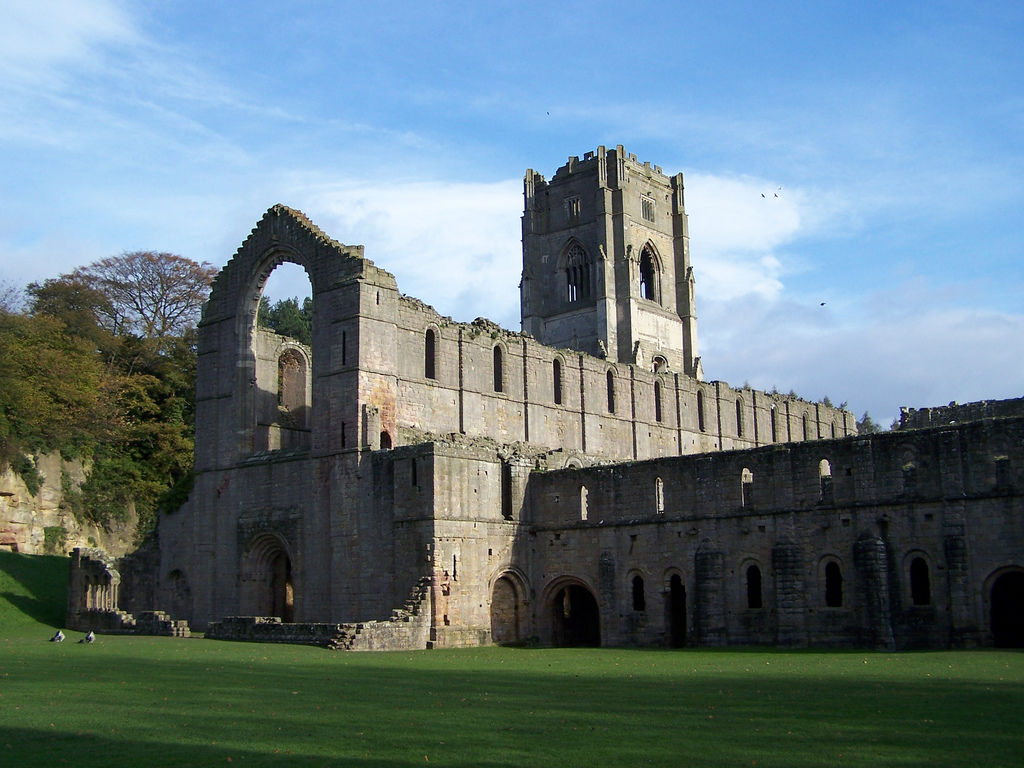
Fountains Abbey

Two places that always rekindle that desire are the Cistercian abbeys of Rievaulx and Fountains. Both are in sublime locations in North Yorkshire, UK. and enough remains (despite the efforts of King Henry VIIIth) to give us big clues as to their daily life and activities. But in the end we can only make well considered deductions from the ruins, archaeology and historical documents.

How great it would be if you could go back to these places when they were at their peak!

We tend to look at history through the lens of our culture and its values. We weigh things up with our 21st century mindset. Wouldn’t it be interesting if we could ask the monks what their hopes, fears, dreams, motivations and aspirations were. What was it really like living in these remote and secluded places? How did they see God and His impact on their lives? What did they hope to achieve and … what was it like to pray for hours on end in a frozen Yorkshire winter?

Rievaulx Abbey

Nobody will ever wonder about our generation. We have written, blogged and videoed all our angsts and desires – ad nauseum. But these people can only be seen through the fogs and shadows of time. We can know them – but only just.

In the meantime, for me, these old abbeys exude a mystery and allure that keeps me fascinated.

Categories: christian, Christianity, Church, History, Reflections | Tags: , , , | 6 Comments

Christian History Institute

While reflecting on Reformation day and the contribution of Martin Luther I was reminded of the fantastic resource that the Christian History Institute is. Over the years I have used their resources in my teaching, both in churches and schools. One of my favourite resources has been their “Reformation Overview” which uses clips from films to look at key players in the Reformation.

If you have not explored their material I encourage you to do so. They have a wealth of valuable information on the history of the church – people and events. Their website has links to magazines, articles and films from the apostles to current times.

For example: this is an article on Luther’s early years. http://www.chinstitute.org/index.php/chm/sixteenth-century/early-luther/

There is material for all ages. In an age when we have tended to lose sight of those who have gone before us CHI keeps alive the marvelous work done by the saints who have paved the way.

Categories: christian, Christianity, Church, History, Luther, Uncategorized | Tags: , , , , , | 3 Comments

Blog at WordPress.com.