Author Archives: Pieter Stok

Unknown's avatar

About Pieter Stok

I am passionate about faith, marriage and family. My interests include reading, video editing, travel and Lego. Also, I find the older I get, the more reflective I become. Whereas once I had answers for everything and everyone, now I have more questions.

What right do we have?

An email recently came across my desk from the Australian Christian Lobby urging me to contact Bill Shorten to express my disapproval of the proposed changes to the Marriage Act which will allow people of the same sex to marry.

20130422-204406.jpg

Two becoming one?

I will say clearly upfront, my belief is that marriage is an institution created by God, between a man and woman  (first modelled by Adam and Eve) for life. But I have a number of problems:

1. I live in a democratic country and it now seems that a large majority of my fellow citizens no longer believe that my faith held definition is correct.  So how far should or can I go in enforcing my understanding?  This is in contrast to promoting my understanding under the banner of free speech which I believe, as a Christian, I’m responsible to do with my life and words at all times.

2. My second question bites more deeply. If we who are evangelical/Bible believing Christians have such a high view of Biblical marriage, why have we allowed it to be devalued through our own behaviours within our own Christian community? Divorce rates in the church, even though a little lower than mainstream society, are still high. Cohabitation by church goers is also on the increase. My struggle is that we are calling others to standards that we ourselves are, increasingly, failing to hold.

3. Are there other solutions to this issue which meet the requirements of both the churches and society as whole?  In many European countries marriage is a social contract which is entered into at the town hall.  This contract gives you access to government benefits and a legally recognised status. Those who are Christian then go to a church to seek the church’s blessing. If we took an approach such as this it would separate church and state and leave the church free to bless those who believe in a Christian marriage, and it would also free it from being a “sub contractor” for marriages.

Has the time come for the Christian community to take seriously the need to make the Bible’s views attractive, not through legislation, but through the winsomeness of her own lifestyle? Like the early church, our faith driven lifestyle, should encourage our neighbours to want what God has bestowed on us.
Categories: Children, Church | Tags: , , | 15 Comments

The Lure of the Occult

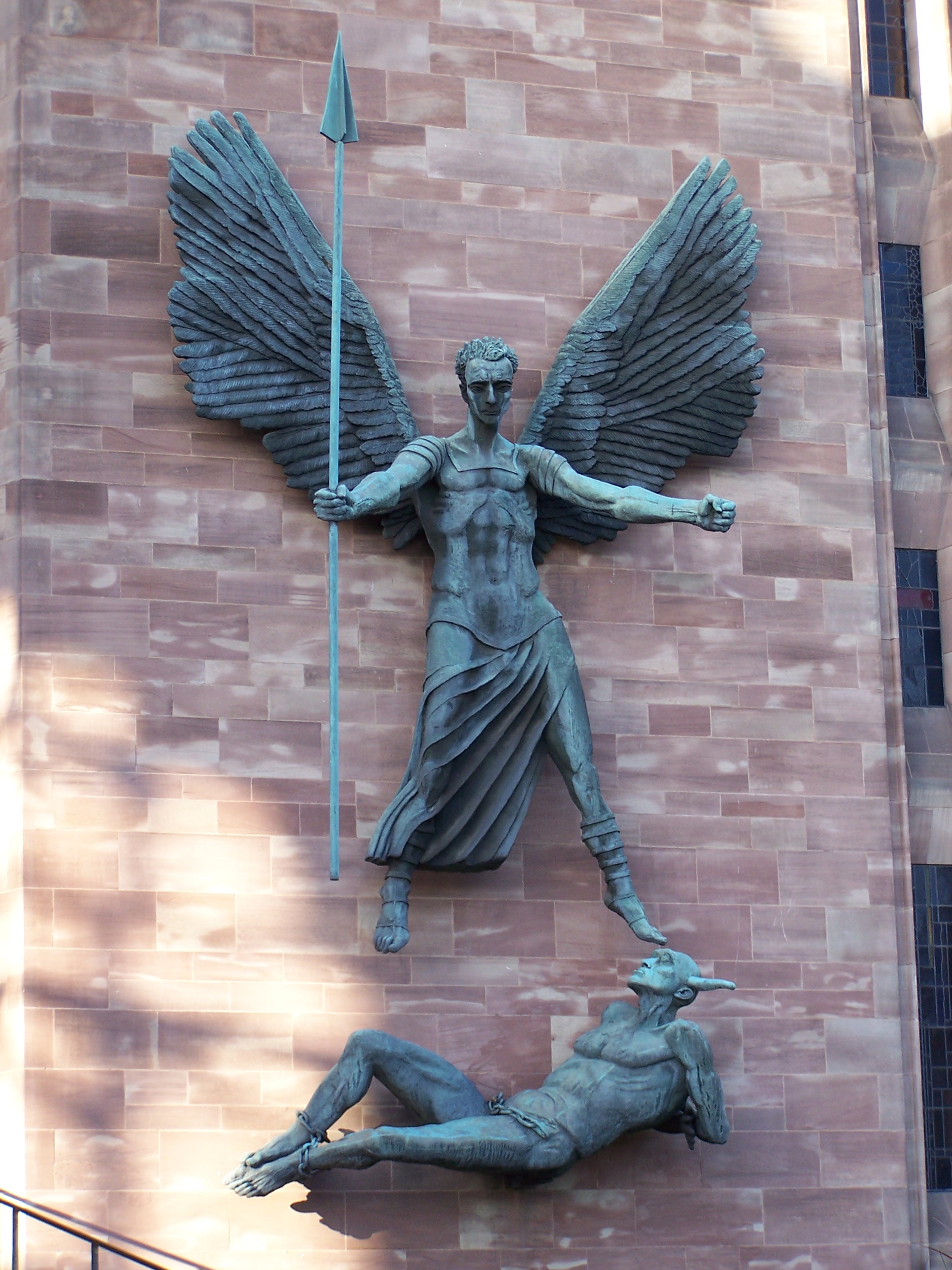
St Michael's Victory over the Devil, a sculpture by Sir Jacob Epstein

St Michael’s Victory over the Devil,  by Sir Jacob Epstein

I remember back in my high school days, last century, that every now and then an occultic fad would pass by: Ouija boards, seances and even palm and tea leaf reading. People have this “spiritual” itch that they want to scratch with these practices.

There is an excitement about dabbling covertly in these unknown realms. Many people have done it from Arthur Conan Doyle (who seemed so logical in his Sherlock Holmes stories!) through to the notorious Rasputin plus many, many more.  Every age seems to have its own versions and own followers. The latest incarnation is a game called Charlie Charlie.  The interweb has made the progress of this and other modern fads more immediate. A few days ago the SMH reflected on the speed at which Charlie Charlie had progressed.

Now it is easy to say that most people who engage in these facile games are not impacted for the long term.  But why does Scripture exhort us to steer clear of these activities? In Ephesians 6: 11 & 12 Paul reminds us to equip ourselves with the full armour of God: Put on the full armour of God, so that you can take your stand against the devil’s schemes.  For our struggle is not against flesh and blood, but against the rulers, against the authorities, against the powers of this dark world and against the spiritual forces of evil in the heavenly realms.” In other words, there is a realm of existence about which we not only need to be very wary but we also need to consciously protect ourselves. And if we don’t dabble in it we don’t have to be fearful either and the child of God will be protected.  Second Thessalonians 2 reminds us of the “lawless one” whose aim it is to encourage us to serve the lie – that is Satan.

When we read the Old Testament we also find many frightening passages which literally damn these practices as they are in direct contravention of the first four commandments.  God doesn’t mince His words when He speaks of divination, sorcery and its practitioners.

As parents and teachers we need to be sensitive and aware of this discussion.  Some young people may be just playing a foolish game, for others however, there may be a real spiritual longing – one that we could tap into and nurture in healthy directions. An added concern is the alarming prospect that there may be those for whom these games act like a gateway drug and introduce them to more worrying and even more sinister activities.

Whatever the situation, this latest fad is a clear reminder to be vigilant and to protect, educate and nurture those in our care or sphere of influence in ways that enhance and protect their spiritual and eternal welfare.

Here are a few helpful resources on the Web:

http://www.christiananswers.net/q-eden/edn-occult.html

http://studentsoul.intervarsity.org/occult

This has a useful list of texts further down the page.

http://www.gospelway.com/religiousgroups/witchcraft.php


Categories: christian, christian education, Christianity | Tags: , , | 5 Comments

The Wesleys’ Hymns

This past weekend my wife and I attended a Wesley Hymn Fest, where, as you can imagine, we were led in the enthusiastic singing of Wesleyan hymns.  Now I don’t come from the Methodist tradition but there was something very special about 250 people being led by a small group of musicians, pipe organ and choir, declaring in song  messages of hope, faith and truth.

I was struck by the wonderful words of the hymns.  Charles Wesley, often assisted or supported by brother John, knew his Scripture and wove this understanding into his verses.  Many hymns were inspired by particular Bible passages, or were Bible passages put to music. In response to Isaiah 51:9 he penned:

Arm of the Lord, awake, awake!
Thine own immortal strength put on!
With terror clothed, hell’s kingdom shake,
And cast thy foes with fury down!

The hymns also reveal a great understanding of the human condition. In an era when many children died young one can feel the tension of faith and pain that Wesley was only too familiar with in a hymn we didn’t sing last Sunday:

Dead, dead! the child I loved so well!
Transported to the world above!
I need no more my heart conceal;
I never dared indulge my love:
But may I not indulge my grief
And seek in tears a sad relief?

The language is quaint but the messages are still intimately personal:

My God, I am Thine, what a comfort divine,
What a blessing to know that my Jesus is mine!
In the heavenly Lamb thrice happy I am,
And my heart it doth dance at the sound of His name.

The image of the dancing heart is uplifting! Charles Wesley wrote nearly 6000 hymns which were often composed for special occasions. And still there were many others from the era who wrote fabulous hymns from John Newton’s Amazing Grace to Isaac Watts’  When I Survey the Wondrous Cross. Watts was a comparative sluggard as he only wrote 750 hymns. And there are others: William Cowper, Frances Havergal … and all the way back to Bernard of Clairvaux  to name only three.

In many churches today these hymns have disappeared under the weight of modern songs and choruses.  Every era is inspired by the Spirit anew but we shouldn’t forget these incredible songs from the history of the church – a history that extends all the way to the early church. In the case of the Wesleys it was a history of renewal and revival. It would be good if we had links to these brothers and sisters from the past every time we met in worship.

Here is one of my favourite singers singing one of Charles Wesley’s songs.  Maddy Prior and the Carnival Band also have a great album of Wesley’s songs called Paradise Found:

Categories: christian, Christianity, Church, hymns, Uncategorized | Tags: , , , | 11 Comments

And He Was There

Image: Courtesy, Wikipedia

Image: Courtesy, Wikipedia

What does God see when He sees us worshipping?

And He Was There

  1. Worshipping when I was younger – mid last century

There was a custom and tradition

that, years ago, meant

meeting twice

on the Sunday.

Morning AND evening –

starting the day and closing the day

with God.

Best suits,

hats and dresses:

“No corduroy son!

Would you meet the queen in that!”

My father barked.


The worship,

like the pews, was stern and formal.

Faces serious and

attention strict, as eyes

focussed forward.

Fidgeting children were pinched,

prodded and glared into conformity.


And God was there

in the droning, reverie inducing words,

everlasting musty organ hymns,

peppermints,

and Eau de Cologned hankies.


And He was there

when the bread was broken

and the wine sipped

during the quarterly

communion:

when I was left behind

for a moment’s freedom.


And He was there

As I counted the

Organ pipes,

Bannister rails

And made mind pictures

With the patterns of the wooden ceiling.

And later,

He was still there

when I stumblingly

declared my youthful faith.

And despite my fear induced amnesia,

He was there

when I declared my love for my bride.

And He was there when our children

received His promises

in baptism.


Yes,

He was there.

Categories: christian, Church, Poem, poetry | Tags: , , , | 2 Comments

Including Children in Church Community

There is a small but growing group of Christians who are eager to see the children of the church integrated into the life of the Church body and not just pandered to by programs. Although programs, in and of themselves can be quite useful, they can also stymie the discussions that churches and families need to have about faith formation in the life of their children. Programs by themselves often focus on knowledge (cognition) and what is missed is the beautiful mystery of faith and the excitement of disciple development.  I have written on previous occasions about the importance of the child’s vocation in the church. (Here is just one example).

Last night I heard David Csinos, who describes himself as an author, speaker, practical theologian, husband, researcher of children’s spirituality, and former children’s photo 4pastor, speak in Geelong. This was encouraging for a variety of reasons. It reminded me that there are more voices and often more articulate voices speaking out on this issue and it also caused me to reflect that this is not “rocket science” but requires families, churches and church leaders to engage in a prayerful discussion of how faith is developed in the most vulnerable and important members of our church communities.

If you wish to explore this important notion I have included some websites and books to explore:

  • David’s blog:   http://davecsinos.com/
  • The Journal of Family and Community Ministries (which is free to subscribe to): http://www.familyandcommunityministries.org/
  • A wonderful book is :  Children’s Ministry in the way of Jesus by Ivy Beckwith and David Csinos. This is a good place to begin your reflections if you haven’t started already, or to continue your journey.
  • Is it a Lost Cause: Having the Heart of God for the Church’s Children by Marva Dawn.
  • And if you look under Child Theology you will encounter more of my thoughts/musings on the issue.
  • Another worthwhile approach is taken by the Child Theology Movement.


Categories: Child Theology, Children, christian, Christianity, Faith, Family | Tags: , , , , , | 2 Comments

Telling Bible stories to young children

Once again my wife reflects upon one of our passions – how to present gospel stories to children.


The story of Jesus washing His disciples’ feet. (John 13:1-17)


Traditionally, we concentrate on Jesus, the teacher, humbling himself to wash the feet of his disciples. However, to a young child, this would not seem unusual at all. Their experience is normally one of adults caring for them; teachers and childcare providers, parents, and grandparents. It would be strange to them if the disciples had washed Jesus’ feet!


So how could we tell this story?


Often Bible storytellers try to interpret the stories. We want to be sure the child understands the meaning and the lesson. In short, we tell the child what they should think.

I’m wary of this approach.

I believe that when we impart God’s Word to young people the Holy Spirit is present and active in their hearts and their heads.children 1

We need to trust that He will guide them as they hear our stories.

Our aim should be to facilitate worship in children.


The lives of children are full of friends, family gatherings, travelling, food, and identity. This story has it all. Jesus plans a meal together with his friends. They all travel to an upstairs room in a house. They probably walked along dusty roads to get there. When they arrived there were probably hugs and kisses all around. The table had an array of food and drink, lovingly prepared by others in their circle of friends.

Most importantly, Jesus was with his friends: they identified themselves (and the community recognised them) as His followers.


So, as you tell this wonderful story, touch on these points of contact.


Children will also visualise the story as you tell it. They will “see” it using their own experiences. Therefore a table full of food will be their family’s dining table.

Enrich the story for them by telling them the colours, the smells, the icky ness of the dirty feet, the warmth of the water in the basin, the gentleness of Jesus hands, and the softness of the towel.


When we tell stories in this fashion we help a child take it into their heart. The story will resonate with them.


And finally, give the child a way to respond to what they have heard. Wonder with them, sit quietly and ponder, provide art materials, sing. Follow their lead as they follow the Holy Spirit.


Categories: Child Theology, Children, christian, Faith, Family, Hetty's Devotions | Tags: , , , , | 1 Comment

Greater Love

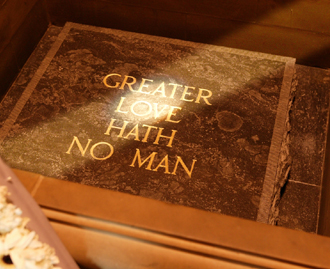
Photographic record of the Shrine of Remembrance, photographer unknownLast night my Literature students and I went to a performance of Shakespeare’s cross dressing comedy, ‘As You Like It’.  It explores love in many of its facets. How and why does it happen?  What does it do to us – for good or bad?  Is it different for men and women?  What external influences are involved? What about our motives? … and there are more uncomfortable questions.

But underlying all of that is the idea that love, romantic and otherwise, is an essential part of the human character. We all want to love and be loved. A life without love is empty and possibly meaningless.

And then this morning at our College’s  ANZAC  service our Senior School Captains spoke on the verse John 15:13  “Greater love has no one than this: to lay down one’s life for one’s friends.”  This is paraphrased in the War Memorial in Melbourne – “Greater love hath no man”.

This verse must be seen in the context of Christ reflecting on his own sacrifice and then suggesting to his disciples that this sacrifice in turn become a model for their lives. Accepting Christ’s love becomes the foundation of our desire to love like he does. Love, here, is a giving of one’s self for others. It puts others first, which is no doubt the reason for its presence in the War Memorial it highlights the Aussie ideal of mateship.

There is nothing amiss with the Bard’s exploration of love. He raises excellent questions and challenges us. However, the answers are not found in his plays, but rather in the gospel. Christ’s love becomes a model for our relations – romantic and otherwise.  Christ’s love doesn’t start with our own private swooning’s, or sexual desires but for the welfare and best outcomes for the other – friend and foe alike.

Shakespeare raises tough questions but Jesus gives us even tougher answers.

Categories: christian, Christianity, community, Uncategorized | Tags: , , | Leave a comment

Two Dreams

Our dream life is a mysterious and unfathomable part of the mind.  My wife had two successive dreams that caused me to wonder. I usually find this area of life too ethereal to write about but here are the two dreams as my wife relates them.
Last night I had two dreams. Like Pharaoh, I woke up wondering what they could mean. Where is Joseph when you need him?In the first dream I was at a book fair run by a church and a Bible college. There were many tables laden with theological books. There were also women putting lots of delicious looking baked goods onto other tables. Little children raced around amongst the tables and everything looked ready for business. But there were no customers. One woman expressed her dismay. “We made all this food to encourage people to come.” “But there’s no place for people to sit” I said, “and you’re not offering any coffee or tea.”

In the second dream I was again at a fair. This time it was a toymaker’s. I had heard about it and Pieter agreed to take me there. He dropped me at the door and we arranged a time for him to return. As I stepped into the building, which happened to be an old wooden church, the toymaker himself greeted me. But my attention was completely taken by the sight before my eyes. Handmade toys of every description: felted dolls in gaudy colours, brightly painted wooden vehicles and puppets, metal wind-up toys sparkled on the shelves, and a hundred pretty mobiles hung from the ceiling. “Oh, this is amazing!” I enthused.

Immediately, the toymaker reached up and took down one of the mobiles. It was a nice one, but others had already caught my eye. As I continued to enjoy the fantastic array of toys, the toymaker took the mobile to the counter and began to wrap it. I believed he had made a wrong assumption and I was quick to point this out to him. “No, no,” I said, “I don’t want that!” He didn’t stop straight away, and I had to repeat myself several times. Finally he ceased wrapping. His hands fell at his sides and he looked up at me. There were tears in his eyes and his whole face crumpled with grief. Slowly he turned and walked away.

Some women were also in the shop and they’d seen what happened. One came to me and quietly explained. “The toymaker made every toy in this place,” she said.
“But didn’t he understand that I didn’t want to buy that toy?” I interjected. “I would have bought something else; it’s all beautiful, I would have found something to buy.”
“Buy?” she said. “He was going to give it to you!”

You can imagine my horror to hear this. I needed to find the toymaker and explain my actions. But then Pieter returned and still the toymaker hadn’t reappeared. I had no choice. I left the toy fair empty-handed.

Somehow I think these stories should be prefaced with the words of Jesus – “The Kingdom of Heaven is like…….”

Categories: Uncategorized | Tags: , | Leave a comment

Jesus Unicorn

Today my wife, Hetty, is presenting a guest blog on the topic of children and worship.

Jesus Unicorn

Courtesy Google  images

Courtesy Google images

A young girl was given a notebook and some colouring pencils and pens while she sat in the pew with her family.  After a few weeks, her parents suggested that she listen to the sermon while she drew. By the end of the sermon she had drawn some pictures of a unicorn with the words ‘Jesus Unicorn’ above them.  Her parents were amused.
 
Some questions:
 
  • What did her parents believe children should be doing in a worship service?
  • Did they give her any guidance about what she could do with the writing and drawing materials?
  • What was the underlying message the child got concerning how she should behave in the worship service and from her parents’ subsequent suggestion?
 
Some ideas:
 
If you were her parents, how might you encourage her to participate in the worship service?
How would you begin a discussion with this child about ‘Jesus Unicorn’ which could lead her to a fuller experience of worship?
 
Paper and pencils are fine to keep a child’s hands busy, to keep a child quiet, and even as a stepping stone to taking notes of the sermon but it should never stop there.
Children can draw the stories they hear (and they should be hearing God’s stories, not just theological concepts) or their feelings. There should be a clear understanding of when they can draw/write and when they should be participating in the singing, praying, etc.  Parents should follow up with the child later. It may help if the parents also occasionally used paper and pencils during the sermon, and the family shared their pictures afterwards.
 
A warning:
 
Be careful not to let this become another kind of ‘school’ activity.
Help the child to use the writing and drawing, as well as the words they’re hearing and the images they’re seeing, as a way to explore their understanding of God, and the worship of Him.
 
 
Hetty Stok
Categories: Child Theology, Children, christian, christian education, Christianity, Church, Uncategorized | Tags: , , , | 8 Comments

Some People Get It!

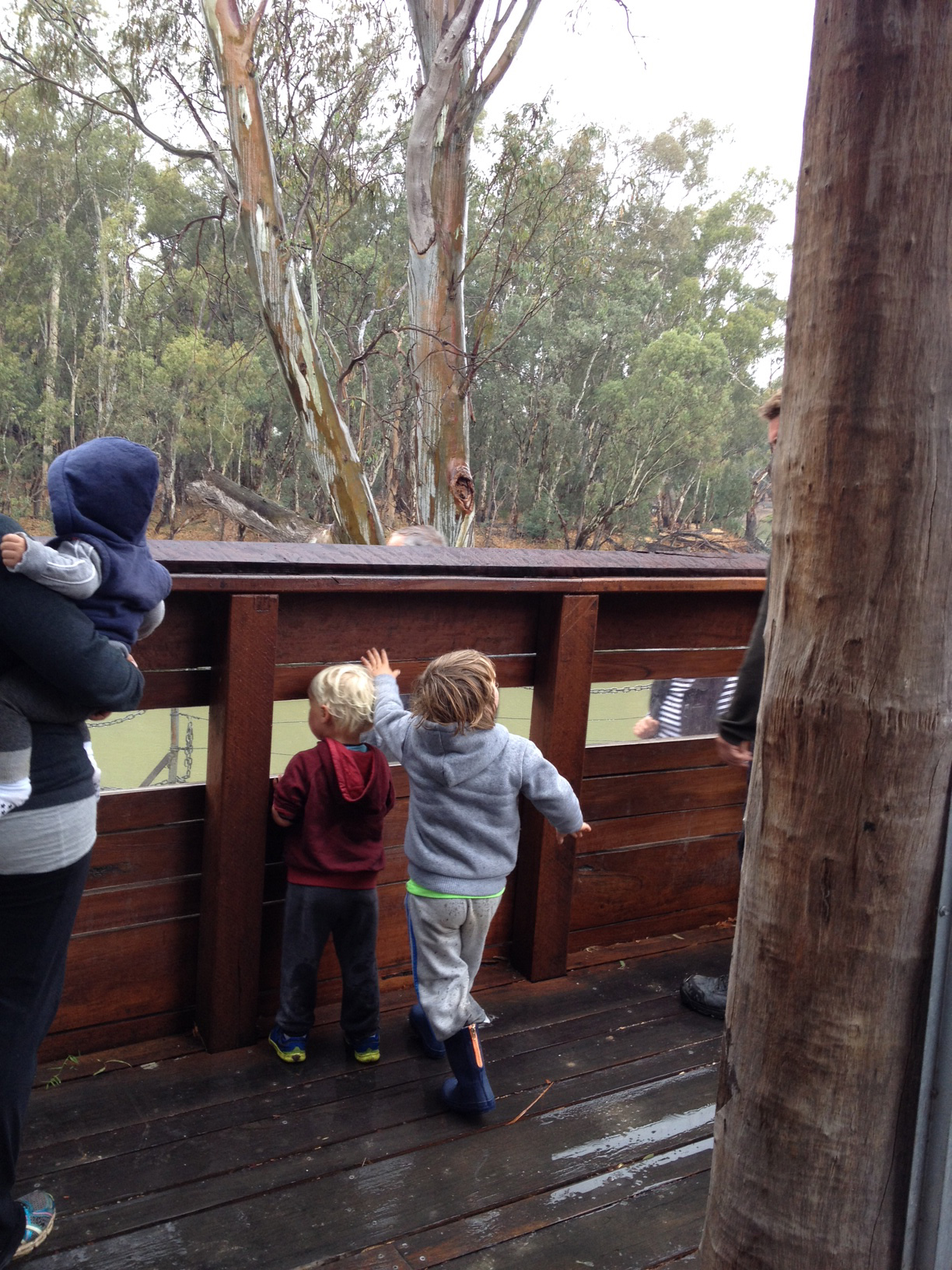
photo 4

Excited by the view

It was a rainy day yesterday as we were walking around the Port of Echuca.  It is the home of the largest collection of working paddle steamers in the world. Daily they paddle up and down the Murray river. At one point along the dock you can walk onto a section that looks out over the river. There is a protective fence where the designers have simply, but cleverly, placed glass panels at “little children” height so that they can look out too.  We were there as two small boys, fresh from jumping in puddles, saw these windows, raced up, looked out, and were thrilled by the sights.

If only churches could see this wonderful metaphor. Too often in worship the fences are that high that only the adults can “see” or experience what is going on. For children the service is an hour and 30 minutes of tedium, or they are sent out to “jump in a few puddles” while the adults do the real thing.

Too many churches, in my experience, either ignore the fact that there are children in church or send them out to be entertained elsewhere. There are no “windows” to enable them to participate and adults are often unable or uwilling to hold them up to see over the fence. So the implied message children receive is that there is nothing here for you. In other words, the view, or real worship, is essentially for adults only.

Children are people of God too. Children are called by Jesus as well. Children are in fact a model for us to follow. “Unless you become like one of these …” Too often however, children are left behind a windowless fence and not included and left out of the worship dialogue altogether.  They are not given a position from where they can be part of, experience and participate in the worship of the whole family of God.

Picture 011

The Port of Echuca on a sunnier day with some of its paddle steamers.

What can we do to give children kid high windows from which, they too, can be part of the worship by the people of God? What can we do as worshipping communities to reduce the walls which prevent children from being part of the singing, listening, praying, reading. giving and hearing that is our dialogue with God on a Sunday?

Churches are losing young people in droves.  What are we doing to make worship an unmissable part of their lives?  One part of the answer is to ensure that the child’s place in the community of worshippers is real and appreciated as well as age appropriate – that they can see through the fences. This does not mean that the worship service needs to be “dumbed down”, but it does mean that the worshipping community needs to think of genuine ways in which children, in fact all ages, have a meaningful encounter with their God when the community gathers for public worship.

I would even suggest that if we as adults are more intentional about including children, that is, giving them “windows” and holding them up, that we too will be enriched by the process. Moreover, and most importantly, God will be honoured and worshipped with greater integrity, as all His children gather before Him.

Categories: Child Theology, Children | Tags: , , | 3 Comments

Blog at WordPress.com.