Church

Is it Time for a New Reformation?

A number of books have been written in recent years that suggest that the direction the Christian Church has been going is profoundly warped and dysfunctional. Just take for example:

  • Radical by David Platt, which explores how we have shaped the gospel to suit ourselves and suggests, as the title implies, some uncomfortable remedies – image030uncomfortable for the materialistic, middle class, self-centred Western Christian.
  • Exiles by Michael Frost looks at how the church has been marginalised in Western cultures and offers new alternatives at being church.
  • There have been a host of books by Tim Chester and Steve Timmis looking at more effective ways of being the body of Christ.
  • Vishal Mangalwadi in The Book That made Your World shows how Western cultures influenced by the Bible have made huge strides but also reveals how we in the West have dropped the ball as we allow this heritage to dissipate.

You could probably add to the list. But my point is this: the sheer scale of people writing and thinking about the church at present indicates that all is not well in Western churches. If we add to this a host of other issues such as young people leaving the church, Christians leaving the church but maintaining the faith outside its influence and the ongoing influence of theologies that marginalise Scripture, we can get a sense of the enormity of the problem.  And we haven’t time to discuss all the areas of abuse the church has been involved in from paedophilia to scandals surrounding celebrity pastors, which have deeply wounded the voice of the church.

One of the stumbling blocks I see is that although some church leaders clearly recognise this problem their ability to act is limited. There are leaders in most churches who are alarmed by the figures both financial and human but in most cases they are seeking solutions from within the structure of their denomination.  The structure is the environment their thinking takes place in.  It is the structure, that for a whole host of reasons, from personal vested interests to tradition, that blinkers any genuinely radical Biblical vision. Property, jobs, “empires” and status are all involved in this unholy mix.  This is not dissimilar to the conditions in the Roman Church before the C16th Reformation.

And then there is us, we who in the West have succumbed to the attractions of materialism.  Our very view of life is shaped from the comfort of our easy chair.  We too are part of the problem.  Our thinking is shaped and anchored in our immediate self-interest. We too have vested self interests.

So, is it time for a new Reformation? I would genuinely love to hear the views of readers. And if it is, how will we hear God’s voice in the noise of our world?  How can our hearts be open to the leading of the Spirit? What steps can we take in faith?


Categories: christian, Christianity, Church, Reformation, Uncategorized | Tags: , , , , , | 7 Comments

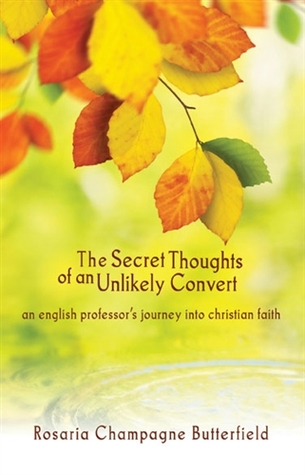
Some thoughts on: The Secret Thoughts of an Unlikely Convert

Currently I am reading “The Secret Thoughts of an Unlikely Convert” by Rosaria Butterfield. This book traces Butterfield’s journey from a lesbian professor of “Queerrosaria Studies” in the English Department of Syracuse University to a conservative evangelical wife and mother.  She is certainly not the poster girl for LGBTI movement nor of the growing voice of the Gay and Lesbian community in evangelical circles.  One can agree or disagree with Butterfield, but the book is eminently worth reading for a variety of disparate reasons:

1. It reveals how conversations between disagreeing parties can be held with honour and integrity:

One of the aspects of the book that I was most impressed with was the description of the respectful conversations she had with the Rev. Ken Smith over a long period as they explored each other’s beliefs and worldviews.  After Butterfield had written an article in a local newspaper a lot of mail came in her direction which was easily divided between hate mail and fan mail, except for one from a local pastor who wanted to have a respectful conversation. It is the genuine consideration of the pastor and the willingness by Butterfield to engage in that discussion where I see a model of how conversations can be held in our pluralistic society. Christians in particular need to take note as often our voices are perceived as judgmental and harsh. It struck me as a model as to how Christians need to deal with those with whom they disagree. It is light-years away from much of the judgemental stridency we hear too often.

2. The book reveals how Christian conversion can be a gut wrenching process  in contrast to some of the glib techniques sometimes espoused.

Butterfield calls her conversion a “train wreck”.  This is such a contrast to the simplistic “believer’s prayers” which often pass for “Christian conversion”.  She describes the amazing struggle to move from one way of life and worldview to another and the incredible personal cost.  The process involved the reorientation of every aspect of her life.  She says she lost everything except her dog.  I see it as a very modern expression of what Bonhoffer calls the cost of discipleship – a cost that those of us who have been Christians for a long time may have lost sight of.

3. The book includes some astute theological observations. I find these particulalrly helpful as they come with fresh eyes untainted by years of tradition. An unpacking of Ezekiel 16 is one example that I would like to explore in a later blog.

4. The book also gives us an outsider’s view of how we often behave in churches – the good and the bad.  Her observations are useful for us to assess our own behaviours and words and their impact on people who are unfamiliar with the ways of churches.  Butterfield also gives an entertaining and sometimes humiliating view of what we look like from the outside.

Finally, it is a book about a personal journey that can teach us all something, whether it is about our attitudes, beliefs or simply the way we go about expressing those beliefs.  I haven’t even finished the book yet and it has challenged me in so many areas.


Categories: christian, Christianity, Church, community, Uncategorized | Tags: , , , , | 6 Comments

Children’s Talks in Church

Here is another post by my wife whose passion is worship that involves all ages – especially children

Why is it that preachers look elsewhere when they speak with children about the things of God? Elsewhere than the Word of God? 

They spend a great deal of time conjuring “likes” out of their box of tricks. The church is like…. being a Christian is like…. forgiveness is like….

And there are a lots of objects in their magician’s kit as well. Namely objects for object lessons.  Unfortunately this sleight of hand only confuses the children who are before them.

Today we had a real magic trick performed for the kids. Three pieces of string of varying lengths were produced for the audience of a dozen preschoolers up to first graders. We heard about the tall people (longest string), the middle sized people (medium string), and … “babies” one child suggested for the shortest string, and we all laughed. More examples of varying things were suggested by the pastor, before he brought all six string ends together in one hand and said “watch this”. (I thought the correct word was abracadabra.)

Sure enough, he turned them into three pieces of equal length. Amazing!

Photo: Courtesy Domino the Jester

Photo: Courtesy Domino the Jester

Then he did another trick.

He turned the trick into an object lesson.

“We all look different, but Jesus has made us all the same.”

Maybe I think too deeply, or too literally about these things. I suspect some  children do too. Perhaps they’re thinking, “I don’t want Jesus to make me look like my brother. I don’t want my Mum and Dad or my baby sister to all be ‘middle sized'”. And that’s if they’ve managed to draw the connection between the strings and ‘us’.

Whichever way you choose to tackle this concept of Colossians 3:11, one thing’s for certain. Little children aged less than eight years old will probably not understand the abstractness of it.

This is when parents need to grow these concepts into their children as they walk along the road together, when they lie down and get up, when they eat and play together. This will be when the abstract becomes concrete for them.

And the pastors who are sitting with the church’s little ones at their feet?

Perhaps they should tell a story. A Bible story.

Categories: Child Theology, Children, christian, Church, Faith, Family | Tags: , , , , , | Leave a comment

What right do we have?

An email recently came across my desk from the Australian Christian Lobby urging me to contact Bill Shorten to express my disapproval of the proposed changes to the Marriage Act which will allow people of the same sex to marry.

20130422-204406.jpg

Two becoming one?

I will say clearly upfront, my belief is that marriage is an institution created by God, between a man and woman  (first modelled by Adam and Eve) for life. But I have a number of problems:

1. I live in a democratic country and it now seems that a large majority of my fellow citizens no longer believe that my faith held definition is correct.  So how far should or can I go in enforcing my understanding?  This is in contrast to promoting my understanding under the banner of free speech which I believe, as a Christian, I’m responsible to do with my life and words at all times.

2. My second question bites more deeply. If we who are evangelical/Bible believing Christians have such a high view of Biblical marriage, why have we allowed it to be devalued through our own behaviours within our own Christian community? Divorce rates in the church, even though a little lower than mainstream society, are still high. Cohabitation by church goers is also on the increase. My struggle is that we are calling others to standards that we ourselves are, increasingly, failing to hold.

3. Are there other solutions to this issue which meet the requirements of both the churches and society as whole?  In many European countries marriage is a social contract which is entered into at the town hall.  This contract gives you access to government benefits and a legally recognised status. Those who are Christian then go to a church to seek the church’s blessing. If we took an approach such as this it would separate church and state and leave the church free to bless those who believe in a Christian marriage, and it would also free it from being a “sub contractor” for marriages.

Has the time come for the Christian community to take seriously the need to make the Bible’s views attractive, not through legislation, but through the winsomeness of her own lifestyle? Like the early church, our faith driven lifestyle, should encourage our neighbours to want what God has bestowed on us.

Categories: Children, Church | Tags: , , | 15 Comments

The Wesleys’ Hymns

This past weekend my wife and I attended a Wesley Hymn Fest, where, as you can imagine, we were led in the enthusiastic singing of Wesleyan hymns.  Now I don’t come from the Methodist tradition but there was something very special about 250 people being led by a small group of musicians, pipe organ and choir, declaring in song  messages of hope, faith and truth.

I was struck by the wonderful words of the hymns.  Charles Wesley, often assisted or supported by brother John, knew his Scripture and wove this understanding into his verses.  Many hymns were inspired by particular Bible passages, or were Bible passages put to music. In response to Isaiah 51:9 he penned:

Arm of the Lord, awake, awake!
Thine own immortal strength put on!
With terror clothed, hell’s kingdom shake,
And cast thy foes with fury down!

The hymns also reveal a great understanding of the human condition. In an era when many children died young one can feel the tension of faith and pain that Wesley was only too familiar with in a hymn we didn’t sing last Sunday:

Dead, dead! the child I loved so well!
Transported to the world above!
I need no more my heart conceal;
I never dared indulge my love:
But may I not indulge my grief
And seek in tears a sad relief?

The language is quaint but the messages are still intimately personal:

My God, I am Thine, what a comfort divine,
What a blessing to know that my Jesus is mine!
In the heavenly Lamb thrice happy I am,
And my heart it doth dance at the sound of His name.

The image of the dancing heart is uplifting! Charles Wesley wrote nearly 6000 hymns which were often composed for special occasions. And still there were many others from the era who wrote fabulous hymns from John Newton’s Amazing Grace to Isaac Watts’  When I Survey the Wondrous Cross. Watts was a comparative sluggard as he only wrote 750 hymns. And there are others: William Cowper, Frances Havergal … and all the way back to Bernard of Clairvaux  to name only three.

In many churches today these hymns have disappeared under the weight of modern songs and choruses.  Every era is inspired by the Spirit anew but we shouldn’t forget these incredible songs from the history of the church – a history that extends all the way to the early church. In the case of the Wesleys it was a history of renewal and revival. It would be good if we had links to these brothers and sisters from the past every time we met in worship.

Here is one of my favourite singers singing one of Charles Wesley’s songs.  Maddy Prior and the Carnival Band also have a great album of Wesley’s songs called Paradise Found:

Categories: christian, Christianity, Church, hymns, Uncategorized | Tags: , , , | 11 Comments

And He Was There

Image: Courtesy, Wikipedia

Image: Courtesy, Wikipedia

What does God see when He sees us worshipping?

And He Was There

  1. Worshipping when I was younger – mid last century

There was a custom and tradition

that, years ago, meant

meeting twice

on the Sunday.

Morning AND evening –

starting the day and closing the day

with God.

Best suits,

hats and dresses:

“No corduroy son!

Would you meet the queen in that!”

My father barked.


The worship,

like the pews, was stern and formal.

Faces serious and

attention strict, as eyes

focussed forward.

Fidgeting children were pinched,

prodded and glared into conformity.


And God was there

in the droning, reverie inducing words,

everlasting musty organ hymns,

peppermints,

and Eau de Cologned hankies.


And He was there

when the bread was broken

and the wine sipped

during the quarterly

communion:

when I was left behind

for a moment’s freedom.


And He was there

As I counted the

Organ pipes,

Bannister rails

And made mind pictures

With the patterns of the wooden ceiling.

And later,

He was still there

when I stumblingly

declared my youthful faith.

And despite my fear induced amnesia,

He was there

when I declared my love for my bride.

And He was there when our children

received His promises

in baptism.


Yes,

He was there.

Categories: christian, Church, Poem, poetry | Tags: , , , | 2 Comments

Jesus Unicorn

Today my wife, Hetty, is presenting a guest blog on the topic of children and worship.

Jesus Unicorn

Courtesy Google  images

Courtesy Google images

A young girl was given a notebook and some colouring pencils and pens while she sat in the pew with her family.  After a few weeks, her parents suggested that she listen to the sermon while she drew. By the end of the sermon she had drawn some pictures of a unicorn with the words ‘Jesus Unicorn’ above them.  Her parents were amused.
 
Some questions:
 
  • What did her parents believe children should be doing in a worship service?
  • Did they give her any guidance about what she could do with the writing and drawing materials?
  • What was the underlying message the child got concerning how she should behave in the worship service and from her parents’ subsequent suggestion?
 
Some ideas:
 
If you were her parents, how might you encourage her to participate in the worship service?
How would you begin a discussion with this child about ‘Jesus Unicorn’ which could lead her to a fuller experience of worship?
 
Paper and pencils are fine to keep a child’s hands busy, to keep a child quiet, and even as a stepping stone to taking notes of the sermon but it should never stop there.
Children can draw the stories they hear (and they should be hearing God’s stories, not just theological concepts) or their feelings. There should be a clear understanding of when they can draw/write and when they should be participating in the singing, praying, etc.  Parents should follow up with the child later. It may help if the parents also occasionally used paper and pencils during the sermon, and the family shared their pictures afterwards.
 
A warning:
 
Be careful not to let this become another kind of ‘school’ activity.
Help the child to use the writing and drawing, as well as the words they’re hearing and the images they’re seeing, as a way to explore their understanding of God, and the worship of Him.
 
 
Hetty Stok
Categories: Child Theology, Children, christian, christian education, Christianity, Church, Uncategorized | Tags: , , , | 8 Comments

Confused World

I have been watching with concern and bemusement the attempts of our government to halt the execution of two Australians in Indonesia.  My hope and prayer is that they succeed even though this seems very unlikely.  However, this situation highlights the inconsistency of our society.  While huge efforts are being put into saving these two, thousands of unborn children are murdered every year without the legal challenges and TV and newspaper headlines.  The moral outrage at killing two Australians doesn’t match our government’s efforts with asylum seekers in detention.

The 6th Commandment, “Thou shalt not kill” is a declaration of the importance and value of life. It reminds us that humanity was created in God’s image.  In the words of John Donne, “Any man’s death diminishes me.” Human life is precious but governments and corporations have devalued them to “economic units”.  Movie producers and and game designers have made death a form of entertainment.  Even religions murder others to advance and justify their beliefs. Worse still, we have come to believe many of the corrupted messages that swirl around us today. In my naive and simple way I believe it is time to reclaim two truths: 1. Humanity was made in the image of God (a huge discussion just by itself!) and because of that, 2. Human life is precious. If we believed that passionately it would change the tenor of our discussions and behaviours.  Our view of others would begin to change and our view of ourselves would change.

As a Christian I understand that only the Holy Spirit changes hearts but we have a challenge and responsibility to remind ourselves and the world what a gift life is.

Categories: christian, Christianity, Church, community, Life, Uncategorized | Tags: , , | 9 Comments

They Will Know …

In my last blog I finished with the statement, “My consistency and that of the Christian community to a gospel life style should be the first line of defence against assaults on Christian values and principles.”

A number of people have responded to me with regard to that comment. It struck a chord. Christians are apt to accuse the world of persecuting them (and it does) but we often forget, particularly in the West, that our greatest witness is our life style, and in the last few decades that has been badly tarnished.  We have had the disturbing litany of fallen televangelists, abuse of children in Christian institutions, corruption, unedifying bickering and … sadly, the list goes on. I haven’t even mentioned my own poor personal example to the neighbourhood in which I live.

Picture 316cropThose of us who are old enough will remember the ’60s song “We are one in the Spirit“. It ends with the chorus, “They will know we are Christians by our love.” In John 13:34  Jesus gives his disciples a new command: “Love one another”  and he adds in verse 35, By this everyone will know that you are my disciples, if you love one another.” Love, agape love – sacrificial, giving not expecting in return love, is to be the badge of the Christian.

Two thousands years later it is still a difficult task for us.  We are good at making our views heard on a whole range of social and moral issues.  But often these voices are strident, judgmental and graceless with no sense of the compassion that Christ showed a fallen world.

Maybe we, and I certainly include myself, need to go back to basics. We need to go back to the attitude of grace that God called his children to have and show.  So when we are persecuted or martyred or pilloried in the media, we would hope that what the world sees is not the hissing of people like cornered snakes, but the face of a Christlike family of people who share the grief of their master for a fallen world.


Categories: christian, Christianity, Church, community, Uncategorized | Tags: , , , | 1 Comment

When they see among them their children …

20130425-165731.jpg22 Therefore this is what the Lord, who redeemed Abraham, says to the descendants of Jacob: ‘No longer will Jacob be ashamed; no longer will their faces grow pale. 23 When they see among them their children, the work of my hands, they will keep my name holy; they will acknowledge the holiness of the Holy One of Jacob, and will stand in awe of the God of Israel. 24 Those who are wayward in spirit will gain understanding; those who complain will accept instruction.’

Isaiah 29 22-24

These verses come in the midst of God’s frightening judgement upon Jerusalem before Judah’s exile in Babylon.  In contrast to the prophecy of the horrors to come, the passage quoted looks beyond this time of exile to a future when there will be joy and genuine awe in the worship of God.

Many commentators when considering this passage jump on the word “children” and translate that as “future generations”.  There is no problem with that, except we lose the critical idea of being a child and the uniqueness of childhood. Too often commentators suggest that we are dealing with a generation of adults in the future. This, in my view, waters down the intent of the passage.

But why does Isaiah/God use the word “children”?

Which parent has not on occasions sat back and quietly mused on the joy of their children – their exploits, wonder, faith and accomplishments. Our hearts are warmed in the knowledge that they are products of our union! I know there are moments when the opposite occurs but let us stay with the positive for the moment. Children are a symbol of amazing potential and promise. In this passage they are reminders and metaphors for naïve and innocent wonder at the character and actions of God.

Children can remind jaded adults of the joy of the discovery of faith and the wonders of God and His creation and most important, the relief and exhilaration of salvation. They are God’s “sacrament” (symbol or image if you prefer) of new faith, new hope and new future – a crucial idea in the passage above.

In the Isaiah passage children are prophecies of awe filled worshippers (in the fullest sense), of God.

I believe this passage is pointing to Christ but also to his second coming when we will see, completely, how all things will be made new. In the meantime, while we wait for the return of the King. Our children are still heralds of faith and future. We jaded, cynical and worldly-wise adults need to make sure that we do not squash that vision in our children  – or our own hearts.

Categories: Bible, Child Theology, Children, christian, Christianity, Church, Uncategorized | Tags: , , , , | Leave a comment

Blog at WordPress.com.