Devotional

The Ladder of Faith

For this very reason, make every effort to add to your faith goodness; and to goodness, knowledge; and to knowledge, self-control; and to self-control, perseverance; and to perseverance, godliness;  and to godliness, mutual affection; and to mutual affection, love.  2 peter 1:5-7
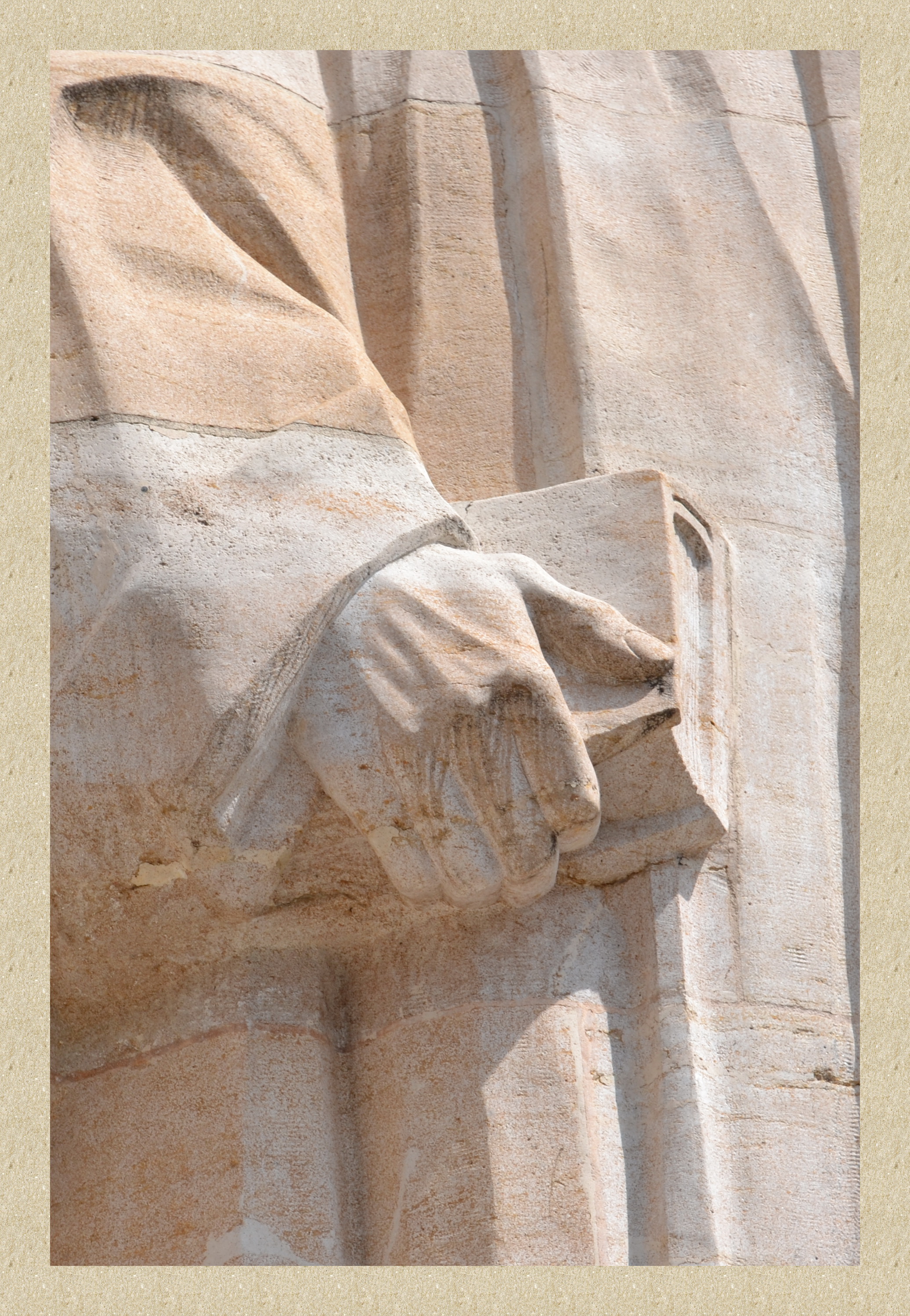
The Christian life is not some inert situation. Faith, as Peter reflects, is a doorway to a whole new way of existing, no, more than existing, truly living. In this passage, which has echoes of Paul’s “fruit of the Spirit” (Gal 5:22-23) we see that we have a responsibility in this new life to build our spiritual muscles. By God’s “divine power’ there are steps we can take to me more Christlike and productive in the kingdom.

The first after faith is

  • goodness or excellence: this describes the expectation that the character of Christ now grows in the person of faith,
  • then the next is knowledge or wisdom, the ability to distinguish good from bad – especially important at the time of writing as false teachers were having an impact. This is an importance that is not diminished today.
  • The third is self control. This is the ability to have authority over our sinful nature. Some believed if they were saved they could do anything they liked. Peter stresses that the child of God reflects a control over their actions rather than abandonment to their desires.
  • That in turn enables endurance – the mature Christian is resolute and determined to maintain this new life,
  •  and exude a godliness – a way of living that shows reverence to God and a right attitude to those around him –
  • mutual affection or brotherly love. As John writes, how can a person love God and hate his brother (1 John 4:20)? The two are inseparably linked.
  • These all culminate in the fulfilment of the law – love. Our lives are to be witnesses to Christ’s agape – sacrificial – love. This is the love for the lives and souls of people around us that empowers the mission of the church.

Above are three short verses we can all spend a life time in practising and the more we do, the more we will see Christ.

Categories: Bible, Christianity, Church, Devotional, Faith, Second Peter | Tags: , , , | 2 Comments

Looking and Seeing

Looking is not seeing.
Speaking is not thinking.
Hearing is not listening.
 
How do we
look at,
speak to
and hear the world?
 
How do we
make sense
and meaning?
 
How do we
make decisions
and commitments?
 
Are we standing
on shifting sand
or solid ground?
 
Is our sight focussed?
Anchored?
Is our hearing
sharp and clear?
Are our voices strong 
and sure …
 
Rivetted
to the Word of truth.
Categories: christian, Christianity, Devotional, Faith, Poem, poetry | Tags: , , , , , , | Leave a comment

World-Views

My usual habit is to read a number of books at once. Not all at the same time but I rotate through them daily. It is the life of an “abstract random” person. Messy but glorious.

Currently one of the books in my rotation is “Think Like Jesus” by George Barna. In fact it is a re-reading as I first read it a few years ago. Barna’s contention is that far too many Christians do not a have Christian World-view. They do not have a Biblical grid through which to see the world and therefore are not only unable to make Biblically/Christian informed choices but they are subject to the insidious influences of other world-views; world-views that are presented through the popular media, celebrities and the like. I don’t think I need to go into detail.

Barna confesses that he ran away from the concept of a Christian World-view for years. But it was the lack of Christian maturity he encountered in his church surveys that made him reconsider the concept. His definition, which I happen to find useful, is that a Biblical World-view is a means of experiencing, interpreting and responding to reality in the light of Biblical perspective. He adds, it enables us to answer the question, “What would Jesus do if he were in my shoes right now?”

I agree with Barna that there is a paucity of Christian thinking in churches and amongst Christians. I also agree with Barna that one of the key reasons is the lack of in depth Bible teaching in the church and in the home. Christians do not have the Biblical foundations upon which to develop this Biblical perspective. However, even within churches where the Bible is seriously taught there is another issue. Christian are taught “what to think but not “how to think”. Christians desperately need an apologetic (defending the faith) framework to defend and promote the faith against all comers.

Why do we need this world view? Simply, whatever the issues that society brings up (and they change and morph every generation), whether it be the internet, the nature of marriage, family, work, media, and so on, we need Biblical framework to construct a response or an answer. What films or TV shows should I watch or books should I read? How should I use my time, talents and wealth? What about the environment, global warming and elections? Because the issues and questions are endless a healthy Christian life requires a well considered World-view.

To have an inkling of what Jesus would do, we also need to understand the Word of God and the relationship with God that was central to his life.

Categories: christian, Christianity, Devotional, Faith, World Views | Tags: , , , | 3 Comments

The Narrow Road

Categories: christian, Christianity, Devotional, Faith, Photo | Tags: , , , | Leave a comment

What Do You Remember?

What are your earliest memories? I asked myself that question the other day. In a bit over week’s time I turn 62 years young and so I began reminiscing about my earliest years.

Here are some memories up to the age of 3 and a half years:

  • Sitting under a desk listening to the warm conversation of adults at my grandparents’ home.
  • Visiting a great grandfather whose false leg was standing in a corner – that made quite an impression.
  • Visiting the barber who had a jar of lollies/sweets behind the counter.
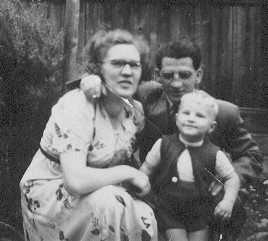
  • Sitting on the grass in a local square reading a picture book. (This one is reinforced with a photo of the event)
  • Checking my aunt’s pocket with my foot as she was holding onto me and hugging me to see if she had brought me a treat.
  • “Reading” Bible story books and having them read to me.
  • Being separated in child care from my parents on the migrant boat to Australia.

There are many more but these are a few that stand out. The overwhelming emotion that comes from remembering these is security and warmth. I was loved by my parents and my extended family. What a privilege that was and what a joy to remember! I hope that my children have similar memories.

It also leads to me to think of the great number of children today for whom those early years are not surrounded with joy, but in contrast, with pain and neglect.

When you cast your mind back to your earliest memories, what comes back to you?

Categories: Child Theology, christian, Christianity, Devotional, Family | 8 Comments

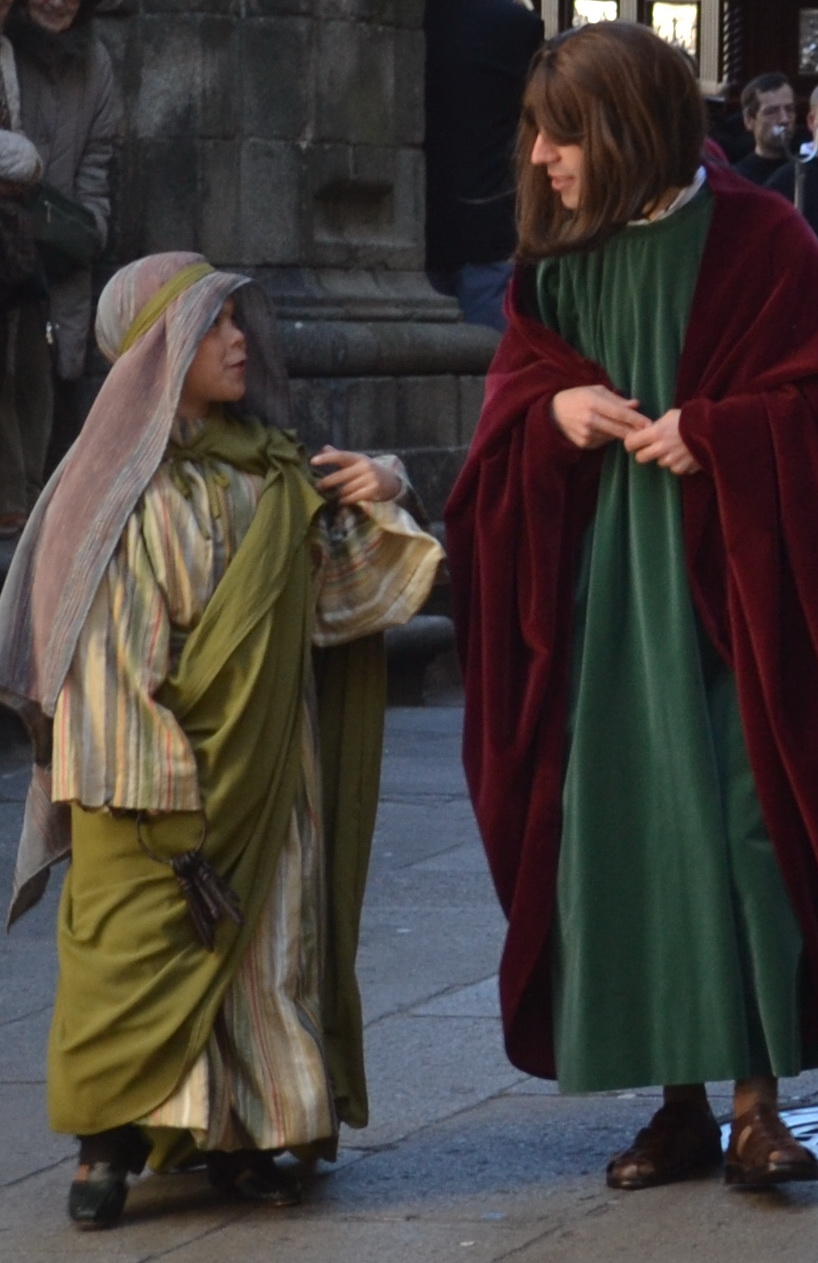
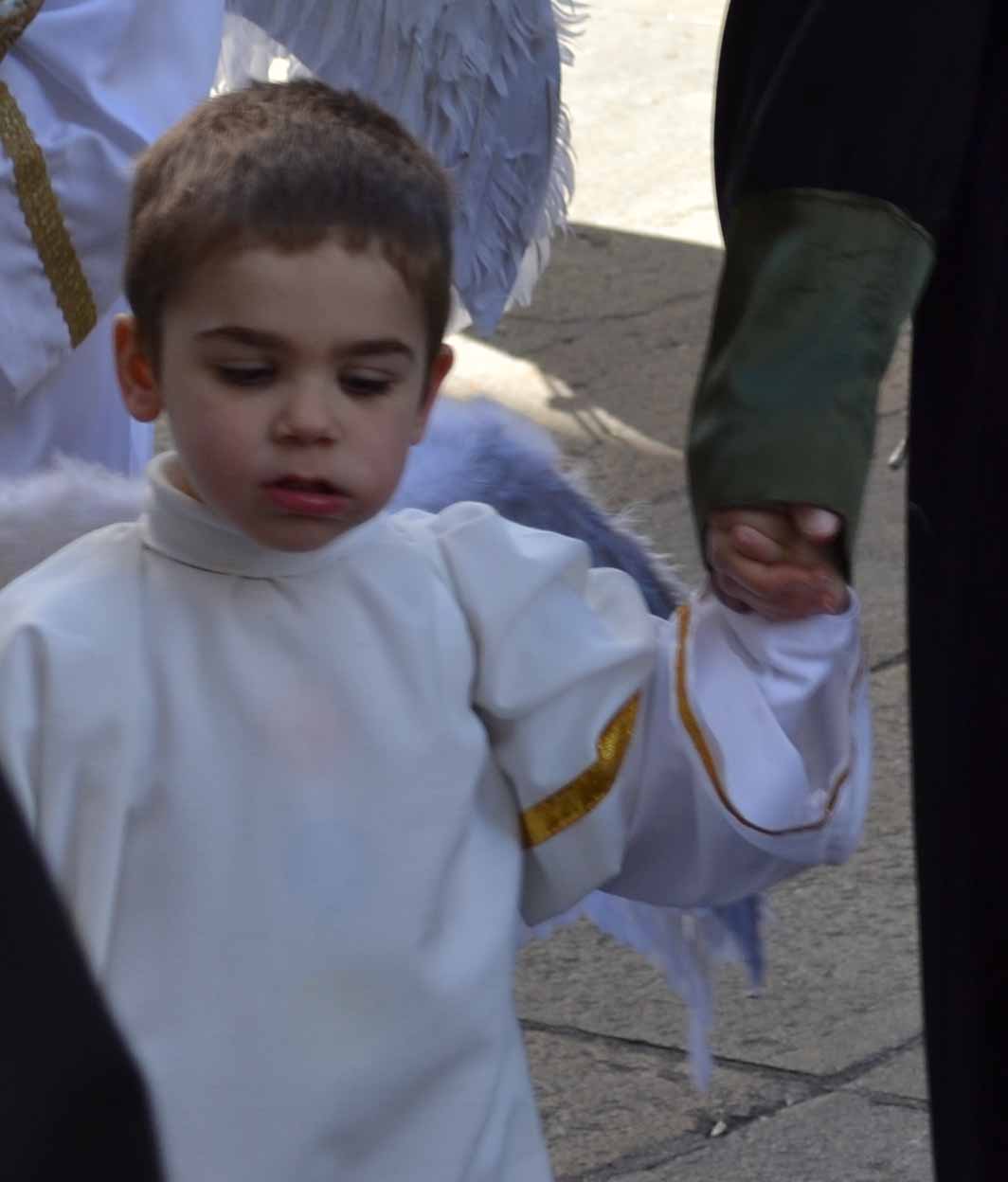
Why Does God Use Children in His Plans?

After having written the last two posts connected with “Child Theology” I asked myself the question in the title.

And I have a few suggestions but I would love to hear what readers think too.

My first thought is that children are imaginative and spontaneous. For too many of us, the older we get, the less spontaneous we become and we are governed by what other people think and past failures. Children are not bound by that.

My second thought is that God’s uses the young at their stage of development. I have some suggestions from the Bible to back my ideas up.

When Joseph had his youthful dreams about his brothers and family, aged wisdom would have told him to keep his mouth shut. Experience tells us that blabbing these dreams would be a mistake. However Joseph in his immaturity and ego centered youthfulness informs the family. Even his dad was annoyed. Foolish as this was, Joseph’s actions ultimately led to his family’s rescue from starvation.

God used Miriam as the responsible older sister care for her baby brother.

Other events include Isaac’s childlike innocence when being prepared as a sacrifice and David’s childlike faith and idealism when facing Goliath. There is also Samuel’s childlike openness to the idea that God was speaking to him. How many of us would have been that open?

My contention is that God used young people because they had qualities that age had removed from the next generation. Are we missing out on the qualities of our young people simply because we are judging and assessing them on a maturity that we may have but that they haven’t reached?

What are we as churches and families missing out on by not recognising that childishness and youth also have a place in the kingdom?

Categories: Child Theology, christian, Christianity, Devotional, Faith, Uncategorized | Tags: , , , | 2 Comments

Children in the Bible

The other day I mentioned the impressive “Child Theology” movement which strives to consider the impact of the child on theological thinking. (See: https://pieterstok.com/2012/07/15/child-theology/).

Today I want to make a simple observation: Children have an amazing place and role in Scripture. Not only are they made in God’s image, like the rest of us, and not only are they part of the pain and joy of God’s people, but God also uses children in a direct way to achieve His ends.

Let us consider some examples:

1. Joseph (OT) was a young lad of 17 when he started his journey under God’s hand to be his family’s improbable saviour.

2. Samuel went to serve the Lord in the temple after he was weaned – he was very young.

3. David is the forgotten young man who God sets aside to become King of Israel

4. In the midst of rebellion, Josiah became a godly King at 8 years of age.

5. Jeremiah started his work as a prophet at 14 years of age.

There are many more, not the least Mary who became the mother of the Messiah. At Pentecost, Peter especially mentions the young as a group of God’s people upon whom the Spirit of God is poured.

I believe there is a challenge for parents and church leaders to remember these facts, that is, to acknowledge openly and often, the significance of the young in the church and God’s call and claim upon their lives. I also believe that this is an antidote to the directionless teenage years and the ennui that seems to grab hold of too many of our young people.

If the young have a place and a purpose in the kingdom, why are they so often neglected in the church when it comes to active roles? We may teach them and even pander to them but do we challenge them to service, as God did, and still does?

Categories: Child Theology, christian, Christianity, Devotional, Faith, Uncategorized | Tags: , , , | 1 Comment

True Faith Oppressed

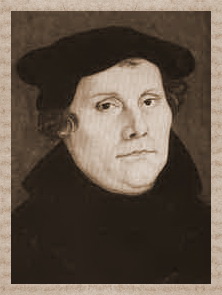
The following words come from Martin Luther’s sermon: THE METHOD AND FRUITS OF JUSTIFICATION. This was written over 450 years ago. If we put aside the quaintness of the old English translation, the message is still potent and direct. In western counties we may not suffer the direct persecution of Luther’s day, but today, the mockery of the gospel, particularly by militant atheists grows by the day. Luther was standing against those who believed in their own works as the means of salvation. We stand against those who deny God altogether. His call to stand and persevere is still pertinent. Luther declares:

Every one by faith is certain of this salvation; but we ought to have care and fear that we stand and persevere, trusting in the Lord, and not in our own strength. When those of the race of Cain hear faith treated of in this manner, they marvel at our madness, as it seems to them. God turn us from this way, say they, that we should affirm ourselves holy and godly; far be this arrogance and rashness from us: we are miserable sinners; we should be mad, if we should arrogate holiness to ourselves. Thus they mock at true faith, and count such doctrine as this execrable error; and thus try to extinguish the Gospel. These are they that deny the faith of Christ, and persecute it throughout the whole world; of whom Paul speaks: “In the latter times many shall depart from the faith,” etc., for we see by these means that true faith lies everywhere opprest; it is not preached, but commonly disallowed and condemned.

(2011-03-24). The World’s Great Sermons, Volume 01 Basil to Calvin (Kindle Locations 1060-1066). . Kindle Edition.

Categories: christian, Christianity, Devotional, Faith | Tags: , , , | Leave a comment

Child Theology

Being a naturally conservative person I always tread warily when I come across new (or in the following case, renewed) ideas. But a movement that has piqued my interest is the “Child Theology” movement. Once again, it was my wife, a natural advocate of children, who brought this to my attention. The Child Theology movement is a relatively new movement that gathers together ideas and concerns that have been present for centuries.

It resonated with me because, for a long time, I have had the nagging feeling that we have not acknowledged the place, function and meaning of children in Scripture. I have always been struck by how many children God used (Josiah, Jeremiah, David, Samuel, Mary etc.) in proclaiming and delivering His Word and too often we have treated this fleetingly. Child Theology takes this one step further. It actually asks how children can develop and deepen our understanding of theology.

Let me quote from a website: (http://www.childtheology.org)

Jesus put a child in the centre of the disciples when they were having a theological argument about greatness in the kingdom of God. It is plain that Jesus thought the child’s presence would give the disciples a clue to the essential truth they were missing.

Occasionally over the centuries, the child has disturbed theologians at work, but has not been in a position to shape theology consistently.

In Child Theology, we are invited to take good note of the child in the midst as we think about, for, to, from and with God in Christ. As we do that, we expect our theology to change for the better. In Child Theology, we embark afresh on the journey with Christ into the open secret of God in the world.

One of the movement’s most articulate proponents is Marcia Bunge: Professor of Theology and Humanities at Christ College, Valparaiso University( a Lutheran University in the US). She has edited two key books in this area:

1. The Child in Christian Thought and Practice explores how churches and theologians have touched on this topic over 2000 years.

2. The Child in the Bible uses the writings of a number of theologians to survey the place and function of children throughout Scripture.

This movement is not child centred but God centred. Children come into the picture as a valid and valuable means of strengthening our understanding of His Word. His people, of course, are both young and old.

Pastors, parents and the Christian community in general will be the poorer if we do not hear what our friends in Child Theology have to say.

Categories: Child Theology, christian, Christianity, Devotional | Tags: , , , , , | 3 Comments

Fountain of Life


Categories: Bible, christian, Christianity, Devotional | Tags: , , , | Leave a comment

Blog at WordPress.com.