
Faith
Looking and Seeing
World-Views
 My usual habit is to read a number of books at once. Not all at the same time but I rotate through them daily. It is the life of an “abstract random” person. Messy but glorious.
Currently one of the books in my rotation is “Think Like Jesus” by George Barna. In fact it is a re-reading as I first read it a few years ago. Barna’s contention is that far too many Christians do not a have Christian World-view. They do not have a Biblical grid through which to see the world and therefore are not only unable to make Biblically/Christian informed choices but they are subject to the insidious influences of other world-views; world-views that are presented through the popular media, celebrities and the like. I don’t think I need to go into detail.
Barna confesses that he ran away from the concept of a Christian World-view for years. But it was the lack of Christian maturity he encountered in his church surveys that made him reconsider the concept. His definition, which I happen to find useful, is that a Biblical World-view is a means of experiencing, interpreting and responding to reality in the light of Biblical perspective. He adds, it enables us to answer the question, “What would Jesus do if he were in my shoes right now?”
I agree with Barna that there is a paucity of Christian thinking in churches and amongst Christians. I also agree with Barna that one of the key reasons is the lack of in depth Bible teaching in the church and in the home. Christians do not have the Biblical foundations upon which to develop this Biblical perspective. However, even within churches where the Bible is seriously taught there is another issue. Christian are taught “what to think but not “how to think”. Christians desperately need an apologetic (defending the faith) framework to defend and promote the faith against all comers.
Why do we need this world view? Simply, whatever the issues that society brings up (and they change and morph every generation), whether it be the internet, the nature of marriage, family, work, media, and so on, we need Biblical framework to construct a response or an answer. What films or TV shows should I watch or books should I read? How should I use my time, talents and wealth? What about the environment, global warming and elections? Because the issues and questions are endless a healthy Christian life requires a well considered World-view.
To have an inkling of what Jesus would do, we also need to understand the Word of God and the relationship with God that was central to his life.
Peter’s Second Letter and the Church Today
Today I want to begin an occasional series on Peter’s second letter. In my personal studies I have spent a lot of time looking at the church in Acts and Second Peter seems a natural development of that. At the time the letter was written the church had been in existence for over 30 years and issues were beginning to arise. In 1 Peter we read about persecution in and in 2 Peter the serious issue of false teachers arises – specifically false teachers from within the church.
However, let me start with a story. A friend was telling me about an issue within a church: should the pastor marry a believer with an unbeliever? The arguments have been flying thick and fast. Some say that 2 Cor 6:14 which warns against believers being yoked to unbelievers summarises what God’s intention is. Others suggest that if the two people love each other the church should be loving and gracious and see the marriage as a possibility for evangelism and outreach.
I’ll be up front. Without going into detail (which I could do very easily) I believe the Bible in the OT and NT reminds us that marriage is an institution (from a Christian’s perspective) which God has instituted and needs to be done in a way that honours His Word. In other words, believers should not marry an unbeliever. (I can sense many hackles rising). Maybe  I’ll expand on this on another occasion.
One of the reasons why we need to be careful with this issue is that the reasons that people give for agreeing to these marriages (such as the need to be loving and gracious) can also be applied to same sex marriages. So if we agree to the first we will also need agree to the second.
My point is that when we begin to unpack the Word of God we also need to be aware of what that means in practice. Many good intentions e.g. we need to be “loving and gracious” can have consequences. False teaching can arise because we have good intentions but have failed to understand the full impact of the Word of God.
In the first 10 verses of 2 Peter 1 the word “knowledge” is mentioned: knowledge of God (vs 2), knowledge (vs5) and knowledge of Jesus (vs8). The healthy Christian life is underpinned by an understanding of God and His will. To stand firm against false teaching we need to know what God intends.
Will this stop arguments? Not at all. But at least our common reference point will be God’s Word in all its fullness and not human opinion and variable feelings. In Peter’s words. we will be “established in the truth” (vs 12).
Lord willing. I will have an opportunity to unpack this further in the future.
So on to Peter.
The Narrow Road

Why Does God Use Children in His Plans?
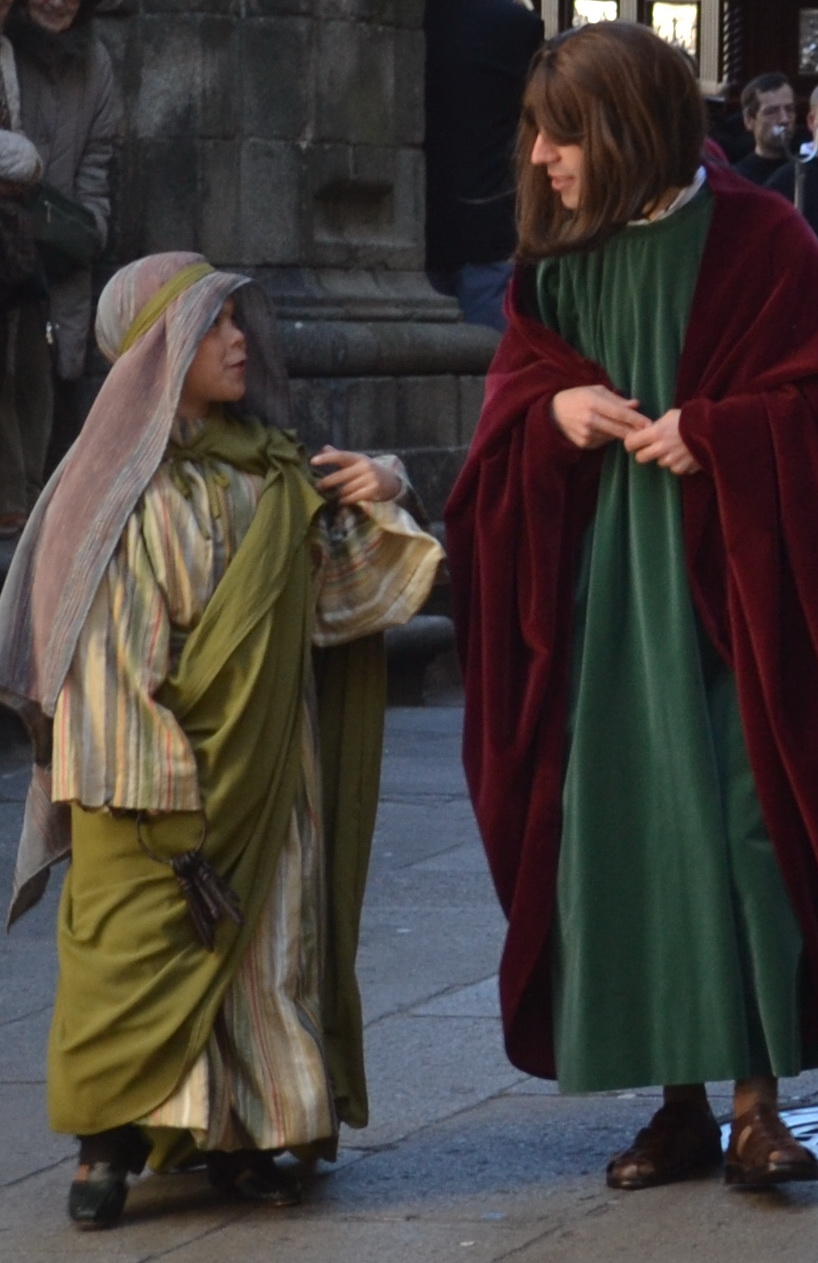 After having written the last two posts connected with “Child Theology” I asked myself the question in the title.
And I have a few suggestions but I would love to hear what readers think too.
My first thought is that children are imaginative and spontaneous. For too many of us, the older we get, the less spontaneous we become and we are governed by what other people think and past failures. Children are not bound by that.
My second thought is that God’s uses the young at their stage of development. I have some suggestions from the Bible to back my ideas up.
When Joseph had his youthful dreams about his brothers and family, aged wisdom would have told him to keep his mouth shut. Experience tells us that blabbing these dreams would be a mistake. However Joseph in his immaturity and ego centered youthfulness informs the family. Even his dad was annoyed. Foolish as this was, Joseph’s actions ultimately led to his family’s rescue from starvation.
God used Miriam as the responsible older sister care for her baby brother.
Other events include Isaac’s childlike innocence when being prepared as a sacrifice and David’s childlike faith and idealism when facing Goliath. There is also Samuel’s childlike openness to the idea that God was speaking to him. How many of us would have been that open?
My contention is that God used young people because they had qualities that age had removed from the next generation. Are we missing out on the qualities of our young people simply because we are judging and assessing them on a maturity that we may have but that they haven’t reached?
What are we as churches and families missing out on by not recognising that childishness and youth also have a place in the kingdom?
Children in the Bible
The other day I mentioned the impressive “Child Theology” movement which strives to consider the impact of the child on theological thinking. (See: https://pieterstok.com/2012/07/15/child-theology/).
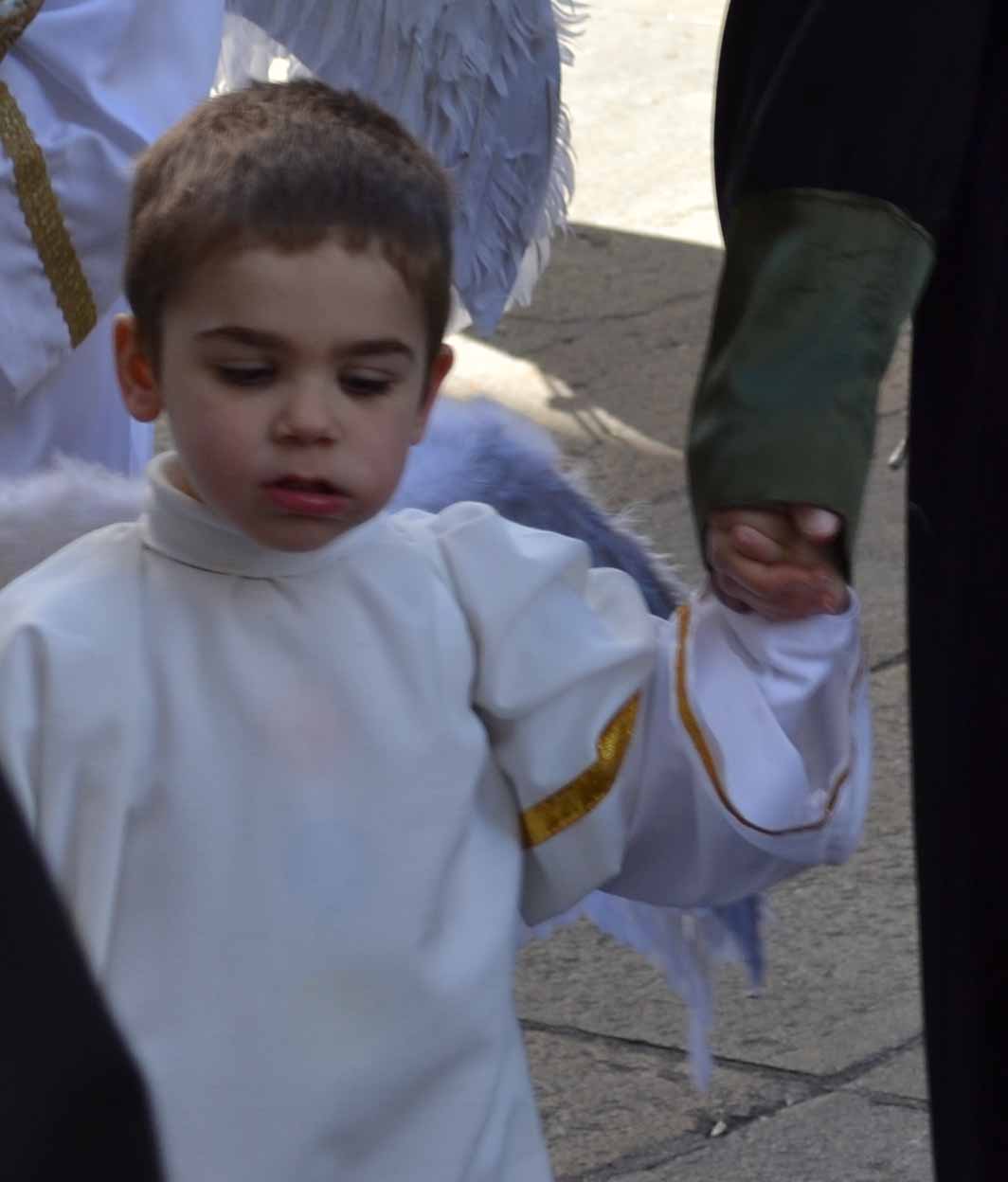 Today I want to make a simple observation: Children have an amazing place and role in Scripture. Not only are they made in God’s image, like the rest of us, and not only are they part of the pain and joy of God’s people, but God also uses children in a direct way to achieve His ends.
Let us consider some examples:
1. Joseph (OT) was a young lad of 17 when he started his journey under God’s hand to be his family’s improbable saviour.
2. Samuel went to serve the Lord in the temple after he was weaned – he was very young.
3. David is the forgotten young man who God sets aside to become King of Israel
4. In the midst of rebellion, Josiah became a godly King at 8 years of age.
5. Jeremiah started his work as a prophet at 14 years of age.
There are many more, not the least Mary who became the mother of the Messiah. At Pentecost, Peter especially mentions the young as a group of God’s people upon whom the Spirit of God is poured.
I believe there is a challenge for parents and church leaders to remember these facts, that is, to acknowledge openly and often, the significance of the young in the church and God’s call and claim upon their lives. I also believe that this is an antidote to the directionless teenage years and the ennui that seems to grab hold of too many of our young people.
If the young have a place and a purpose in the kingdom, why are they so often neglected in the church when it comes to active roles? We may teach them and even pander to them but do we challenge them to service, as God did, and still does?
True Faith Oppressed
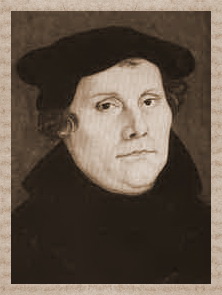 The following words come from Martin Luther’s sermon: THE METHOD AND FRUITS OF JUSTIFICATION. This was written over 450 years ago. If we put aside the quaintness of the old English translation, the message is still potent and direct. In western counties we may not suffer the direct persecution of Luther’s day, but today, the mockery of the gospel, particularly by militant atheists grows by the day. Luther was standing against those who believed in their own works as the means of salvation. We stand against those who deny God altogether. His call to stand and persevere is still pertinent. Luther declares:
Every one by faith is certain of this salvation; but we ought to have care and fear that we stand and persevere, trusting in the Lord, and not in our own strength. When those of the race of Cain hear faith treated of in this manner, they marvel at our madness, as it seems to them. God turn us from this way, say they, that we should affirm ourselves holy and godly; far be this arrogance and rashness from us: we are miserable sinners; we should be mad, if we should arrogate holiness to ourselves. Thus they mock at true faith, and count such doctrine as this execrable error; and thus try to extinguish the Gospel. These are they that deny the faith of Christ, and persecute it throughout the whole world; of whom Paul speaks: “In the latter times many shall depart from the faith,” etc., for we see by these means that true faith lies everywhere opprest; it is not preached, but commonly disallowed and condemned.
(2011-03-24). The World’s Great Sermons, Volume 01 Basil to Calvin (Kindle Locations 1060-1066). . Kindle Edition.
“Orthodoxy”

Image courtesy: Google Images
Today I have collected a few tantalising quotes from G.K. Chesterton’s book “Orthodoxy“. Once again, it is available on Kindle and it is free. I hope the following tempt to you to read the book and follow his arguments for faith. Although some of his references to people of his day (excepting well known authors and historical figures) do not connect with the modern reader, his humour and the flow of his thinking are a joy. Best of all, it is an antidote to modernism and post-modernism. The quotes come from Chapter 2, The Maniac and Chapter 3 The Suicide of Thought
The poet only asks to get his head into the heavens. It is the logician who seeks to get the heavens into his head. And it is his head that splits.
The madman is not the man who has lost his reason. The madman is the man who has lost everything except his reason.
Mysticism keeps men sane. As long as you have mystery you have health; when you destroy mystery you create morbidity. The ordinary man has always been sane because the ordinary man has always been a mystic.
The whole secret of mysticism is this: that man can understand everything by the help of what he does not understand. The morbid logician seeks to make everything lucid, and succeeds in making everything mysterious. The mystic allows one thing to be mysterious, and everything else becomes lucid.
It is vain for eloquent atheists to talk of the great truths that will be revealed if once we see free thought begin. We have seen it end. It has no more questions to ask; it has questioned itself. You cannot call up any wilder vision than a city in which men ask themselves if they have any selves. You cannot fancy a more sceptical world than that in which men doubt if there is a world. It might certainly have reached its bankruptcy more quickly and cleanly if it had not been feebly hampered by the application of indefensible laws of blasphemy or by the absurd pretence that modern England is Christian. But it would have reached the bankruptcy anyhow. Militant atheists are still unjustly persecuted; but rather because they are an old minority than because they are a new one. Free thought has exhausted its own freedom.
Chesterton, G. K. (Gilbert Keith) (1994-05-01). Orthodoxy Public Domain Books. Kindle Edition.
The Pelican and the Glory of God
 A few days ago as I was camped on the banks of the Murray River I sat and observed pelicans – as you do. The pelican is an unusually shaped bird but is obviously configured appropriately for its life on the water and in the air; effective in the water, graceful in the air and exuding an independent character all the while. It is so unlike the squabbling gulls and raucous galahs.
And God said, “Let the water teem with living creatures, and let birds fly above the earth across the vault of the sky.” So God created the great creatures of the sea and every living thing with which the water teems and that moves about in it, according to their kinds, and every winged bird according to its kind. And God saw that it was good. God blessed them and said, “Be fruitful and increase in number and fill the water in the seas, and let the birds increase on the earth.” And there was evening, and there was morning —the fifth day. … God saw all that he had made, and it was very good. (Gen 1)
Too often I come across Christians who are unconcerned about the environment. Their  argument seems to be, the more we use and abuse creation, the sooner Christ will return. I find this thinking hard to stomach. God made a creation that was “good” and He placed us as stewards over it. When He does return will he have found faithful stewards? Ummm, I wonder.
In the meantime, for me, the pelican is a simple but special reminder of the beauty and uniqueness of what God has made, but even more, it gives me an insight into God Himself.
Little Errors Big Trouble
I have discovered that writing posts on an iPad in a tent can be dangerous. My usual poor spelling and grammar is exacerbated by the small print and the predictive text. A few months ago while we were on the Camino in northern Spain this got me into trouble when I was writing about my wife, Hetty. The predictive text changed it to “hefty” without me noticing … and I didn’t check the spelling carefully. My “friends” who read the blog all made sure my wife became aware of my error, many adding, that they didn’t think it was a real error. One of daughters, however, who has since been upgraded in the will, suggested I was referring to my rucksack.
Apart from finding out who my true friends were it is also a good illustration of the power of sin. “For we all have sinned an fall short of the glory of God,” Paul tells us in Romans 3:23. Sin is falling short of God’s holy perfection. It is missing the mark. Whether the error is big or little the consequences can be enormous. We often categorise sin into serious and less serious. Ours are usually less serious and those of others more serious.
Paul’s point is simple; any sin causes us to miss out on perfection, and any lack of perfection separates us from God.
Christ came to restore us to perfection in God’s sight – a judicial perfection. No judgement hangs over us. All we need to do is have faith in Jesus. The Holy Spirit came to grow us into the people God already sees us as in Jesus. Theologians call this process “sanctification.” There is no room for any arrogance on snobbery on our part no matter how trivial we think our sin may be. In ourselves we will always miss the mark. If you know Jesus as your saviour and king, rejoice in His work for you – you have been declared innocent! If you don’t take time to seek Him out now.
Thanks for reading. It is breakfast time. I will go and make hefty, Hetty a cup of tea.


 Travels from Ur