Posts Tagged With: Devotion

Formal Examinations and God

The room is quiet apart from the scribbling of pens and the occasional rustle of a turned page. It must be examination time again.

Tests, exams, quizzes, oral, written and now online as well, are so much part of school life. We assess to see what students have learnt and how effective our teaching has been. When we leave school, college or university there are now reviews of our work and workplace.

In the last few generations testing has broken out from the confines of school and has wheedled its way into all sorts of places. Even kindergartens are getting into the act!

Some Christians even have this view of God – the Chief Examiner. They believe that when Jesus  returns we will have the oral exam to beat all oral exams. I once heard a sermon in which the minister explained that when we get to Judgement Day a video of our lives and thoughts will shown and God will use that to judge us. Apart from being the worst home movie ever, is this really going to happen?

There is a story in Matthew 25 of the sheep and goats and the dividing of them into two groups – a metaphor for God’s judgement. But the “exam” has already happened. The exam was our life and even then, not how good or bad we were. After all, Paul reminds us that we have all f20131011-120609.jpgallen short. (Romans 3:23)

In Matt 22 with the story of the wedding banquet, we are further reminded that whether we are a sheep or goat depends on how we responded to the King’s invitation – and even then, as we find our after Matt 25, the King’s son completes the exam for us with a perfect score which we could never have attained.

There is an exam, or should I say, there was an exam but it was completed 2000 years ago. To receive the perfect score all we need to do is to place our trust in in the one who achieved it. Then it is ours too.

In the meantime, my students are still scribbling away because, unlike God, the school system doesn’t work that way.


Categories: christian, Christianity, Reflections, Uncategorized | Tags: , , , | 3 Comments

The Dark Side of the Church

Very recently I asked for readers to respond to a query I had about how people remember church when they were children (https://pieterstok.com/2013/07/13/your-experience-of-church-as-a-child/). I am still keen on hearing your responses.

One thing I didn’t expect (maybe I should have), was the number of private emails I have received from people recalling the abuse they received. This abuse sometimes arose because church authorities deliberately turned away from events in their families and congregation, or was perpetrated by them. This abuse ranged from spiritual and emotional neglect through to the more sordid examples we see in the news on a daily basis

20120411-214403.jpgIt reminded me that in my years as a pastor I came across too many examples of events that had never been dealt with properly. The “lets sweep it under the carpet” syndrome was all too prevalent. In an effort to protect the church’s reputation we have mired it more deeply in hidden and unconfessed sin and with no real thought for the victims.

Jesus weeps at the sins of His people but the tears must be even greater when these atrocities touch the innocent and vulnerable who are largely made up of women and children.

So far I have seen two main results of this hidden abuse revealed in the emails. Some people turn their back on the church and faith and want nothing to do with either. This is a tragedy of eternal proportions. The other result is those people who, usually through a Christlike mentor or partner, have, at some future occasion, dealt with the abuse and have come out the other side with a stronger faith and a greater awareness of God’s love for them. This is miraculous!

These emails have convinced me that the issue of children in the church is a crucial issue at so many different levels. What do we do to protect them? How do we make them feel that they belong? What is their role in the church and what can we learn from them? These are just some of the questions!

And from you dear readers, I would still love to hear what you have to say.

Categories: Children, christian, Christianity, Church, Ethics, Faith, Reflections, Uncategorized | Tags: , , , , , | 4 Comments

Children as Spiritual Champions – Part 1

The first book I am re-reading as I immerse myself in the topic of “children and church” is George Barna’s very personal confession and realisation, “Transforming Children into Spiritual Champions” (Regal 2003). In this book he acknowledges his own blindness, and suggests that this is modelled by the church at large – especially its leadership, with regard to the importance of children in the church.

In true Barna-esque style he weighs and measures the problem. He looks at the trends and suggests they are alarming (41). He measures the knowledge and values that children have and comes to the conclusion that American children are not being nurtured in the faith. He says this is even more alarming when you understand that most people come to their Christian faith in their childhood.

In a very moving chapter entitled “Why kids matter” he points out that, first of all, they matter to God. They are his gifts to us. Even more importantly, because they matter, He has given clear instruction to parents and the community at large as to the importance of nurture. I would add that we see this most intimately in Jesus’ relationship with children.

Barna also states that children are the battlefront of the spiritual warfare. The battle for the hearts and minds of children is where spiritual warfare is the hottest! He suggests that the more we invest in training, teaching, modelling, encouraging and etc. at this time the less we will have to pick up the pieces in the future.

Part 2 – soon. I hope!

Categories: Children, christian, christian education, Christianity, Church, community, Ethics, Faith, Family, Reflections | Tags: , , , , , | 1 Comment

Josiah: a reflection

I have been doing a lot of writing lately, but alas, not my blog. It is report writing season and I have to assess and make comment on my students.

In the Old Testament God gave a report on Josiah, the King who started at 8 years of age in an era when Judah had rebelled mightily against God. Young Josiah went on a program of reinstating God’s law in Judah and removing idols. However God’s plan for Judah were already set in place. Despite His anger against the nation God was still able to declare about Josiah that:

Neither before nor after Josiah was there a king like him who turned to the Lord as he did – with all his heart and with all his soul and with all his strength, in accordance with all the Law of Moses. 2 Kings 23:25

Sadly Josiah’s reformation was ultimately futile. Further evil kings followed and Judah was dragged to Babylon. We are reminded that the only true reformation is one that is purchased on the cross by Christ and applied to our hearts by the Holy Spirit. … and yet I hope that the Spirit of God plants in me the attitude of Josiah, who in the face of God’s anger against the nation, still did what was right.

In the face of so many evils today we need the courage of Josiah but we have the added blessing of knowing the Messiah, having His Spirit and being assured that His Kingdom will come!

Categories: christian, Christianity, Devotional, Faith, Reflections, Uncategorized | Tags: , , , , | 2 Comments

Anchor Less Soul

Footsteps idly wandering
in circles
is a soul
without an anchor.
Seeking not
or knowing not,
but meandering
all the same.

ashipBut even anchors
break loose
and fail to hold.
Some drag on ocean floors
or snag on unseen perils.

To what buoy or mooring
does your soul cling?
Where does your heart
find a home
with warmth,
memory and belonging?

Categories: christian, Christianity, Faith, Poem, poetry, Reflections, Uncategorized | Tags: , , , , , , | 5 Comments

Is It Time For Another Reformation?

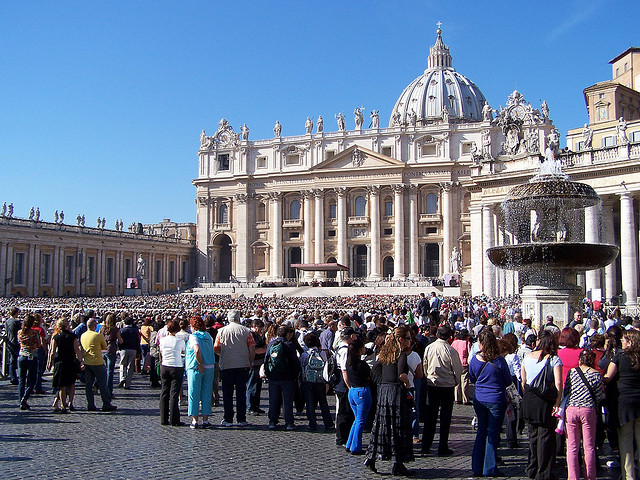
St Peter's Rome

St Peter’s Rome

Recently an old friend from the Catholic tradition commented on a poem I had written about the importance of acknowledging those, from the past, who had paved the way for us. He reminded me that this goes back many generations. Not so subtlety he reflected that even for Protestants our origins go back to the Catholic tradition.

As I pondered further I considered the reasons for the Reformation. The reinstatement of the primacy of the Word, a return to “Grace alone” and the corruption in the Vatican at the time were all key issues. It took the church 1500 years to get to the point that the Reformation occurred. Despite the corruption in the church there were many bright lights and examples of Christlikeness. My readers will be aware of my occasional reference to Teresa of Avila. (See here  and here).  It wasn’t all bleak. Yet it has taken the Protestant tradition less than 500 years, since Luther nailed his theses on the door at Wittenberg in 1517, to come to a similar state. Instead of indulgences we have the “prosperity gospel” – selfishness in different clothes. The primacy of the Word is under strident attack. Issues that secular society seeks to reevaluate such as gay marriage and abortion are understandable, however that many in the church support these causes is not. And that is just the tip of the iceberg.

The Reformation Wall, Geneva

The Reformation Wall, Geneva

The point is this: the church must continually be reforming itself in the light of Scripture. In every new era as issues arise, the Word of God needs to be applied afresh to the times. The Catholic church recognised this with the Counter Reformation and the Vatican Councils. We may disagree with many of the outcomes but at least they understood the need for review.

On the immovable foundation of the Word of God, what do we need to reassess about ourselves, our values, our priorities – both as Christians and churches? Is it time for another reformation – a reformation that can trace its spiritual ancestry through those who, over the centuries, down to the early church have striven to be faithful to God, His Word, His Gospel and His Kingdom?

Categories: christian, Christianity, Church, Faith, Uncategorized | Tags: , , , | 1 Comment

The Lord’s Prayer – Rote or Real?

The Dutch C19th/C20th theologian and statesman, Abraham Kuyper, is not that well known in the English speaking world, yet his works are worth knowing. His devotions are particularly inspiring.

Here is another short quote from a longer devotional: “Lord Teach us to Pray” in “To Be Near Unto God.” (The Kindle version is available for a very modest price).

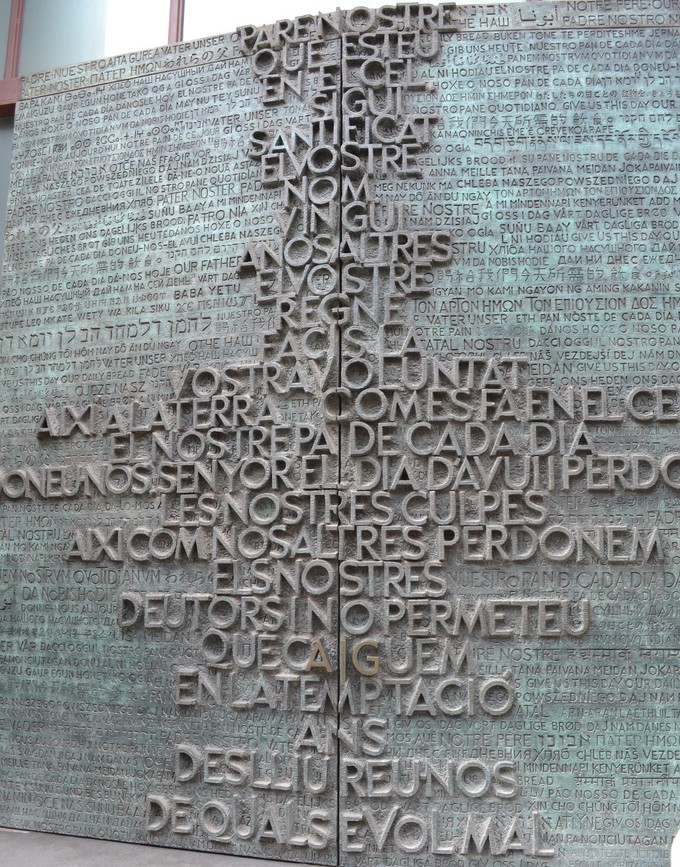
The Paternoster (The Lord's Prayer) in the Sagrada Familia, Barcelona

The Paternoster (The Lord’s Prayer) in the Sagrada Familia, Barcelona

“Undoubtedly, the highest end is attained when, independent of every aid, from the free impulse of the Spirit, the soul lifts itself up to God, and on the wings of the Spirit, spreads itself before God in sacred, devotional language. Such glorious moments are not infrequent in the prayer-life. And it is plain that in such moments even the Our Father is not sufficiently concrete to direct the soul in its utterance before God. But in all seriousness, how many among the great and small in the congregation have risen to these sacred heights. And, if there are such, how many are the moments of a long day, when they are in such sacred and exalted moods? We must needs reckon with reality. And think not only of yourself, but have a tender consideration for the poor sheep in the church and in your own home, whose spiritual standing is still low, and who yet needs must pray, and for whom it is no less glorious than for you, when in prayer they come a little nearer unto God, and may perceive something of his holy presence. How much higher did not the apostles of Jesus stand than we, and yet for them Jesus deemed a memorized prayer so little aimless or superfluous, that he himself gave them one.”

Kuyper, Abraham  To Be Near Unto God. Kindle Edition.

Categories: christian, Christianity, Faith, Prayer, Uncategorized | Tags: , , , | 1 Comment

To Be Near Unto God

sunrise newThe following, amazing quote, comes from the introduction to Abraham Kuyper’s delightful collection of devotions: To Be Near Unto God.

Love for God may be fine sentiment. It may be sincere and capable of inspiring holy enthusiasm, while the soul is still a stranger to fellowship with the eternal, and ignorant of the secret walk with God. The great God may still not be your God. Your heart may still not be attuned to the passionate outburst of delight: I love the Lord. For love of God in general is so largely love for the idea of God, love for the Fountain of life, the Source of all good, the Watcher of Israel who never slumbers; in brief, love for him who, whatever else changes, abides the same eternally.

But when the heart can say: I love the Lord, the idea of the Eternal becomes personified. Then God becomes the Shepherd who leads us, the Father who spiritually begat us, the covenant-God to whom we sustain the covenant relation, the Friend who offers us friendship, the Lord whom we serve, the God of our trust, who is no longer merely God, but our God.

Abraham Kuyper, To Be Near Unto God,  Kindle Edition.

Categories: Abraham Kuyper, christian, Christianity, Devotional, Faith, Reflections | Tags: , , , , | Leave a comment

Rushing Waters – a Photo and Text for Sunday

20130525-165915.jpg

Revelation 19:6-8
Then I heard what sounded like a great multitude, like the roar of rushing waters and like loud peals of thunder, shouting:
“Hallelujah!For our Lord God Almighty reigns.
Let us rejoice and be glad and give him glory!
For the wedding of the Lamb has come,
and his bride has made herself ready.
Fine linen, bright and clean,was given her to wear.

Categories: christian, Christianity, Devotional, Faith, Photo, Uncategorized | Tags: , , , , | Leave a comment

Deo Volente

The pulpit in the old church at Gamla Uppsala

The pulpit in the old church at Gamla Uppsala

“Deo Volente” is not a phrase used much nowadays, yet it speaks of a wonderful attitude.

Deo Volente, often shortened to D.V. simply means “God willing”. Like many Latin phrases its real meaning has been lost in the mists of time. “N.B”, “A.D.” and “C.V.” are just some other examples. In the past letters and messages were often annotated with “D.V.” It acknowledged that any human plans were subject to God’s will.

Deo Volente, at its heart, speaks of an attitude before God. It recognises that our plans are always subject to His will and purposes. God is sovereign and I am not. It is a phrase of humility and acceptance. Not resignation, but the acknowledgement that ultimately God’s purposes and plans far outweigh my wishes and petty ambitions.

It is also a phrase of comfort. Whatever happens in my life is not governed by fate or chance but is overruled by a God who sent His son to reveal His love for His children and who cares for them into eternity. It is a comfort because He has told me, that love is what He wills.

Categories: Children, christian, Christianity, Devotional, Reflections | Tags: , , , , , | 4 Comments

Blog at WordPress.com.