Child Theology

Words Jesus Didn’t Say

Then people brought little children to Jesus for him to place his hands on them and pray for them. But the disciples rebuked them.

Jesus replied, “Send the children around the corner to a children’s program that one of my lesser disciples is running. She will look after them.”

Categories: Child Theology, Children, christian | Tags: , | 7 Comments

When they see among them their children …

20130425-165731.jpg22 Therefore this is what the Lord, who redeemed Abraham, says to the descendants of Jacob: ‘No longer will Jacob be ashamed; no longer will their faces grow pale. 23 When they see among them their children, the work of my hands, they will keep my name holy; they will acknowledge the holiness of the Holy One of Jacob, and will stand in awe of the God of Israel. 24 Those who are wayward in spirit will gain understanding; those who complain will accept instruction.’

Isaiah 29 22-24

These verses come in the midst of God’s frightening judgement upon Jerusalem before Judah’s exile in Babylon.  In contrast to the prophecy of the horrors to come, the passage quoted looks beyond this time of exile to a future when there will be joy and genuine awe in the worship of God.

Many commentators when considering this passage jump on the word “children” and translate that as “future generations”.  There is no problem with that, except we lose the critical idea of being a child and the uniqueness of childhood. Too often commentators suggest that we are dealing with a generation of adults in the future. This, in my view, waters down the intent of the passage.

But why does Isaiah/God use the word “children”?

Which parent has not on occasions sat back and quietly mused on the joy of their children – their exploits, wonder, faith and accomplishments. Our hearts are warmed in the knowledge that they are products of our union! I know there are moments when the opposite occurs but let us stay with the positive for the moment. Children are a symbol of amazing potential and promise. In this passage they are reminders and metaphors for naïve and innocent wonder at the character and actions of God.

Children can remind jaded adults of the joy of the discovery of faith and the wonders of God and His creation and most important, the relief and exhilaration of salvation. They are God’s “sacrament” (symbol or image if you prefer) of new faith, new hope and new future – a crucial idea in the passage above.

In the Isaiah passage children are prophecies of awe filled worshippers (in the fullest sense), of God.

I believe this passage is pointing to Christ but also to his second coming when we will see, completely, how all things will be made new. In the meantime, while we wait for the return of the King. Our children are still heralds of faith and future. We jaded, cynical and worldly-wise adults need to make sure that we do not squash that vision in our children  – or our own hearts.

Categories: Bible, Child Theology, Children, christian, Christianity, Church, Uncategorized | Tags: , , , , | Leave a comment

A Dream for the Spiritual Health of Our Children

skate board ramp“We dream of a local church that is willing to radically rethink what it means to worship God together in ways that are meaningful across generations. This wouldn’t mean simply tweaking  our current elements of worship to make them more child friendly, and it wouldn’t involve the juvenilization of the church. Instead it would mean turning committed disciples of all ages to worship God together. As the contemporary world brings new ways of thinking about and doing church togther, we hope this is part of the agenda.

In her book Welcoming Children, Joyce Mercer asks, “what would happen if, instead of removing children for not conforming to the styles of worship comfortable to adults, we changed some of those styles to invite the fuller participation of children?” We imagine Jesus would answer  this question by taking a child into his arms and saying,”The kingdom of God belongs to such as these.” Will we follow our teacher?”

Children’s Ministry in the Way of Jesus, David M. Csinos and Ivy Beckwith, IVP Praxis 2013, p 125


Categories: Child Theology, Children, Church, Faith, Family, Uncategorized | Tags: , , , , | Leave a comment

The Voice of Inspired Youth

A  few weeks ago I went to an evening church service where two of my students were going to preach for about 20 minutes each.  These likable lads are not always mature or wise in their decisions and behaviour – but they are great young people.

To be honest, even though they are talented young men I didn’t expect too much from them in their first sermon. I was wrong! These lads spoke/preached and delivered the word of God with a passion, zeal, maturity and sophistication. They wove Scripture upon Scripture to declare God’s word to the congregation. Like any good preacher should – they spoke for God.

I reflected later that I heard more of God’s word in these 40 minutes than I had in many so-called sermons in other churches in recent years. They did not delve into pop psychology, glib jokes and puerile anecdotes. Their aim was not to tickle ears but to speak a word that was on their hearts to the heart of the congregation.

I went home humbled. God spoke to me that evening though two of my students. God reminded me that young people have a place, purpose and word to speak in the lives of our congregations. He has gifted all of us, not just the “mature”.

Categories: Child Theology, Children, christian, Christianity, Church, Faith | Tags: , , , | 1 Comment

Helping Our Children Grow in Faith – a review

keeleyOver the years I have become reticent about recommending books as I have discovered that books often resonate with a person because of the time and place they are in individually. However, I will overcome my reluctance and challenge Christian parents, teachers and Children’s ministry workers to read “Helping Our Children Grow in Faith” by Robert J. Keeley (Baker Books 2008).

Essentially Keeley unpacks 6 principles that he believes (and I concur) are important in nurturing faith in children.

  • Children need to be nurtured in their faith by the whole community of faith, not just parents.
  • Children need to be part of the whole life of the church.
  • Children need to know that God is mysterious.
  • Bible stories are the key to helping children know a God who is mysterious and who knows them for who they are.
  • Faith and moral development are both important but they are not the same thing.
  • Children should be part of congregational worship and they should have opportunities to experience developmentally appropriate worship.

Not only are these 6 points beautifully unwrapped but a lot of the incidental teaching along the way is very valuable too. For example, when discussing the power of story, he touches on the danger of simply attaching morals to Bible stories. He suggests that if we simply connect a story to a moral (“Dare to be a Daniel or David” – my examples) we prevent children pondering what God may be teaching them.

He also reflects on a passion of mine: children in worship. He says, “For children to have the kind of faith we want them to have, they need to be part of the worship experience.” Here I would like to have seen, at least, a mention of the impact that children have on the faith of adults as they can inspire us with their naïve simplicity.

Overall, an excellent book that is worth reading, re-reading and discussing with family, colleagues and congregation so that we can all assist in the nurturing of that all import faith in the most vulnerable in our families, schools and churches.

Categories: Book Review, Child Theology, Children, christian, christian education, Christianity, Church | Tags: , , , | 1 Comment

Our Inner Child

When our inner child is not nurtured and nourished, our minds gradually close to new ideas, unprofitable commitments, and the surprises of the Spirit. Evangelical faith is bartered for cozy, comfortable piety. A failure of nerve and an unwillingness to risk distorts God into a Bookkeeper, and the gospel of grace is swapped for the security of religious bondage.
“Unless you become like little children …” Heaven will be filled with five-year-olds.

Brennan Manning, The Ragamuffin Gospel

Categories: Child Theology, Children, Reflections | Tags: , | 3 Comments

Children and Church – Thank You, but More Please!

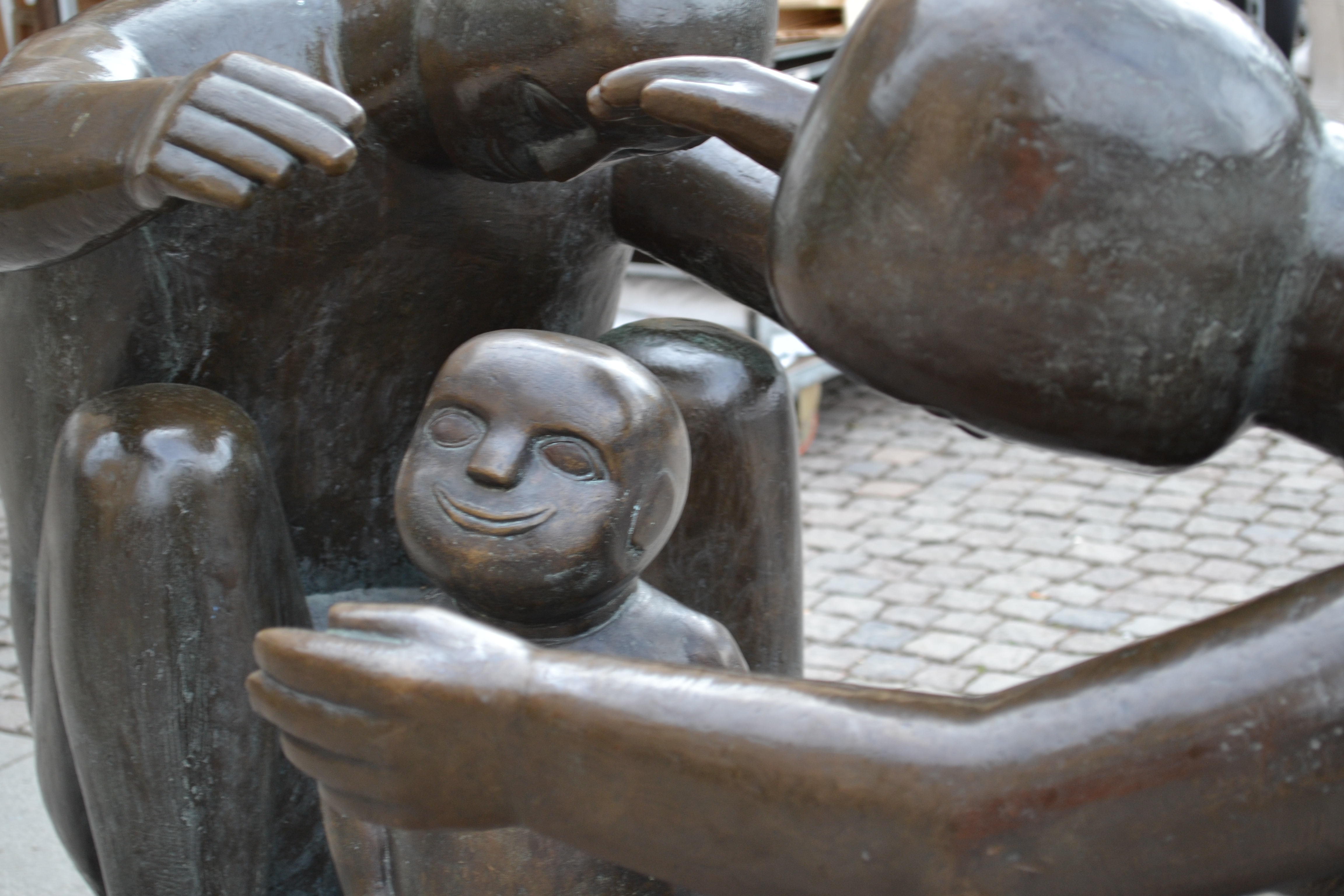
Statue in StockholmI must extend a big thank you to all of you who have responded to my request for childhood memories of church. (The original post here which includes an email address). One thing your responses have already done is widen my thinking and planning. I have received some emails regarding various kinds abuse upon which I have to reflect deeply. Some of you have commented on excitement and others sheer boredom. Overall, however, I get the strong impression that for many, if not most, children were incidental to church life. This collection has only just begun so I continue to encourage readers to comment and to ask friends to comment

Please keep your memories and reflections coming.

Categories: Bible, Child Theology, Children, christian, Church, Uncategorized | Tags: , , , , | 2 Comments

Your Experience of Church as a Child

I need your feedback!20130425-165731.jpg

I am asking readers to recall their experience of church and worship as a child. What did you connect with, what alienated you, what activities enabled you to enjoy the community of church – in all I want to hear about the good, bad and ugly. Your memories and experiences, anecdotes and stories is what I am after.

Currently I am researching material for a book I hope to write on “children and church” and your experiences will help fill out the picture

Please email me at pstok@iinet.net.au or add your comments below.

Fellow bloggers may I please encourage you to reblog this request so that your blog readers have an opportunity to respond as well. The greater the cultural variety the better the picture I can gather.

Thank you in anticipation.

Pieter

Categories: Child Theology, Children, Church, community, Faith, Family | Tags: , , , , , | 20 Comments

“Let the little children … “

But Jesus called the children to him and said, ‘Let the little children come to me, and do not hinder them, for the kingdom of God belongs to such as these. Luke 18:16

holding handsIt strikes me me time and again how worship, that is, the average worship service, is largely an adult activity. There maybe a children’s talk, which in my experience is usually too abstract or allegorical for younger children to grasp and there maybe a children’s song, but for 95% of the service, or more, children are ignored or excluded.

To solve this problem churches often hive the children off to a separate room at some point. This usually comes as relief to both child and parent.

My question: What are some of the success stories out there where children have been  genuinely incorporated into all age worship? That is, where has the family of God been truly visible in worship – and not just the older members?

If you have witnessed Biblical, successful strategies I would love to hear about them. Jesus’ injunction above is far too important to ignore.

Categories: Child Theology, Children, christian, Christianity, Church, Faith, Family | Tags: , , , , , | 2 Comments

Equipping The Troops – a Christian Apologetic Approach

If the Laissez faire is foolish and the Fortress method only temporary, how do we prepare our children for a life of Christian faith that can withstand the arguments and abuse that will certainly come.

Let me begin by saying, if one believes that Scripture is the Word of God and that the Holy Spirit is real and that God’s promises are true then there is no reason to be fearful. Too often however, I have seen parenting that is driven by fear – fear of the world and its myriad dangers.

From an early age, starting with Children’s Bibles, teach the truth as the Bible presents it.skate board ramp (The Bible in Pictures for Little Eyes by Kenneth Taylor is a classic in this area). Do this daily, whether at the meal table or bedtime. And pray regularly. As the children grow, so must the sophistication of the stories and the discussion. Bible knowledge is the bedrock from which we defend our faith. Memorising stories and verses become essential tools for the future.

Knowing the overarching story of Scripture with the centrality of the promised Christ in the Old Testament and his arrival in the New will protect them from seeing Scripture as a mere set of moral rules. As our children grow older they discover that the Bible is presenting an image of a Kingdom that has come in Christ and will be completely revealed with his return. They need a picture of eternity and the relationship of our earthly pilgrimage to it.

P1030744I could say so much more about this but I think you get the drift. Our children need to be seeped in knowledge AND in understanding. They need to understand the uniqueness of the faith. Critically, they also need to know that God has created them for a purpose in His kingdom, both now and forever.

So where do other faiths come in? Don’t major on minors. What are the predominant counter Christian worldviews today? What do people believe? What motivates the lives of people? What dominant values does the media portray? How is Christianity distinctive from these views?

To understand these motivations is to know where Christianity differs. What are the logical outcomes of these “faiths”? E.g. If we are simply the product of evolution how does that affect our value as humans? How does this contrast with being a child of God? And what about faiths that demand we earn our salvation? What does that reveal about their view of sin and how does that match up with the Christian concept of Grace?

100_9647Finally, as parents we need to model a genuine Christian life where our words and actions, choices and views are shaped by our faith. Our children need to see us talking with God and studying His word. Our children need to see that our lives are not lived out of custom and superstition but out of a living relationship.

Is this a guarantee. No. Ultimately our children will need to make choices of their own. But if you hearken back to Prov 22:6,(see: A Scary Verse)  the principle is that if we set the foundations of faith the likelihood of straying will be greatly reduced.

Categories: Child Theology, christian, christian education, Christianity, Devotional, Faith, Family, Reflections, Uncategorized | Tags: , , , , , | 4 Comments

Blog at WordPress.com.