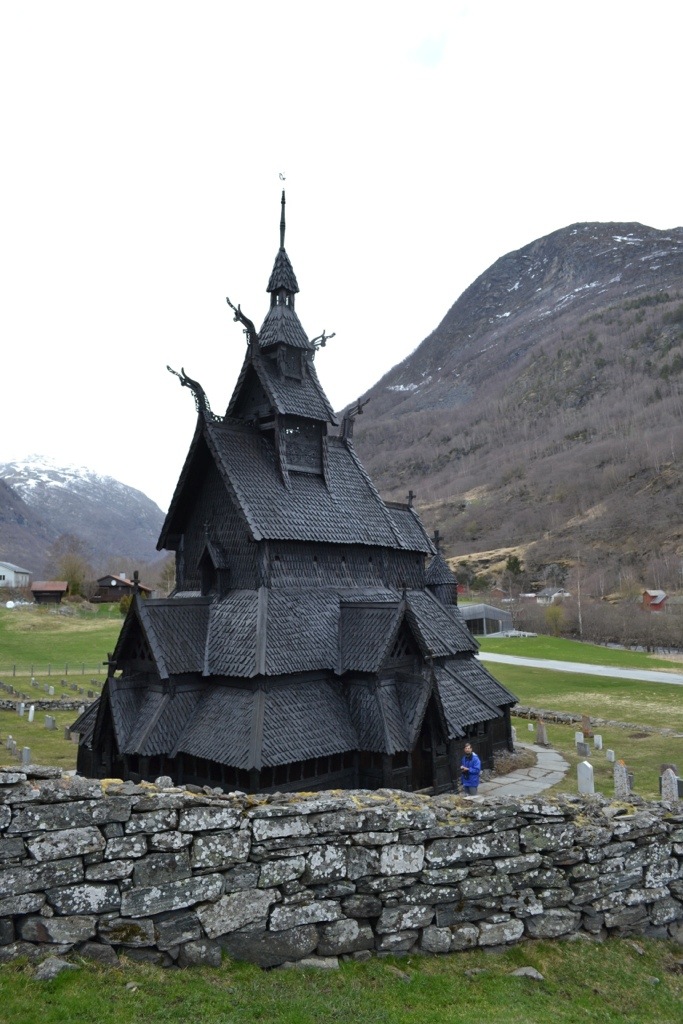
A year ago today we were camping in Norway and hunting for Stave churches … sigh!
The Word Stares
The Word stares
at me
and challenges
my heart
and hands.
I parse
and exegete
unfold and explore
but it waits
and silently
demands more.
The words are cross referenced,
the context considered
and yet it says
“So what?”
What will you do
with your gleanings
to make Christ
and His Kingdom known?
Child Theology
In reference to Mathew 18
The child placed by Jesus is beside Him to serve as a sign of the Kingdom of Heaven. So the child (about whom we know nothing except that he or she was little and lowly in status) is only to be the object of attention, care or veneration insofar as that is inherent in being a sign of the Kingdom of God. Child Theology starts with Jesus and asks what light children throw on God, the Father, Son and Holy Spirit and His way of doing things in His world (that is, the Kingdom of Heaven). This light immediately exposes the way the disciples are thinking and behaving, and their fundamental misjudgement of Jesus and the Kingdom. Put simply, if not crudely, Jesus was telling them that they had got the Kingdom of Heaven all wrong! It wasn’t just that they were a bit off course: they were on completely the wrong track. Child Theology seeks always to have the child placed by Jesus in the midst of conversations and reflections, but it is concerned with every aspect of God’s mission, and involves the whole community of God. It will lead us all to see that in welcoming children we welcome Jesus, and the One who sent Him.
From: Introducing Child Theology
Theological Foundations for Holistic Child Development
REVISED EDITION
KEITH J. WHITE
No Man (or Woman) is an Island
With apologies to John Donne
One plus one
Equals
Relationship.
One plus one plus one
Equals community.
Each sum
Requires the addition
Of our commitment,
Our time,
Our selves.
With subtraction
Comes pain
And loss.
Completeness disappears.
The sum
Doesn’t
Add up.
Growing Up Today
For regular, or even occasional readers of my blog, you would be aware that every now and then my mind goes on bizarre excursions. As I was walking to school the other day I reflected that in my 40 odd years of teaching and pastoring it has been increasingly difficult to comprehend what drives and motivates teenagers. So I asked myself the question: What would have influenced me if I had been born in 2000 rather than 1950? Some things haven’t changed, but there is much that has.
I would now be almost thirteen. I grew up into a mobile phone culture. My parents have had one each as long as I can remember so I naturally assume that this is the way I will operate too. Having the phone with me and on, at all times is “normal”. Similarly with computers. PCs, laptops, tablets, gaming consoles, android and iPhones are a normal part of life. The internet is an important, if not the main, source of information, entertainment and communication. All of this has been part of my life as long as I can remember. I have a feeling of connection and am uncomfortable if this is removed.
I was too young to remember the 9/11 event but that and associated terrorist events are part of the “mythology” I have grown up with. Every subsequent event is referenced to that date. I have grown up in the age of terrorism. There are regular events, like the recent Boston bombings, that remind me of that. The nuclear threat, the space race and the cold war are events in history books. The rise of Islam as a religion, and China and India as economic powers is the world I am growing up in. Europe and the USA seem increasingly vulnerable although I am still too young to understand what that might mean for me. It does however raise a ripple of apprehension.
Another historical anachronism is the church. The buildings dot the cities and countryside but like “Mechanics Institutes” and corner stores they are remnants of a bygone era. They seem so irrelevant today. Even those who go to church struggle to explain its purpose. But still, there must be more to living than just having things.
Divorce and homosexual relationships are a normal aspect of life. We need to be politically correct and accept all points of view. Half the kids in my class come from broken homes and a number have openly gay parents. Mum and dad might split. That is just the way it is.
I have never known real want or hunger. There have always been choices. But they tell me when I get older a job might be hard to get. Others tell me that the job I might do may not even have been invented yet. I am also told that education is important. My problem is that I struggle with practical subjects and Maths – what hope have I got?
Even though I can’t explain it, all this gives me a vague feeling of unease. So I will get back to FB, update my status, check my friends’ texts and this might just make me feel better about myself.
God’s Protection
If you are like me, you are quick to complain when things go wrong. I don’t always vocalise these grumbles but God must be only too aware of my grumbling heart.
God’s eternal care really came home to me on our recent trip to Tasmania. God reminded me that He takes care of me all the time. Even when I am oblivious. I am always “in his grip” (as a fellow blogger describes himself).
After a strenuous hike my wife and I pitched our hiking tent in, what seemed at the time, a suitable location. We slept there that night. At one point in the middle of the night I left the tent to take care of “necessities”. The following morning as my wife was making breakfast I packed up the tent. A short while later a fellow hiker, whom we had met a day earlier, passed through and said “Hi”. After a chat she continued on her way. A few seconds later we heard a scream. We jumped up and ran to find out what was going on. Our hiker friend had spied a black snake. When she described where it had come from and where it had gone she pointed to where we had pitched our tent that night as its place of origin.
As danger lurked around us we were ignorant. On how many other occasions in my life has that happened?
I only grumble about the problems and struggles that I see, but how much more should my life be a hymn of praise for all the blessings, protection and care that God bestows moment by moment!
Sunday
Finding News in Other Places
Yesterday I suggested seeking alternative sources for news. Below is a very small cross section of the places one can go. You may wish to suggest others. There are both Christian and secular websites referenced. The point is simple: in this Internet age there are websites as well bloggers on the ground who can inform us across a wider spectrum and remove us from the need to source our news exclusively from the commercial news giants. After all my aim in life is not to make Rupert Murdock, for one, richer and even more influential.
http://www.compassion.com.au/content/newsroom/gjso08
The Value of Life and the Media
On the day of the horrific Boston bombings there were many other atrocities around the world. Fifty people died in Iraq, children were killed in Syria, and thousands continued to die from starvation, disease and abuse around the world. But our televisions, computers and newspapers were filled with images from Boston. Newspaper pages and TV hours were crammed with this one story.
Being a first world country there were of course lots of images to broadcast. Also the American networks were pouring out reams of material that others could plug into. But I felt uneasy. I don’t want to decry the seriousness of the Boston event. It was awful and undeserved. However in the international scheme of things it was not the worst thing that happened in the world that day. Here in Australia the media would make it appear that it was.
There are so many questions and issues that arise out of this situation: What is news and who determines what we should be shown? Are western lives more valuable than others? What impact does this skewed reporting have on our sense of justice for all? What about the child dying in its mother’s arms in a forgotten village – shouldn’t she be noticed? What about the Christians who are dying and having their churches bombed in towns and villages in Asia and the Middle East? Sadly, the list is seemingly endless.
Another question which directly confronts us, is, are we simply watching the news to be entertained? Neil Postman confronted this attitude with his LIAR principle – Low Information to Action Ratio. His point, we gain so much information, but we do so little about it. Is the news just another ongoing sitcom or is it a means by which we can gain understanding of the needs in the whole of God’s world?
I understand that this a very complex area and I am only scratching the surface. Yet we can start with ourselves and critique what we see, and explore other sources of news, such as the news that comes from mission and aid organisations. This would broaden our input, remove some of the power of the big news organisations and would also have the effect of putting us, to some degree, in charge of our own news sourcing. We would also have a more complete perspective from which to pray and act. And acting afterall, rather than being curious voyeurs, is the heart of Christ at work.