Monthly Archives: July 2012

Peter’s Second Letter and the Church Today

Today I want to begin an occasional series on Peter’s second letter. In my personal studies I have spent a lot of time looking at the church in Acts and Second Peter seems a natural development of that. At the time the letter was written the church had been in existence for over 30 years and issues were beginning to arise. In 1 Peter we read about persecution in and in 2 Peter the serious issue of false teachers arises – specifically false teachers from within the church.

However, let me start with a story. A friend was telling me about an issue within a church: should the pastor marry a believer with an unbeliever? The arguments have been flying thick and fast. Some say that 2 Cor 6:14 which warns against believers being yoked to unbelievers summarises what God’s intention is. Others suggest that if the two people love each other the church should be loving and gracious and see the marriage as a possibility for evangelism and outreach.

I’ll be up front. Without going into detail (which I could do very easily) I believe the Bible in the OT and NT reminds us that marriage is an institution (from a Christian’s perspective) which God has instituted and needs to be done in a way that honours His Word. In other words, believers should not marry an unbeliever. (I can sense many hackles rising). Maybe I’ll expand on this on another occasion.

One of the reasons why we need to be careful with this issue is that the reasons that people give for agreeing to these marriages (such as the need to be loving and gracious) can also be applied to same sex marriages. So if we agree to the first we will also need agree to the second.

My point is that when we begin to unpack the Word of God we also need to be aware of what that means in practice. Many good intentions e.g. we need to be “loving and gracious” can have consequences. False teaching can arise because we have good intentions but have failed to understand the full impact of the Word of God.

In the first 10 verses of 2 Peter 1 the word “knowledge” is mentioned: knowledge of God (vs 2), knowledge (vs5) and knowledge of Jesus (vs8). The healthy Christian life is underpinned by an understanding of God and His will. To stand firm against false teaching we need to know what God intends.

Will this stop arguments? Not at all. But at least our common reference point will be God’s Word in all its fullness and not human opinion and variable feelings. In Peter’s words. we will be “established in the truth” (vs 12).

Lord willing. I will have an opportunity to unpack this further in the future.

So on to Peter.

Categories: christian, Christianity, Church, Faith, Second Peter, Uncategorized | Tags: , , , | 2 Comments

The Narrow Road

Categories: christian, Christianity, Devotional, Faith, Photo | Tags: , , , | Leave a comment

What Do You Remember?

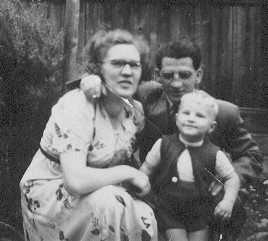
What are your earliest memories? I asked myself that question the other day. In a bit over week’s time I turn 62 years young and so I began reminiscing about my earliest years.

Here are some memories up to the age of 3 and a half years:

  • Sitting under a desk listening to the warm conversation of adults at my grandparents’ home.
  • Visiting a great grandfather whose false leg was standing in a corner – that made quite an impression.
  • Visiting the barber who had a jar of lollies/sweets behind the counter.
  • Sitting on the grass in a local square reading a picture book. (This one is reinforced with a photo of the event)
  • Checking my aunt’s pocket with my foot as she was holding onto me and hugging me to see if she had brought me a treat.
  • “Reading” Bible story books and having them read to me.
  • Being separated in child care from my parents on the migrant boat to Australia.

There are many more but these are a few that stand out. The overwhelming emotion that comes from remembering these is security and warmth. I was loved by my parents and my extended family. What a privilege that was and what a joy to remember! I hope that my children have similar memories.

It also leads to me to think of the great number of children today for whom those early years are not surrounded with joy, but in contrast, with pain and neglect.

When you cast your mind back to your earliest memories, what comes back to you?

Categories: Child Theology, christian, Christianity, Devotional, Family | 8 Comments

Why Does God Use Children in His Plans?

After having written the last two posts connected with “Child Theology” I asked myself the question in the title.

And I have a few suggestions but I would love to hear what readers think too.

My first thought is that children are imaginative and spontaneous. For too many of us, the older we get, the less spontaneous we become and we are governed by what other people think and past failures. Children are not bound by that.

My second thought is that God’s uses the young at their stage of development. I have some suggestions from the Bible to back my ideas up.

When Joseph had his youthful dreams about his brothers and family, aged wisdom would have told him to keep his mouth shut. Experience tells us that blabbing these dreams would be a mistake. However Joseph in his immaturity and ego centered youthfulness informs the family. Even his dad was annoyed. Foolish as this was, Joseph’s actions ultimately led to his family’s rescue from starvation.

God used Miriam as the responsible older sister care for her baby brother.

Other events include Isaac’s childlike innocence when being prepared as a sacrifice and David’s childlike faith and idealism when facing Goliath. There is also Samuel’s childlike openness to the idea that God was speaking to him. How many of us would have been that open?

My contention is that God used young people because they had qualities that age had removed from the next generation. Are we missing out on the qualities of our young people simply because we are judging and assessing them on a maturity that we may have but that they haven’t reached?

What are we as churches and families missing out on by not recognising that childishness and youth also have a place in the kingdom?

Categories: Child Theology, christian, Christianity, Devotional, Faith, Uncategorized | Tags: , , , | 2 Comments

Children in the Bible

The other day I mentioned the impressive “Child Theology” movement which strives to consider the impact of the child on theological thinking. (See: https://pieterstok.com/2012/07/15/child-theology/).

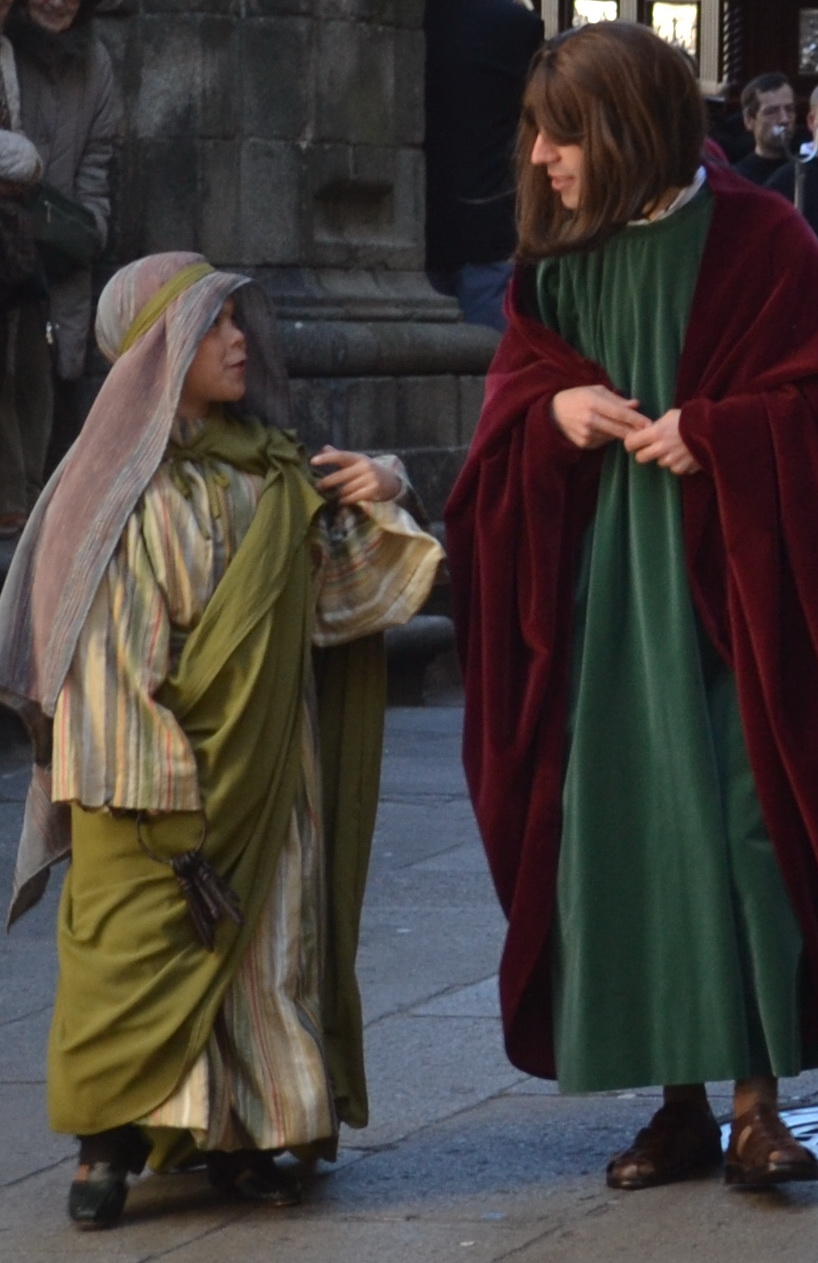
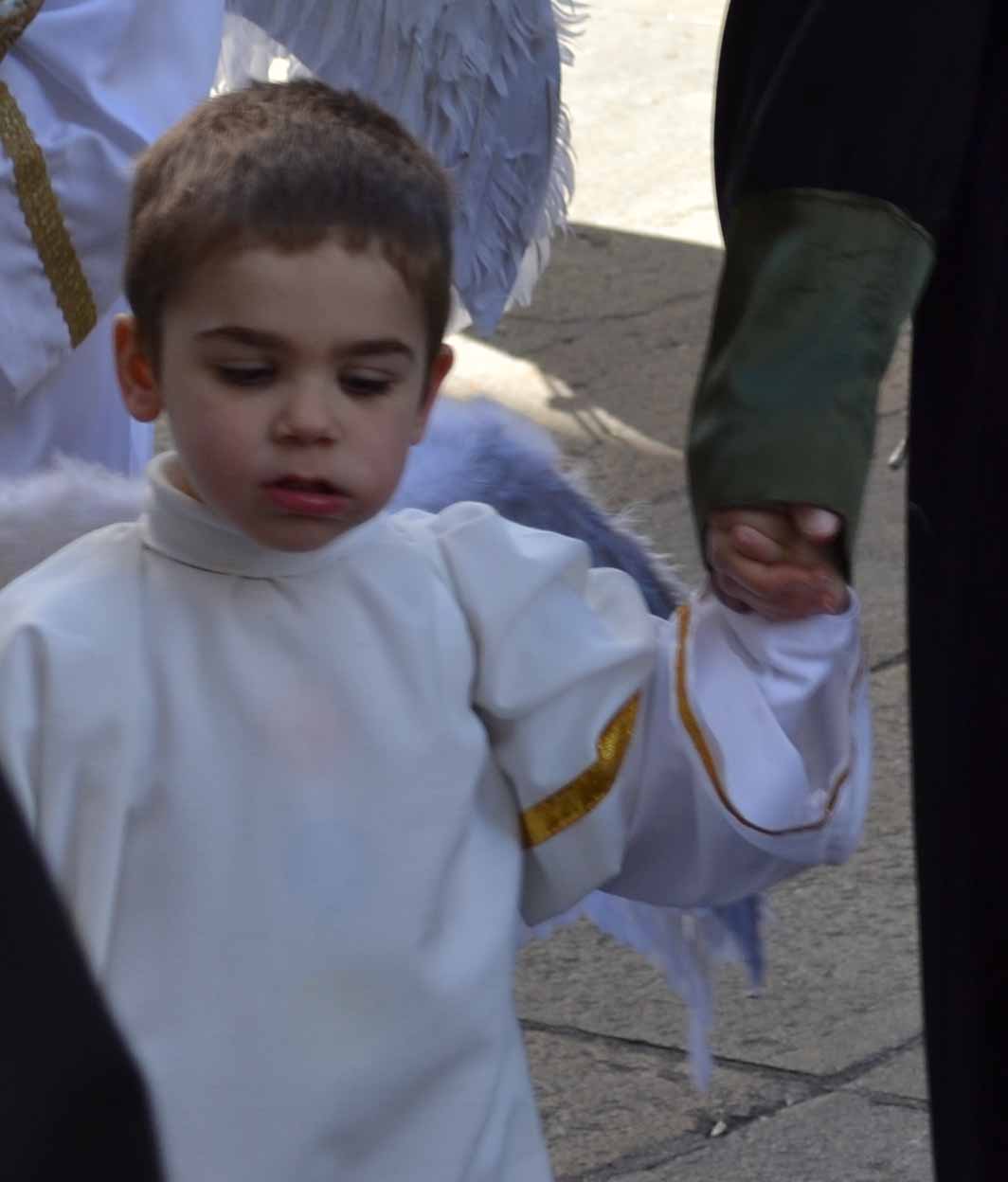
Today I want to make a simple observation: Children have an amazing place and role in Scripture. Not only are they made in God’s image, like the rest of us, and not only are they part of the pain and joy of God’s people, but God also uses children in a direct way to achieve His ends.

Let us consider some examples:

1. Joseph (OT) was a young lad of 17 when he started his journey under God’s hand to be his family’s improbable saviour.

2. Samuel went to serve the Lord in the temple after he was weaned – he was very young.

3. David is the forgotten young man who God sets aside to become King of Israel

4. In the midst of rebellion, Josiah became a godly King at 8 years of age.

5. Jeremiah started his work as a prophet at 14 years of age.

There are many more, not the least Mary who became the mother of the Messiah. At Pentecost, Peter especially mentions the young as a group of God’s people upon whom the Spirit of God is poured.

I believe there is a challenge for parents and church leaders to remember these facts, that is, to acknowledge openly and often, the significance of the young in the church and God’s call and claim upon their lives. I also believe that this is an antidote to the directionless teenage years and the ennui that seems to grab hold of too many of our young people.

If the young have a place and a purpose in the kingdom, why are they so often neglected in the church when it comes to active roles? We may teach them and even pander to them but do we challenge them to service, as God did, and still does?

Categories: Child Theology, christian, Christianity, Devotional, Faith, Uncategorized | Tags: , , , | 1 Comment

True Faith Oppressed

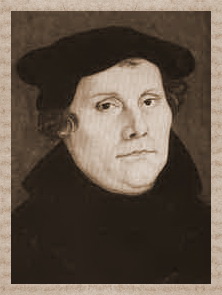
The following words come from Martin Luther’s sermon: THE METHOD AND FRUITS OF JUSTIFICATION. This was written over 450 years ago. If we put aside the quaintness of the old English translation, the message is still potent and direct. In western counties we may not suffer the direct persecution of Luther’s day, but today, the mockery of the gospel, particularly by militant atheists grows by the day. Luther was standing against those who believed in their own works as the means of salvation. We stand against those who deny God altogether. His call to stand and persevere is still pertinent. Luther declares:

Every one by faith is certain of this salvation; but we ought to have care and fear that we stand and persevere, trusting in the Lord, and not in our own strength. When those of the race of Cain hear faith treated of in this manner, they marvel at our madness, as it seems to them. God turn us from this way, say they, that we should affirm ourselves holy and godly; far be this arrogance and rashness from us: we are miserable sinners; we should be mad, if we should arrogate holiness to ourselves. Thus they mock at true faith, and count such doctrine as this execrable error; and thus try to extinguish the Gospel. These are they that deny the faith of Christ, and persecute it throughout the whole world; of whom Paul speaks: “In the latter times many shall depart from the faith,” etc., for we see by these means that true faith lies everywhere opprest; it is not preached, but commonly disallowed and condemned.

(2011-03-24). The World’s Great Sermons, Volume 01 Basil to Calvin (Kindle Locations 1060-1066). . Kindle Edition.

Categories: christian, Christianity, Devotional, Faith | Tags: , , , | Leave a comment

Child Theology

Being a naturally conservative person I always tread warily when I come across new (or in the following case, renewed) ideas. But a movement that has piqued my interest is the “Child Theology” movement. Once again, it was my wife, a natural advocate of children, who brought this to my attention. The Child Theology movement is a relatively new movement that gathers together ideas and concerns that have been present for centuries.

It resonated with me because, for a long time, I have had the nagging feeling that we have not acknowledged the place, function and meaning of children in Scripture. I have always been struck by how many children God used (Josiah, Jeremiah, David, Samuel, Mary etc.) in proclaiming and delivering His Word and too often we have treated this fleetingly. Child Theology takes this one step further. It actually asks how children can develop and deepen our understanding of theology.

Let me quote from a website: (http://www.childtheology.org)

Jesus put a child in the centre of the disciples when they were having a theological argument about greatness in the kingdom of God. It is plain that Jesus thought the child’s presence would give the disciples a clue to the essential truth they were missing.

Occasionally over the centuries, the child has disturbed theologians at work, but has not been in a position to shape theology consistently.

In Child Theology, we are invited to take good note of the child in the midst as we think about, for, to, from and with God in Christ. As we do that, we expect our theology to change for the better. In Child Theology, we embark afresh on the journey with Christ into the open secret of God in the world.

One of the movement’s most articulate proponents is Marcia Bunge: Professor of Theology and Humanities at Christ College, Valparaiso University( a Lutheran University in the US). She has edited two key books in this area:

1. The Child in Christian Thought and Practice explores how churches and theologians have touched on this topic over 2000 years.

2. The Child in the Bible uses the writings of a number of theologians to survey the place and function of children throughout Scripture.

This movement is not child centred but God centred. Children come into the picture as a valid and valuable means of strengthening our understanding of His Word. His people, of course, are both young and old.

Pastors, parents and the Christian community in general will be the poorer if we do not hear what our friends in Child Theology have to say.

Categories: Child Theology, christian, Christianity, Devotional | Tags: , , , , , | 3 Comments

Fountain of Life


Categories: Bible, christian, Christianity, Devotional | Tags: , , , | Leave a comment

“Orthodoxy”

Image courtesy: Google Images

Today I have collected a few tantalising quotes from G.K. Chesterton’s book “Orthodoxy“. Once again, it is available on Kindle and it is free. I hope the following tempt to you to read the book and follow his arguments for faith. Although some of his references to people of his day (excepting well known authors and historical figures) do not connect with the modern reader, his humour and the flow of his thinking are a joy. Best of all, it is an antidote to modernism and post-modernism. The quotes come from Chapter 2, The Maniac and Chapter 3 The Suicide of Thought

The poet only asks to get his head into the heavens. It is the logician who seeks to get the heavens into his head. And it is his head that splits.

The madman is not the man who has lost his reason. The madman is the man who has lost everything except his reason.

Mysticism keeps men sane. As long as you have mystery you have health; when you destroy mystery you create morbidity. The ordinary man has always been sane because the ordinary man has always been a mystic.

The whole secret of mysticism is this: that man can understand everything by the help of what he does not understand. The morbid logician seeks to make everything lucid, and succeeds in making everything mysterious. The mystic allows one thing to be mysterious, and everything else becomes lucid.

It is vain for eloquent atheists to talk of the great truths that will be revealed if once we see free thought begin. We have seen it end. It has no more questions to ask; it has questioned itself. You cannot call up any wilder vision than a city in which men ask themselves if they have any selves. You cannot fancy a more sceptical world than that in which men doubt if there is a world. It might certainly have reached its bankruptcy more quickly and cleanly if it had not been feebly hampered by the application of indefensible laws of blasphemy or by the absurd pretence that modern England is Christian. But it would have reached the bankruptcy anyhow. Militant atheists are still unjustly persecuted; but rather because they are an old minority than because they are a new one. Free thought has exhausted its own freedom.

Chesterton, G. K. (Gilbert Keith) (1994-05-01). Orthodoxy Public Domain Books. Kindle Edition.

Categories: christian, Christianity, Devotional, Faith, G K Chesterton, Uncategorized | Tags: , , , | Leave a comment

“Poetry Sucks” a poem for Rohan

“Poetry sucks!” a plaintiff voice cries.
“That is your first line,” I respond.
 
Why do we fear

Image courtesy: Google Images

plucking words and phrases
and arranging thoughts,
phrases,
pains and pleasures
on paper or a screen?
 
What is the “horror”
Created by poetic lines?
Why cringe at rhyme or verse,
metre or metaphor?
 
Let your heart speak
your anger and hope,
and your pen scribble
your love and hate
or the keyboard
the tremors within.
 
“Poetry sucks …”
at my feelings
and flows through the
straw of my pen …
Categories: Poem, poetry, Reflections | Tags: , | 3 Comments

Blog at WordPress.com.