Yesterday I placed a John Calvin quote in my blog. However today I want to share a delightful scene I came across in Stockholm a few weeks ago. If you watch through to the end, the clip finishes with a Swedish version of a line dance!

Yesterday I placed a John Calvin quote in my blog. However today I want to share a delightful scene I came across in Stockholm a few weeks ago. If you watch through to the end, the clip finishes with a Swedish version of a line dance!
I want to stay in Calvin’s town of Geneva for another post. While visiting Geneva, which  included trips to the Reformation Wall and the Reformation Museum, I also came across a most unique archaeological experience – a visit under Saint-Pierre Cathedral (St Peter’s Cathedral).
The archaeology under the Cathedral has unearthed infromation going back millenia. It tells us a story of Geneva from early times, through the Roman period and into the arrival and development of Christianity.
 The uniqueness of this site is that it is under the Cathedral. The Cathedral has been structurally underpinned so that the visitor can explore the history underneath. It is beautifully presented and the information is extensive and yet presented in an easily accessible manner.
Their own website can be accessed at: http://www.site-archeologique.ch/contenu.php?id-node=2 Any visit to Geneva will not be complete with out encountering this unique experience.
The most exciting aspect for me, a Christian, was to see the development of Christianity  and some of its practices (e.g. baptism) develop and mutate over time. A more sobering reminder was how in Western countries in general, the accepted faith in Christ which grew over many years has been diluted in such a short space of time in recent generatiuons.
The site under St Pierre is a reminder that history and archaeology need not be dry and dusty. In fact it proves that it can be aesthetic, immediate and enticing.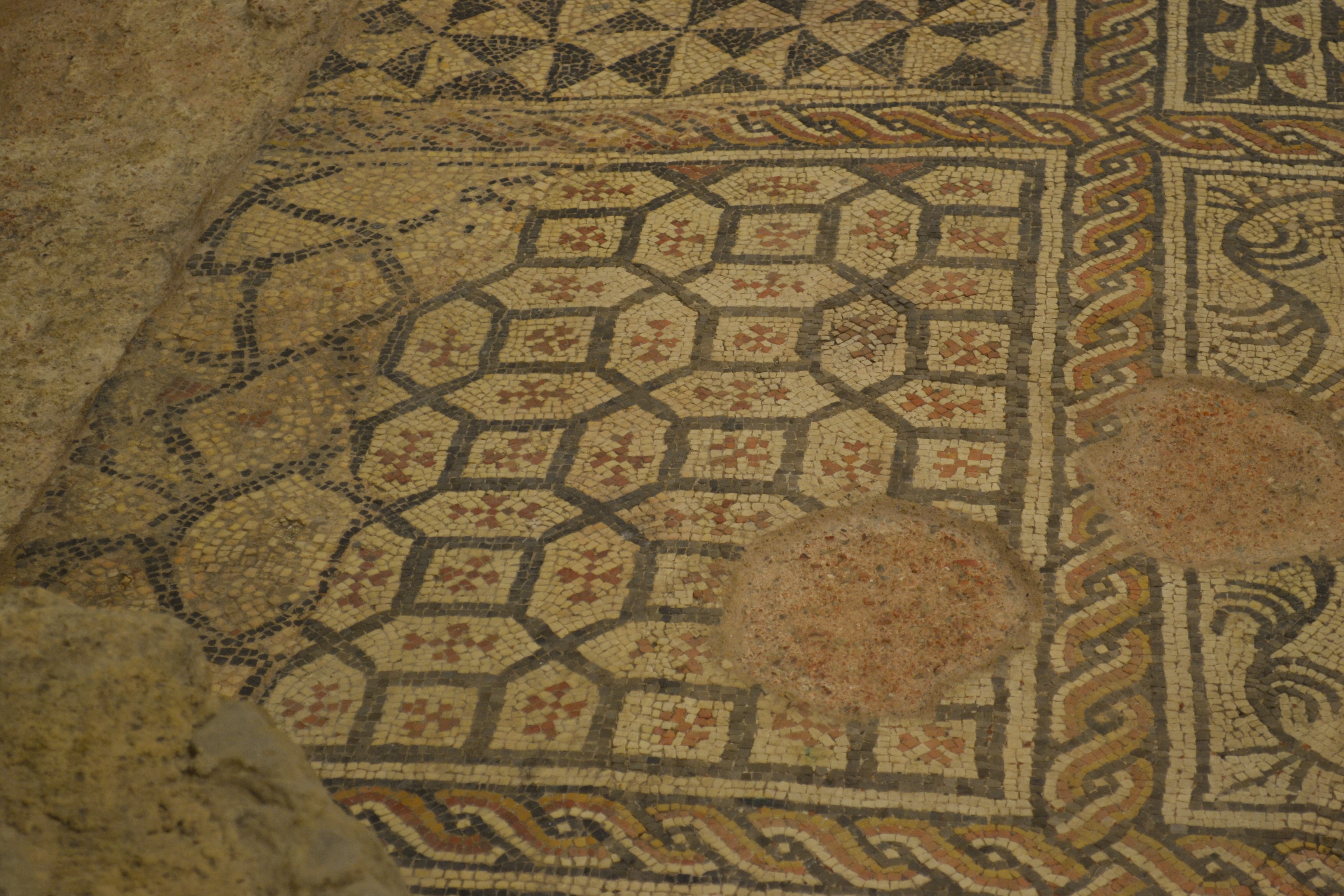
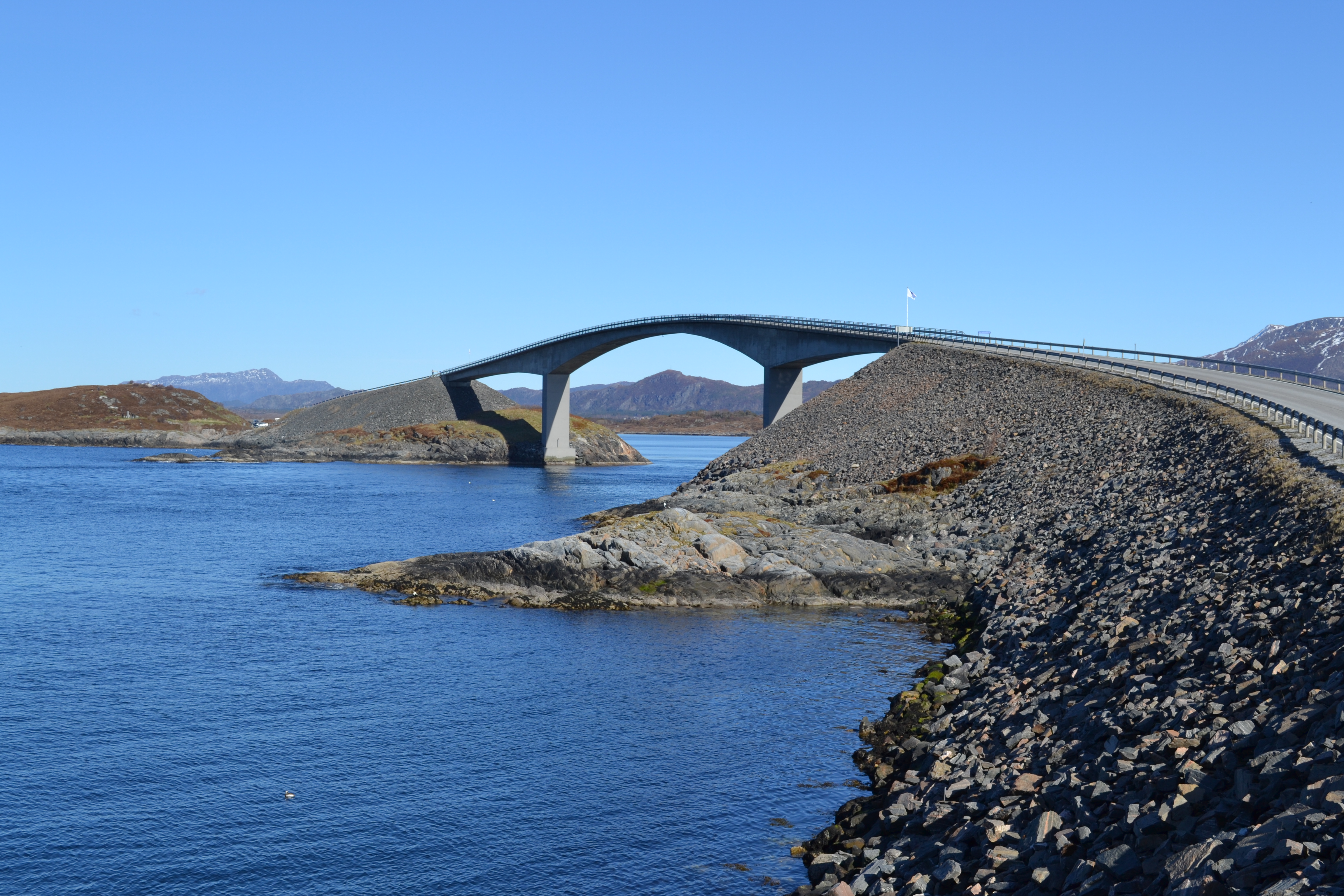
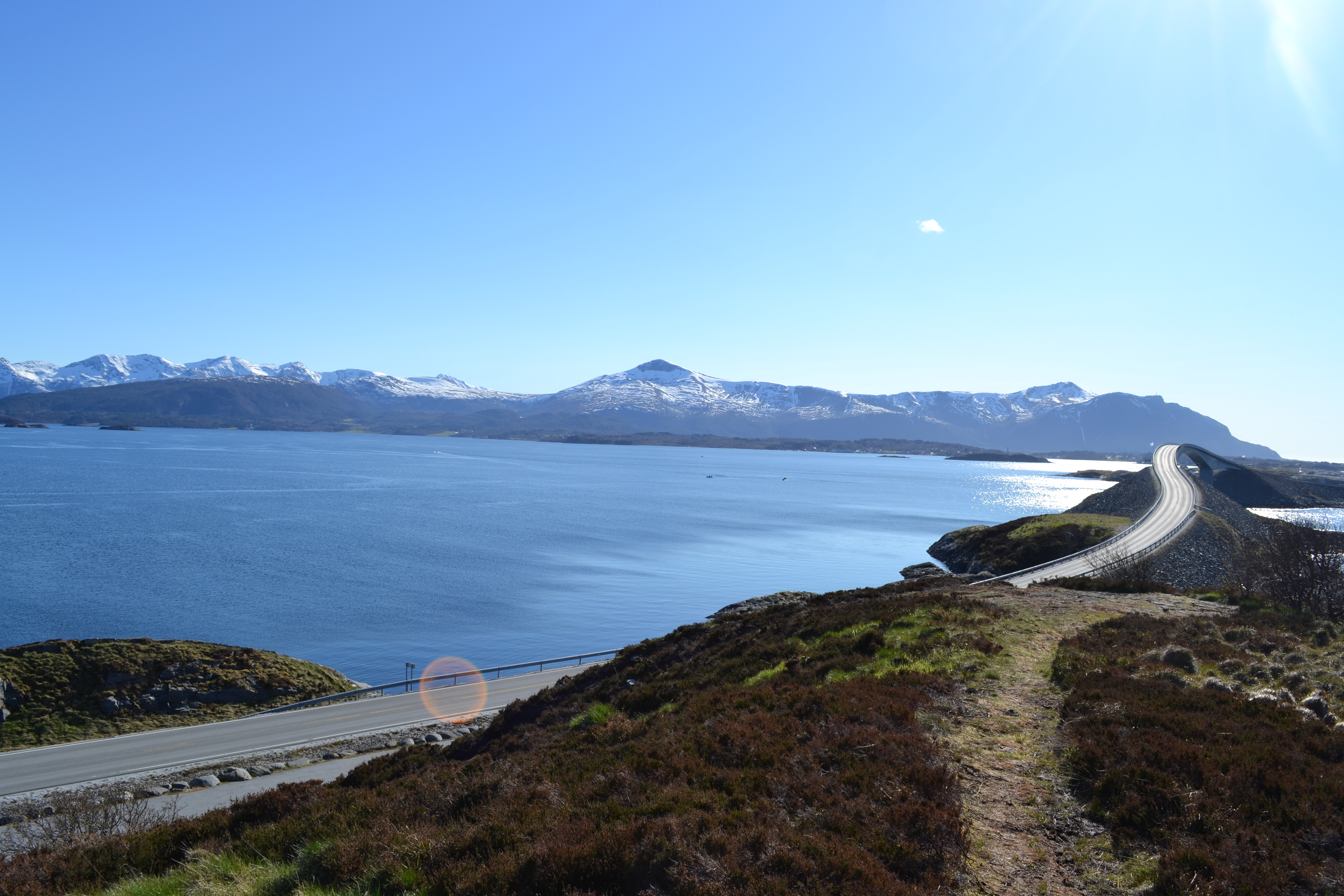 One of the reasons I wanted to visit Norway was to travel the Atlantic Road. This relatively short stretch of highway hops from rock island to island just south of Kristiansund through a nature park. The road swerves and weaves over islands and along water for 8 kilomentres. Without too much hyperbole it could be suggested that this road with its bridges is a work of art.
People were fishing, having picnics and generally enjoying the sights on the day that we went. It was cool but sunny and the road looked magnificent. All this is, of course, set against the dramatic backdrop of Norwegian scenery.
We liked it so much that we made three separate journeys along this road before we finally took the (expensive) tunnel into Kristiansund.
There are great coastal highways in the world. The Pacific Coast Highway in California and the Great Ocean Road in Victoria, Australia but this 8 km stretch is in a category of its own.

Six weeks of travel are drawing to a close. In that time we have walked part of the Camino, traveled to the Arctic Circle, and visited friends and family. We have driven, and flown, thousands of kilometres. But there have been other journeys. Our marriage has reached 38 years and we still discover more about each other every day – especially in the tense traveling moments! There are the journeys of family and friends; the illnesses, the ethical dilemmas, the faith questions and so on. Each of these becomes a mirror we can hold up to ourselves and ask, “How would I respond? How would I deal with the issues and problems?” Often times there are no simple answers and no black and white truths.
Our lives have intersected with others: sometimes fleetingly – the grumpy Spanish waiter, the traffic police who caught me using a bus lane, fellow campers and many others. Even that fleeting moment can leave an impression. How did we respond to the grumpy waiter or the unhelpful garage attendant – especially when we were lost or seemingly helpless?
Our lives are enriched by experiences and our responses to them. So as I fly home on the last leg from Kuala Lumpur, the question I must wrestle with is: how will, or can this accumulation of experiences and events make me a better person, or more importantly, more Christlike.
The range of questions is as varied as the people we met and situations we encountered. For example, there are fellow evangelicals to support in Barcelona. Or, how should I respond to the beggars at nearly every door of the large churches across much of Europe? Are there ways my view of the world can assist my own society at home grapple with its demons. And how has all this advanced my understanding of God?
Now the busy-ness is over, and life returns to normal, there is much to reflect, and act, upon.
We are leaving Scandinavia. Our visit to Norway and Sweden has been fantastic. Although we have seen changes – even since our last visit in 2006, the marginalization of the Christian faith seems to be even more pronounced. Political correctness is the order of the day.
Some random snaps:

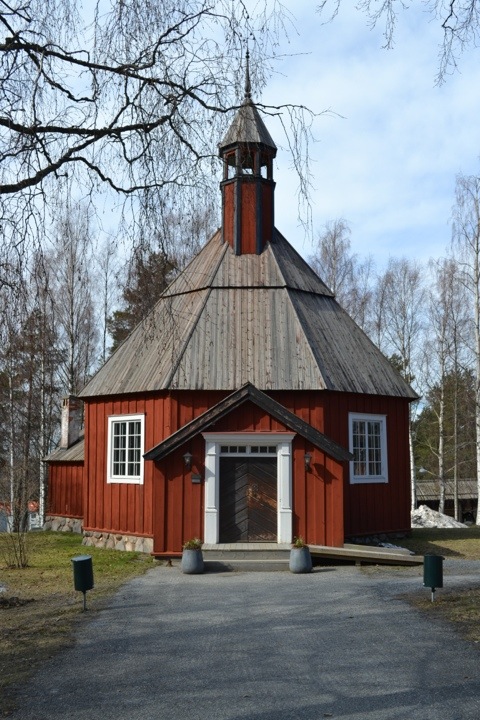


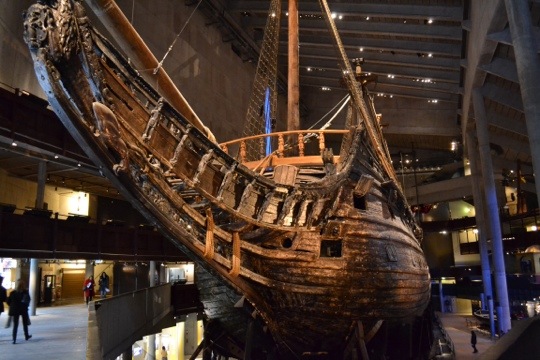


Every now and then special, unexpected moments occur. I had wanted to see the Jamtli regional museum in central Sweden. It is renown for its outdoor and indoor displays of local history.
Hetty went to the door to check on times only to find we were an hour early. However, a small group was waiting for a private tour and we were invited along. For two hours we were honorary members of an Illinois Rotary Club. Marlyn, the Swedish guide gave us an informative tour of both the collection of regional buildings and the museum. As there were a number of teachers, the 1895 school room with its sand topped desks on which to practice writing, was quite a hit.
The museum is of a standard for others to note. It has a number of key qualities: an aesthetic beauty, educational focus, it is hands on and fun for children, it has academic rigor and its own archeologists, and embraces community groups. The displays are creative and breath taking. The display of a tapestry, older than the Bayeux Tapestry, is simple and effective. Sami culture is displayed as well as a great collection of Viking artifacts.
This museum is in a fairly remote town of 25000 people (60000 in the local area) and employs 130 people and double that in the Summer when the outside museum comes alive. Simply said, it is a tribute to the community. There is a message in this for my own home town.

1. On our journeys we have come to the conclusion that it was an EU directive that every Pole acquire a semi trailer. Why else would there be on many on European roads?
2. It is a rule, it seems, that every Norwegian must own a tractor. If he or she can’t afford a tractor, a small digger will have to suffice. If you see the amount of snow in Norway, this rule explains itself.
3. In Spain, every male over 70 must drive a Max car. This 2stroke machine has a top speed of 35 kph. It may only be driven on bike tracks, back roads, suburban streets, highways – in fact wherever they wish, especially during peak hours.
4. Another rule seems to be that every Dutchman must have two bikes – one for home and the other to strap on the back of the camper ( not a prerequisite but highly encouraged).
5. The traffic lights in France are only suggestions. Often they don’t work, so why bother to obey them anyway. The local councils also have a programme to make them as inconspicuous as possible.
6. Indicator lights on Saabs do not work in Sweden. Amazing as it may seem, I have only seen a slight flicker from one light – and that may have been the sun’s reflection.
7. You know it’s cold when the skidoos are parked next to the house and the trailers have skis.
You may have “observations” to add.
Tuesday 24 April Market Harborough to Seer Green
Another homemade breakfast greeted us downstairs as Lin had made porridge for us. It was a relaxing way to start the day, especially with Handel’s Largo playing in the background. Afterwards we bade John and Lin farewell and headed for Milton Keynes Centre to find a car charger for the IPad. It just happened that the Lego shop was across the way from the Apple shop. Imagine that! We filled up a tub with bricks. Then we went in search of a suitcase on wheels which could use as carry-on. It was good to wander through the Centre and surprising how familiar it all was.
Pieter was overjoyed we got back to the car and discovered that the new charger did its job. He programmed the gps on the dashboard for Rochester and soon we were traveling south to the orders of Miss GPS, “in 300 yards veer right, take the second exit, continue on the M1 for 9 miles” . I relaxed. Some other woman was telling Pieter where to go.
A few hours and half the London ring road later, we got to Rochester. We did a walking tour to see the buildings and sites that inspired Charles Dickens. Just as we started the rain stopped, at last. When we got to the tourist office a group of loud schoolgirls were testing the patience of the staff. The lady behind the counter told us about another Dickens exhibition at the Guildhall. We hurried off and discovered not only an excellent video of how Dickens saw Rochester in the 1850-80s. There were also exhibits of the hulk ships, maritime items and town history. They used mirrors creatively to make spaces appear larger. Altogether it was well presented and supplemented what we saw yesterday at the Museum of London. When we get back home I will have to read Edwin Drood, Dickens last unfinished book, set in Rochester.
We wound up Miss GPS and she got us to our campsite in Seer Green, via the other half of the ring road (yes we’re almost back to where we started).
We have had a lovely meal in the local pub- The Jolly Cricketers. Pieter’s thumb looks dreadful and makes cutting his food nearly impossible. “Bryce Courtney” is sitting at the next table behaving lecherously towards a blond half his age. Disgusting!
Tomorrow we will catch our flight to Goteborg, Sweden, after bringing the car and Miss GPS back to Hertz.
PS. I listened to The Archers tonight before going to the pub and meeting people who must have been the inspiration for some of the characters.
I’m currently sitting outside the Sagrada Familia in Barcelona. This morning we have been at Gaudi’s Guell Park a place of weird and wonderful shapes and architecture. The place was jam packed. I was thrilled that at the gate a couple of men were handing out tracts declaring that Jesus is risen. When I encouraged them they told me in halting English that they were evangelicals. Praise God!
Spain appears to be a deeply religious country. The cynic would say that if you drove like that you need faith; in yourself, the other driver and luck! The churches we have been in have been full. However we have sighted very few teenagers, children and younger families in church. That is not a good sign. My overall impression is that Spain is going the secular way of northern Europe.
The overt signs of faith, such as churches and crosses in each village, is not matched with a vibrant reality. My visit is fleeting, but there is much to pay for in this country.




 Travels from Ur